No, the $2,000 Cable Doesn’t Make Your Guitar Sound Better
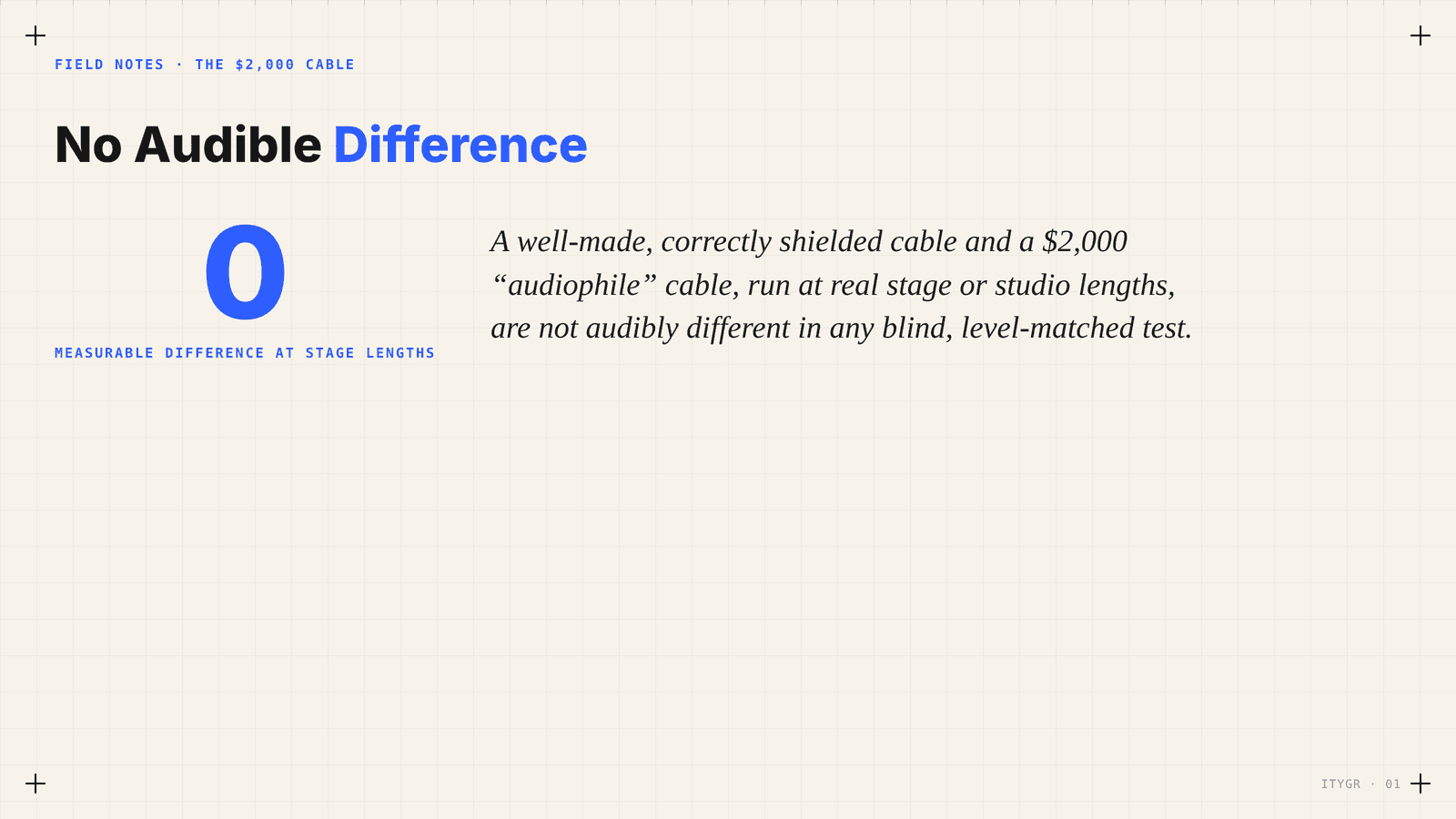
Expensive guitar cables get sold on a story, not on measurable sound. Let’s just get into it. A well-made, correctly shielded instrument cable and a $2,000 “audiophile” cable, run at the lengths and distances actually used on a stage or in a studio, are not audibly different in any way that survives an honest, level-matched, blind comparison. This has been tested. Repeatedly. By people with far more rigorous methodology than “I plugged it in and it felt warmer.”
Why Expensive Guitar Cables Don’t Sound Different
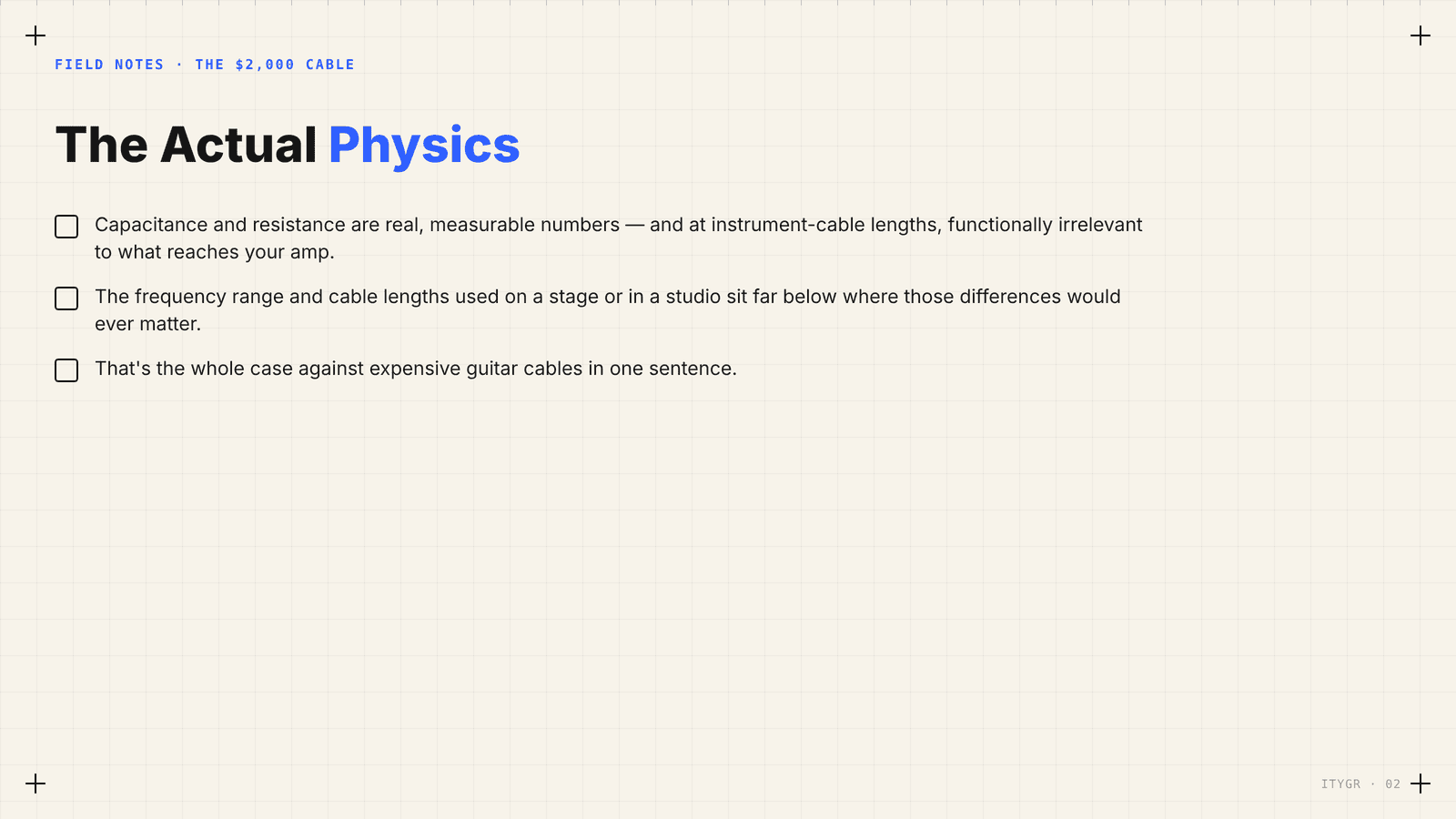
That’s the whole case against expensive guitar cables in one sentence.
Here’s the actual physics, in plain terms: at the frequency range and cable lengths relevant to a guitar or bass signal, the differences between a well-made $30 cable and an exotic $2,000 one are so far below the threshold of audible perception that they don’t matter in any practical sense. Capacitance, resistance, all of it — real numbers, measurable, and at instrument-cable lengths, functionally irrelevant to what reaches your amp.
Expensive guitar cables don’t change the electrical picture at all.
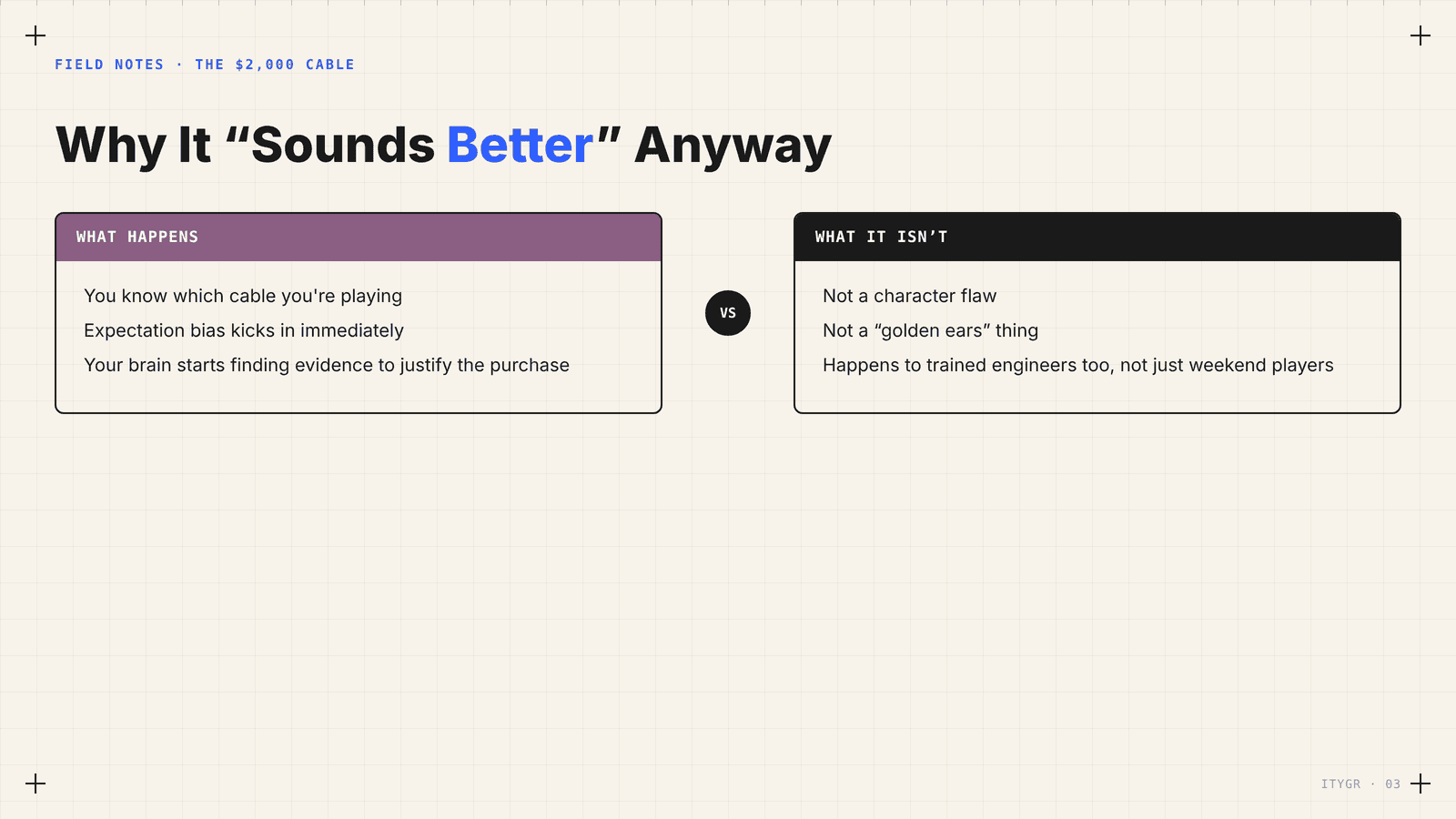
So why does the expensive cable “sound better” to the person who bought it? Because they know which one they’re playing. Expectation bias is one of the most well-documented effects in all of audio perception, and it is not a character flaw — it happens to trained engineers, not just weekend guitarists. The second you know you’re using the “premium” option, your brain starts finding evidence to justify the purchase. That’s not a knock on anyone’s ears. It’s just how perception works when belief gets involved before the signal does.
Where should the money actually go instead? A cable with genuinely good build quality — solid connectors, proper shielding, strain relief that won’t fail after six months of load-in and load-out — is worth paying for, because that buys you reliability, not tone. Buy a cable that won’t crackle out during a solo because a bad shield finally gave up. That’s a real, measurable benefit. Buying a cable because a marketing page used the word “purity” is paying for a story, not a signal improvement.


I’m not saying gear doesn’t matter. Gear absolutely matters. I’m saying this specific category of purchase is one of the most well-documented examples of paying real money for a story instead of a signal. Spend on the mic. Spend on the preamp. Spend on the cable that won’t die on you mid-set. Skip the one that’s selling you a feeling. Expensive guitar cables are the specific category I’m talking about here.
Keep reading