Why Your In-Ears Feel Louder at Rehearsal Than the Actual Show
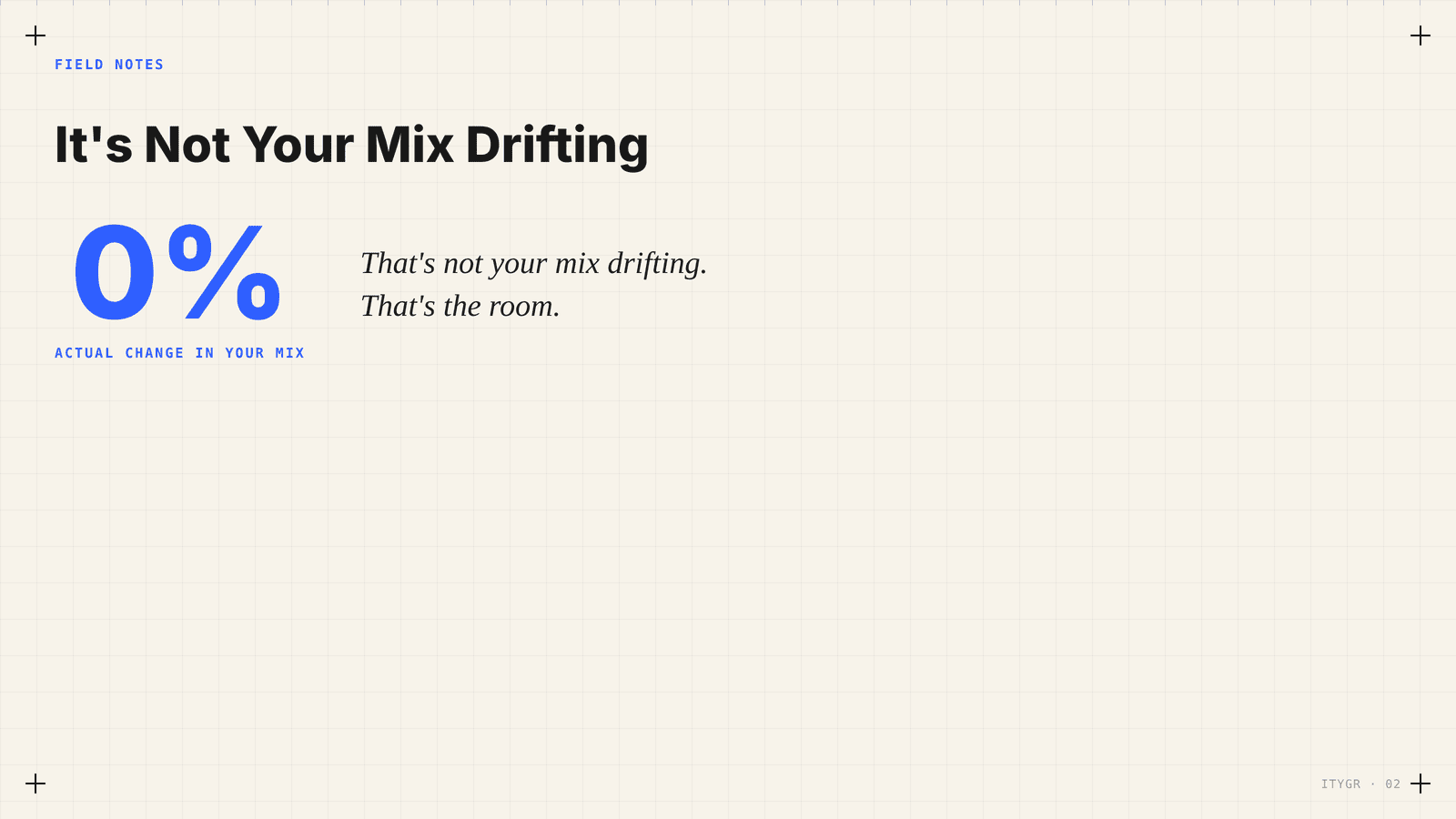
Set your in-ear mix at an empty-room rehearsal, and it can feel completely different once the room’s full for the actual show. That’s not your mix drifting. That’s the room.
What’s actually changing
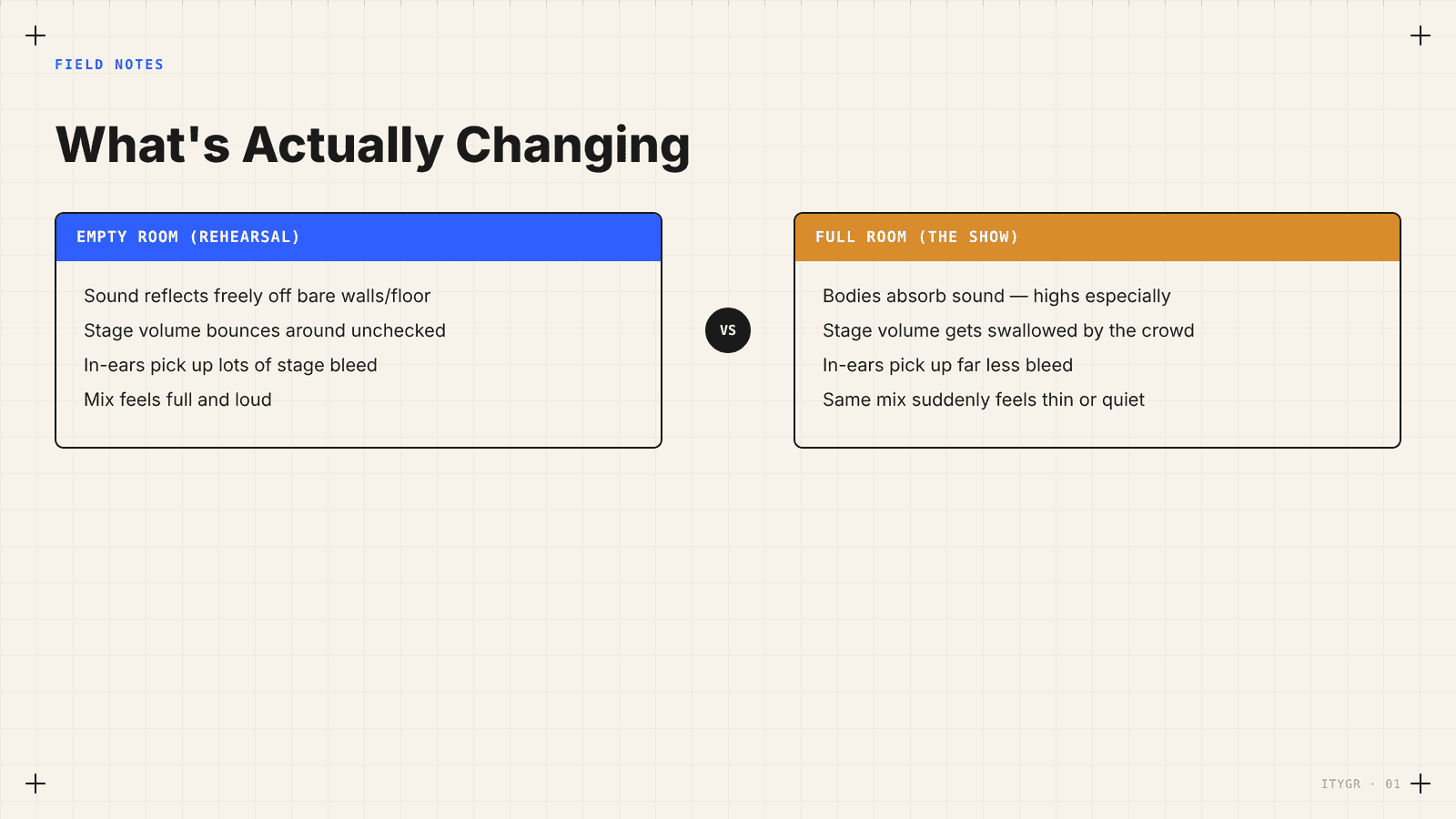
An empty room reflects sound. A full room absorbs it — bodies soak up high frequencies especially, and stage volume that bounced around freely at rehearsal gets swallowed once people show up. Your in-ears aren’t picking up as much stage bleed once the room fills, which can make your carefully balanced rehearsal mix suddenly feel thin or quiet once the venue’s actually full.
Why this trips people up
It feels like your ears are being unreliable, so people start second-guessing a mix that was actually fine — and end up overcorrecting instead of understanding what actually shifted.


What to actually do about it
Don’t treat your rehearsal in-ear mix as final. Build in a small adjustment pass once the room’s full and you’re getting a real read on how much stage bleed actually reaches you — usually a modest bump, not a full rebuild. And if you can, do at least a quick level check as the room’s filling, not only in a fully empty space.

Your ears aren’t broken. The room you’re mixing in changed shape the second people walked in, and your mix should account for that.

Take the guesswork out with a cheap meter
If you want an objective read instead of just trusting your gut, a basic SPL meter app on your phone is enough to compare stage volume readings from the same spot, empty room versus full room. You don’t need calibrated pro gear for this — you just need a consistent before-and-after number so you’re adjusting based on something measured, not just a feeling that might be influenced by nerves or excitement.