“AI Mixing” Plugins: What They’re Actually Good For
AI mixing plugins are everywhere right now, and most of the hype misses what they’re actually for. Every AI-assisted mixing plugin gets marketed the same way: drop in your tracks, get a “mastered, radio-ready mix” in seconds, no engineer required. I’ve used a handful of these on real sessions, and here’s the actually useful, unhyped version of what they do.
What AI Mixing Plugins Are Genuinely Good At
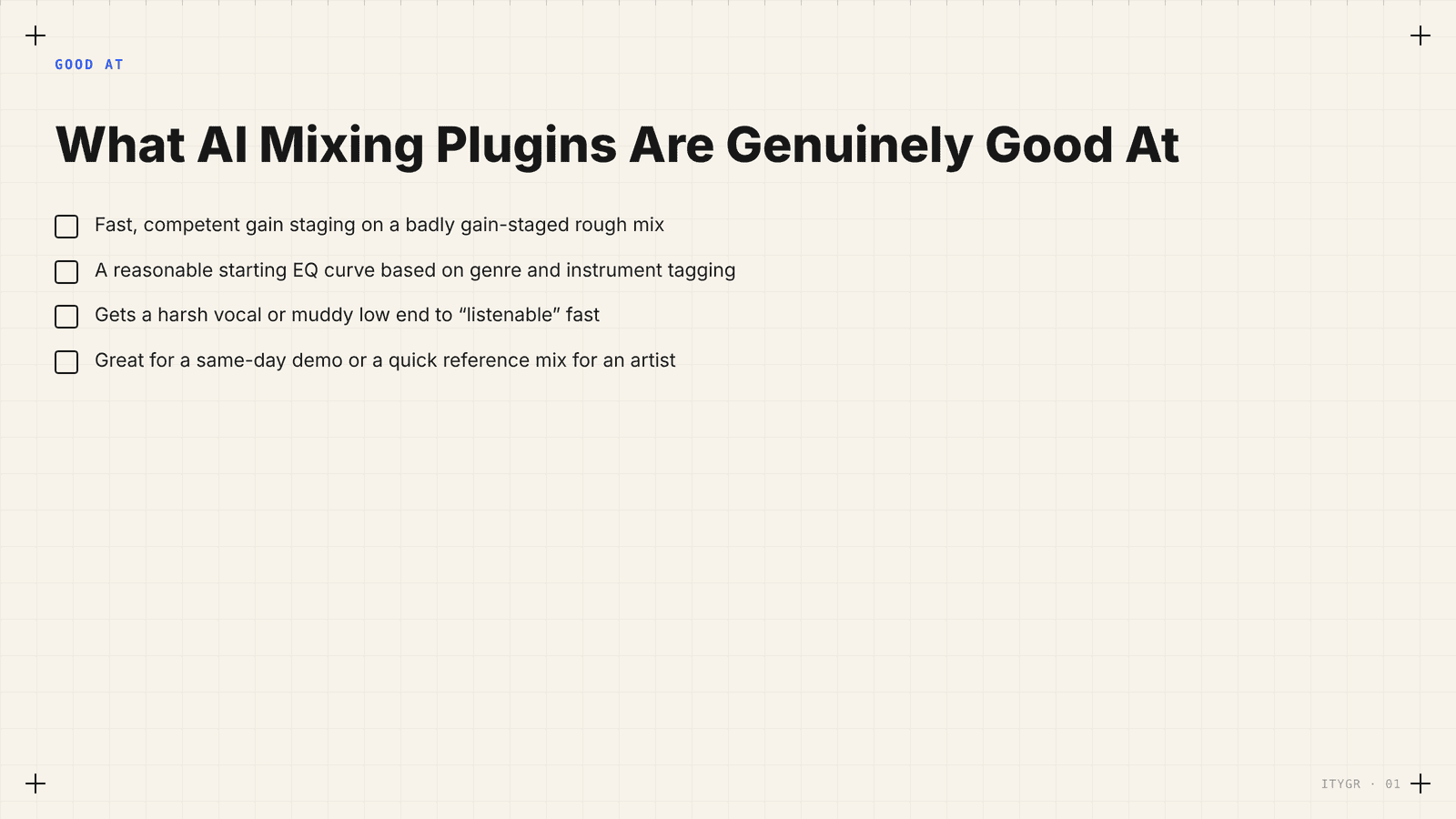
Fast, competent gain staging and a reasonable starting EQ curve based on genre and instrument tagging. If you hand one a rough mix that’s badly gain-staged and has an obviously harsh vocal or a muddy low end, it will get you to a “listenable” starting point faster than doing it manually from scratch. For a demo that needs to go out today, or a writer who needs a quick reference to send an artist, that’s a legitimately useful function. It’s not nothing. That’s where AI mixing plugins genuinely earn their keep.
What they’re not good at
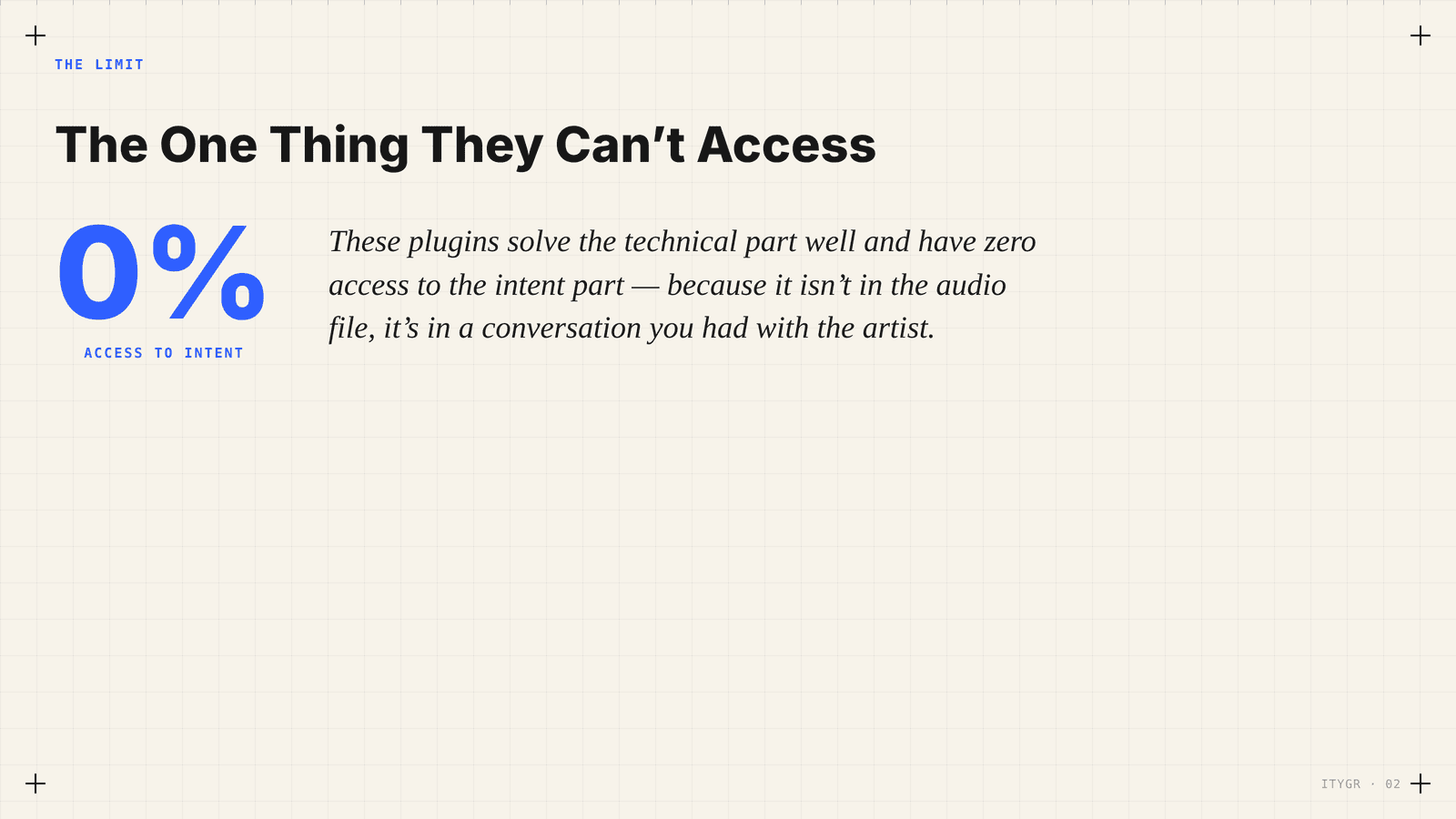
And this is the part the marketing skips: any decision that requires actually knowing what the song is trying to say. An AI tool doesn’t know that the bridge is supposed to feel like it’s opening up, so the vocal should breathe more there. It doesn’t know that the guitarist intentionally played that phrase a little behind the beat for feel, and “correcting” the timing is actually making the track worse, not better. It doesn’t know the difference between a rough edge that’s a mistake and a rough edge that’s the entire point of the take. AI mixing plugins can’t make that call for you.
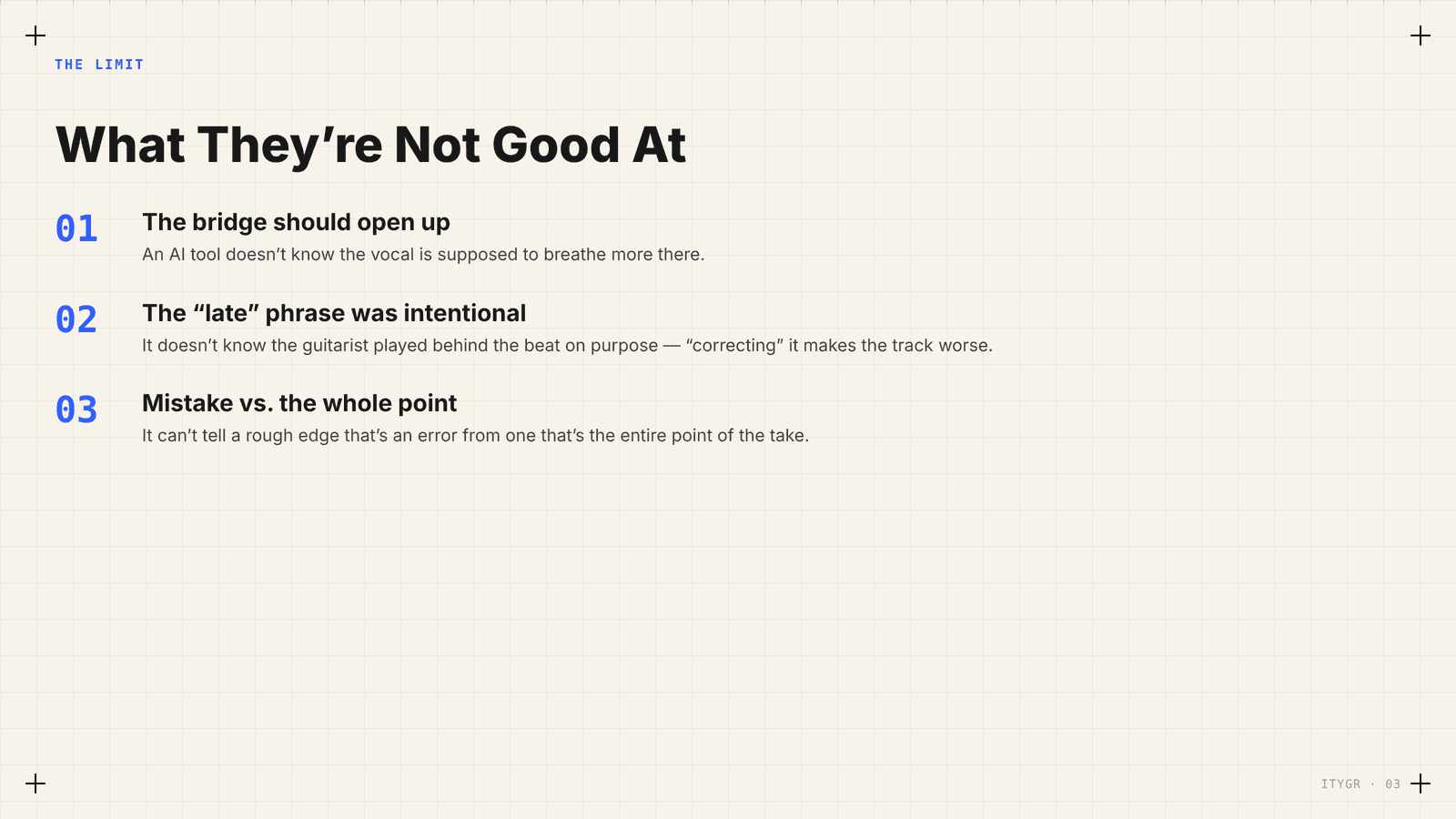
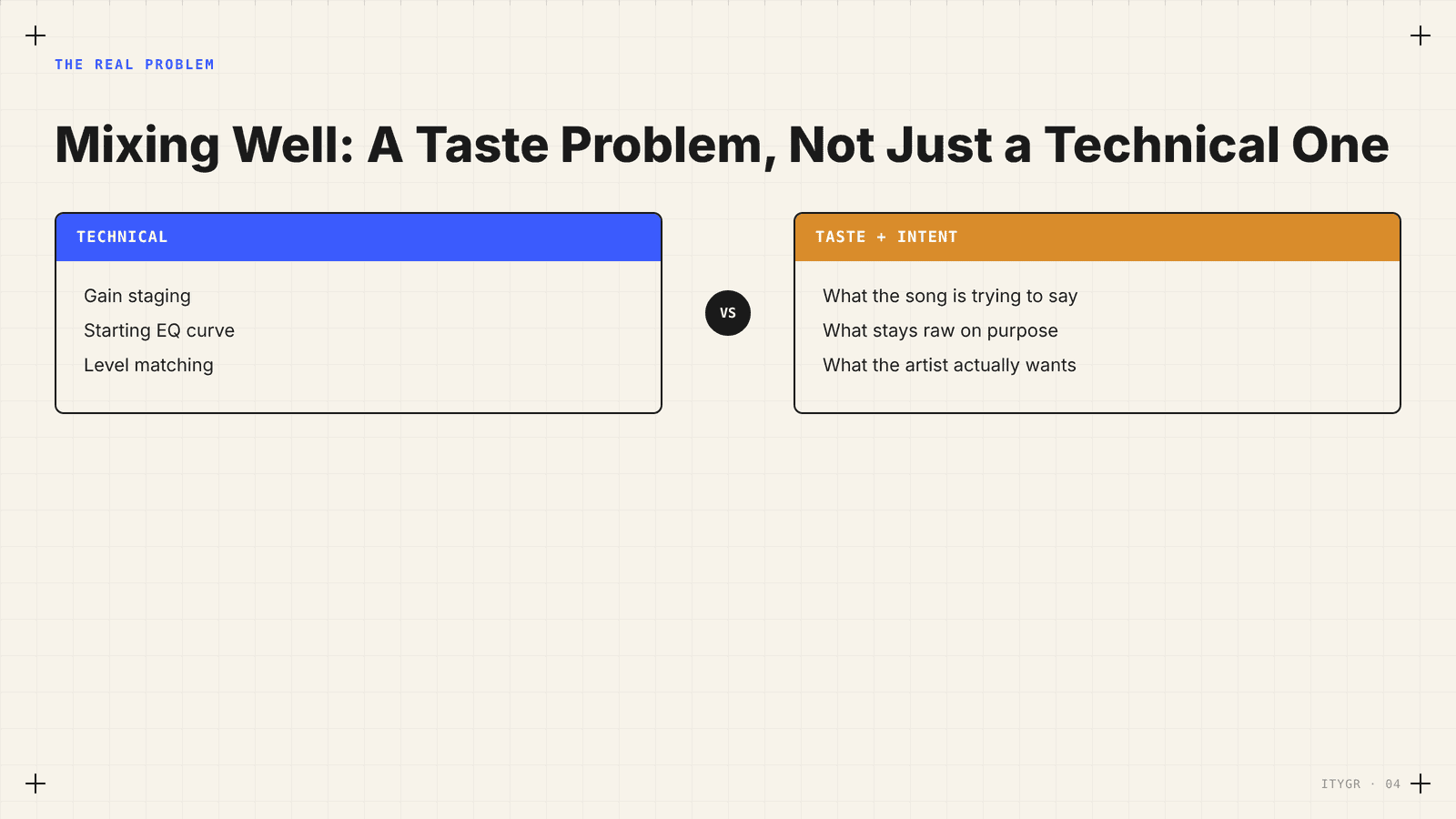
Mixing well is not actually a technical problem being solved. It’s a taste and intent problem being executed with technical tools. These plugins solve the technical part reasonably well and have zero access to the intent part at all, because it isn’t in the audio file – it’s in a conversation you had with the artist that never made it into the session.
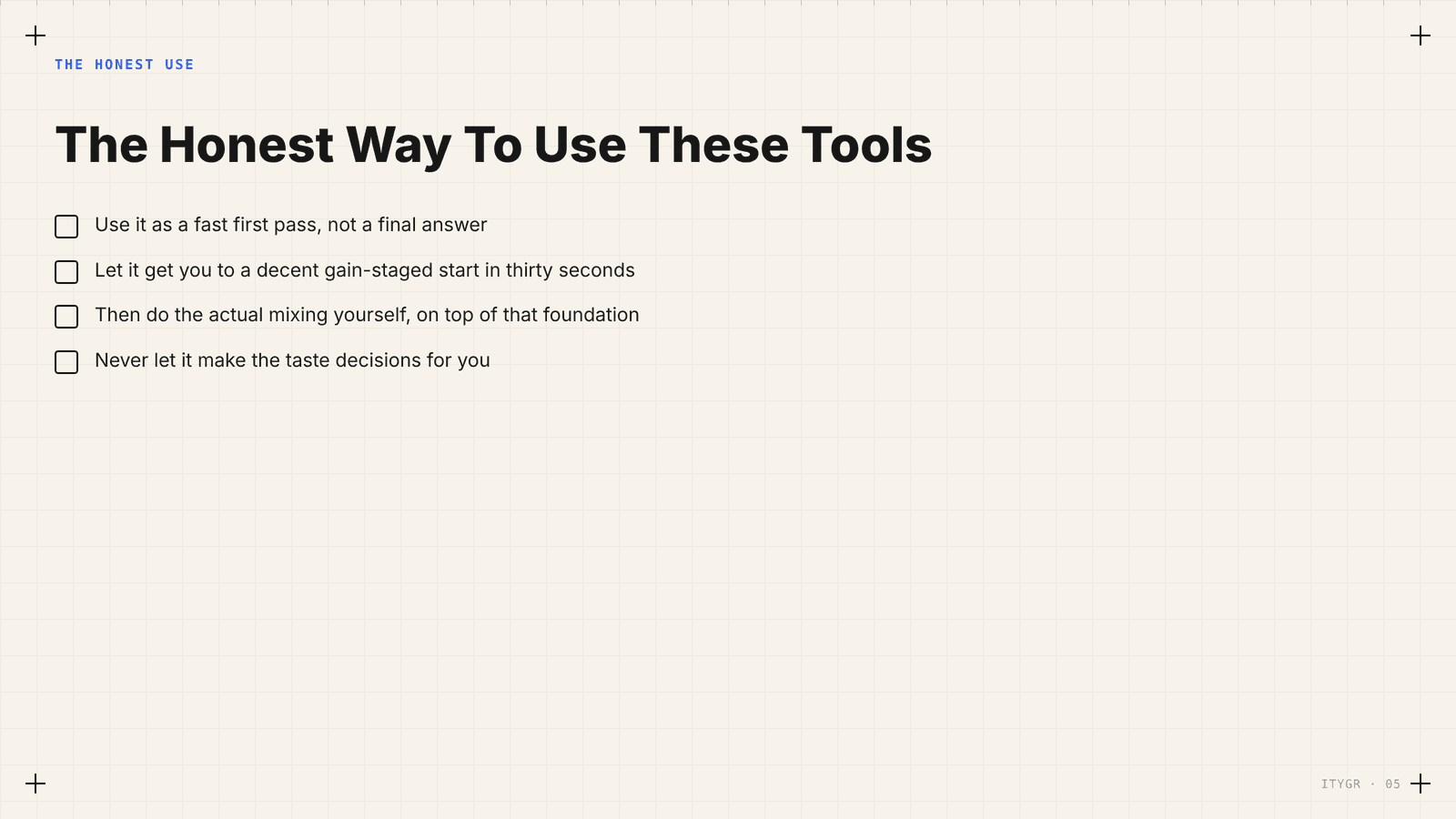
The honest way to use these tools: as a fast first pass, not a final answer. Let it get you from zero to a decent gain-staged starting point in thirty seconds. Then do the actual mixing – the part that requires knowing what the song is trying to do – yourself, on top of that foundation.

Used that way, it’s a genuinely useful piece of your workflow. Used as a replacement for actually mixing, you’ll get a technically competent mix of a song that doesn’t sound like anything, because nothing in the chain ever knew what the song was for. That’s the honest verdict on AI mixing plugins.
Keep reading