Stop Maxing the Master Bus — Headroom Is a Feature
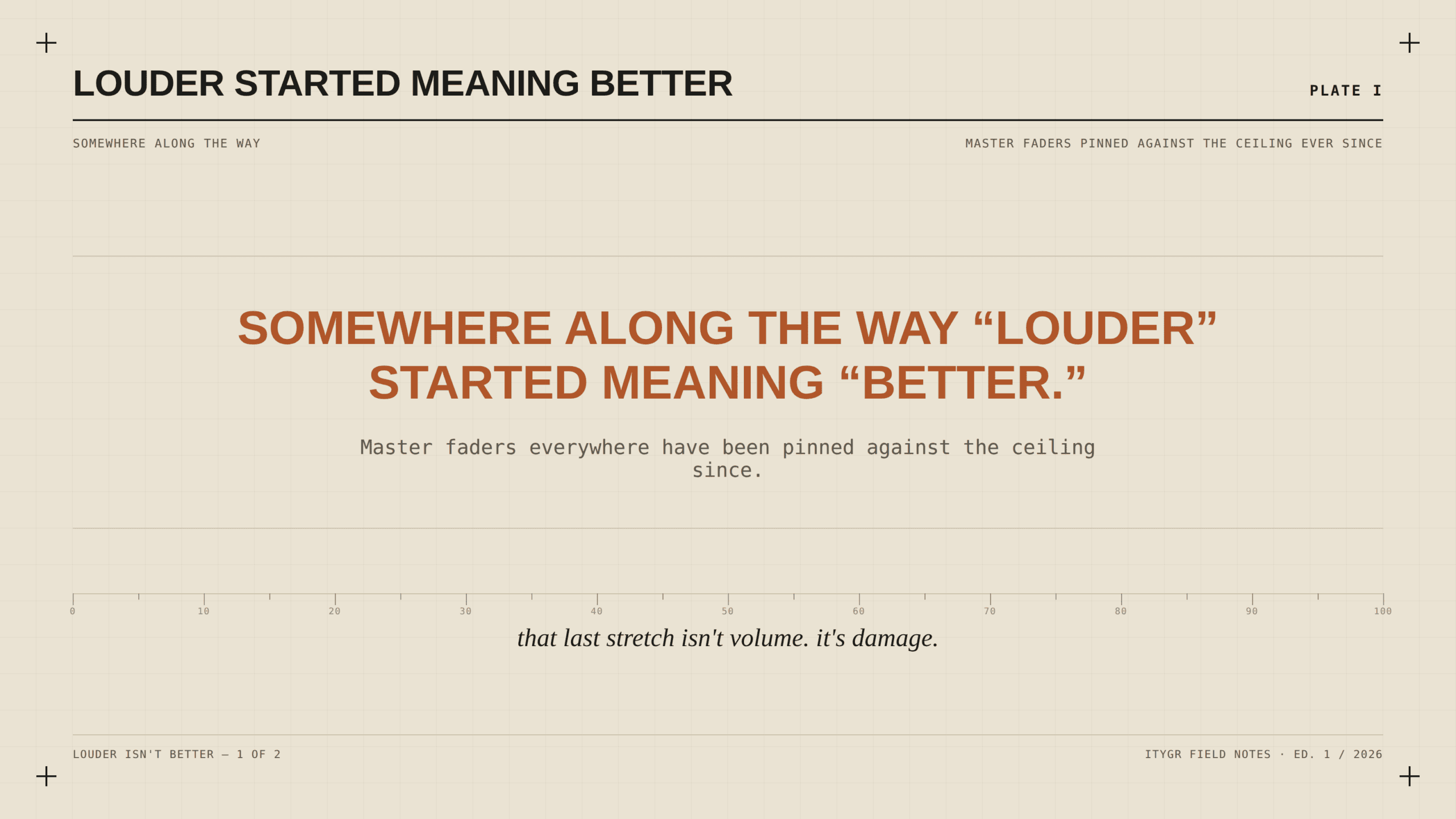
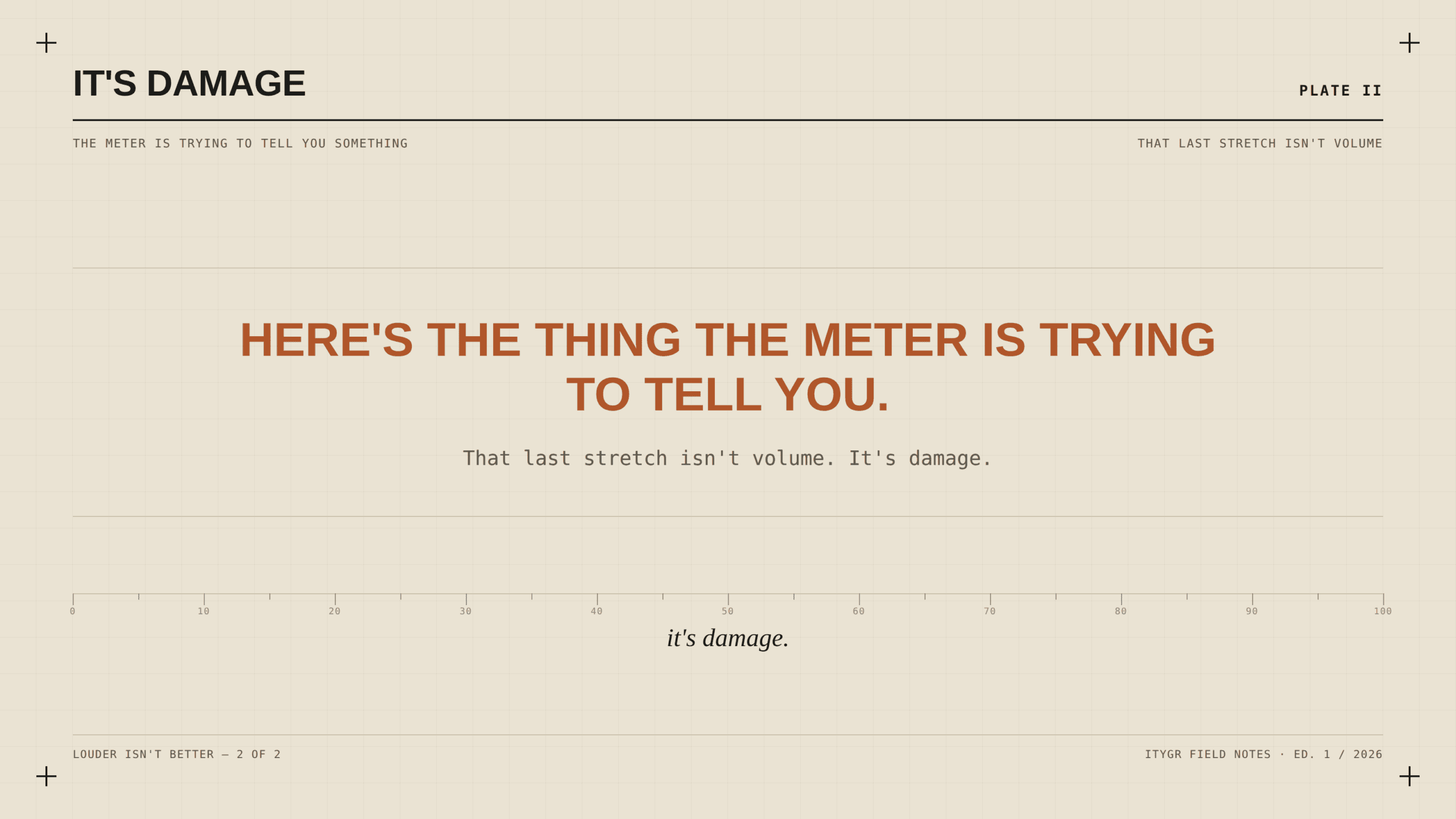
Stop maxing master bus levels before you even start mixing. Somewhere along the way “louder” started meaning “better,” and master faders everywhere have been pinned against the ceiling since. Here’s the thing the meter is trying to tell you: that last stretch isn’t volume. It’s damage.
Stop Maxing Master Bus Levels: What Headroom Actually Is
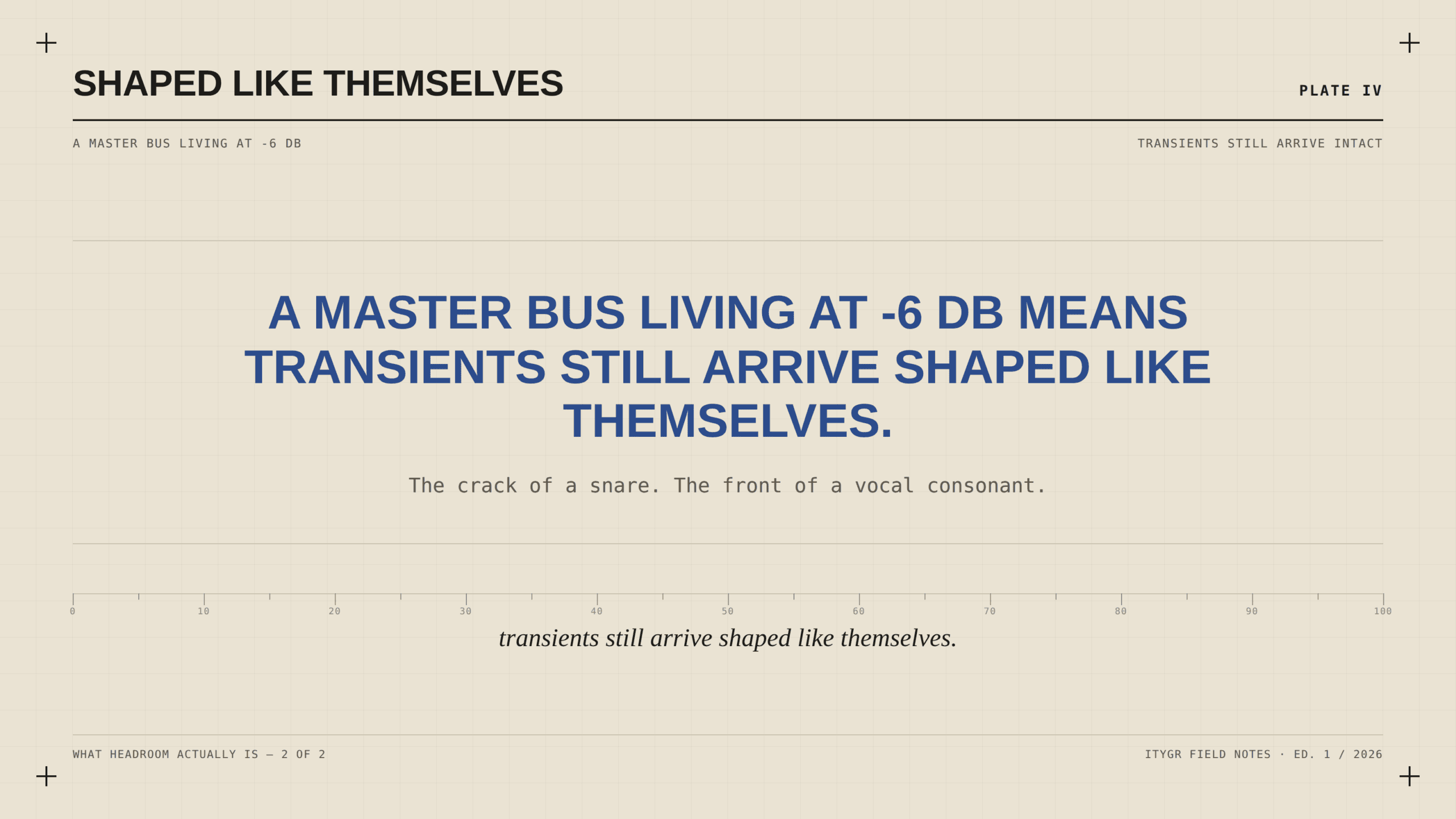
The space between your average level and the point where the system starts lying. Digital clipping isn’t warm. PA limiters saving you all night isn’t dynamics. A master bus living at -6 dB means transients — the crack of a snare, the front of a vocal consonant — still arrive shaped like themselves.

The Live Version
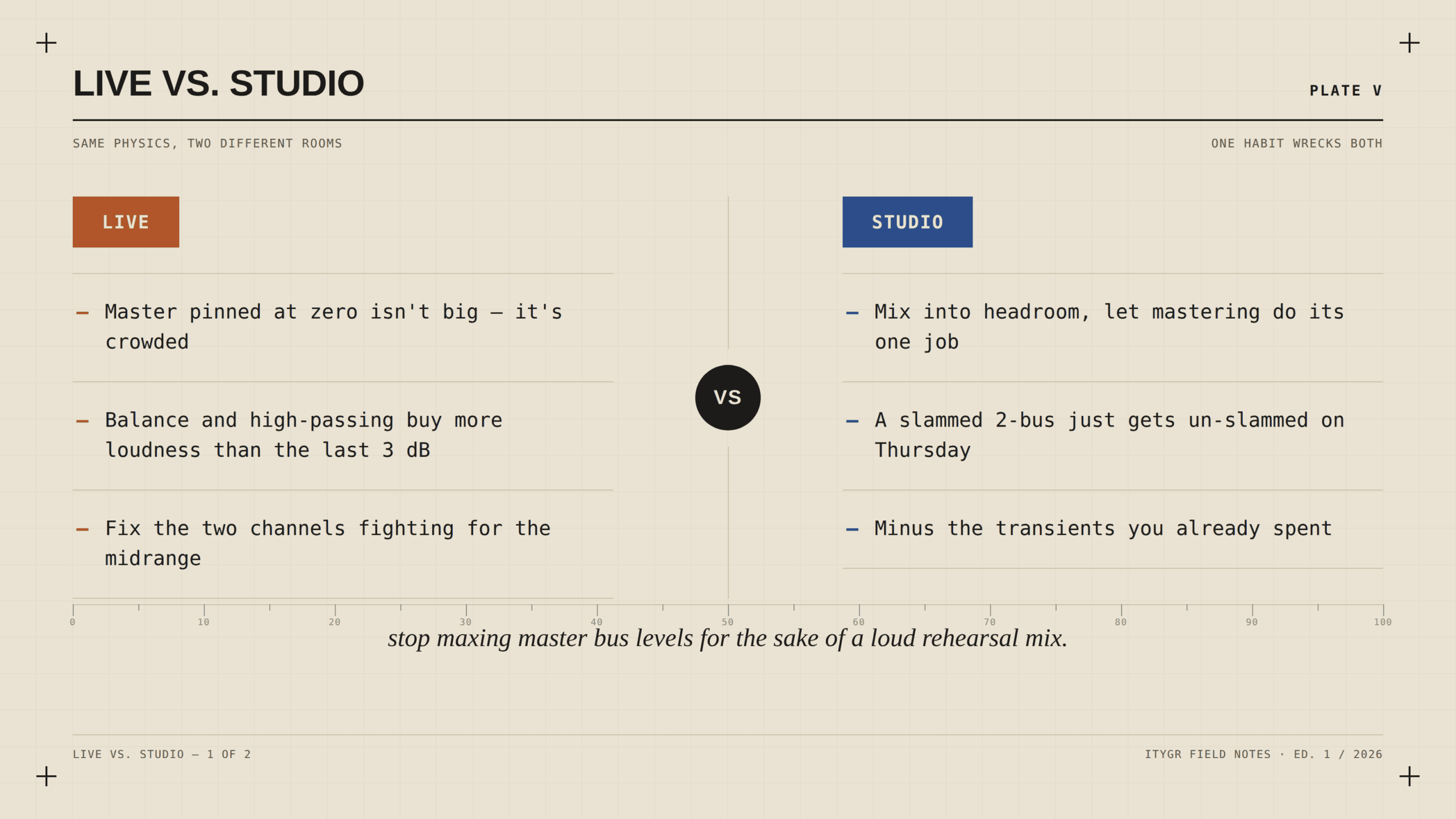
If the only way the mix feels big is the master at zero, the mix isn’t big — it’s crowded. Balance, high-passing, and taming the two channels fighting for the midrange will buy more perceived loudness than the last 3 dB of fader ever will. Stop maxing master bus levels for the sake of a loud rehearsal mix.
The Studio Version
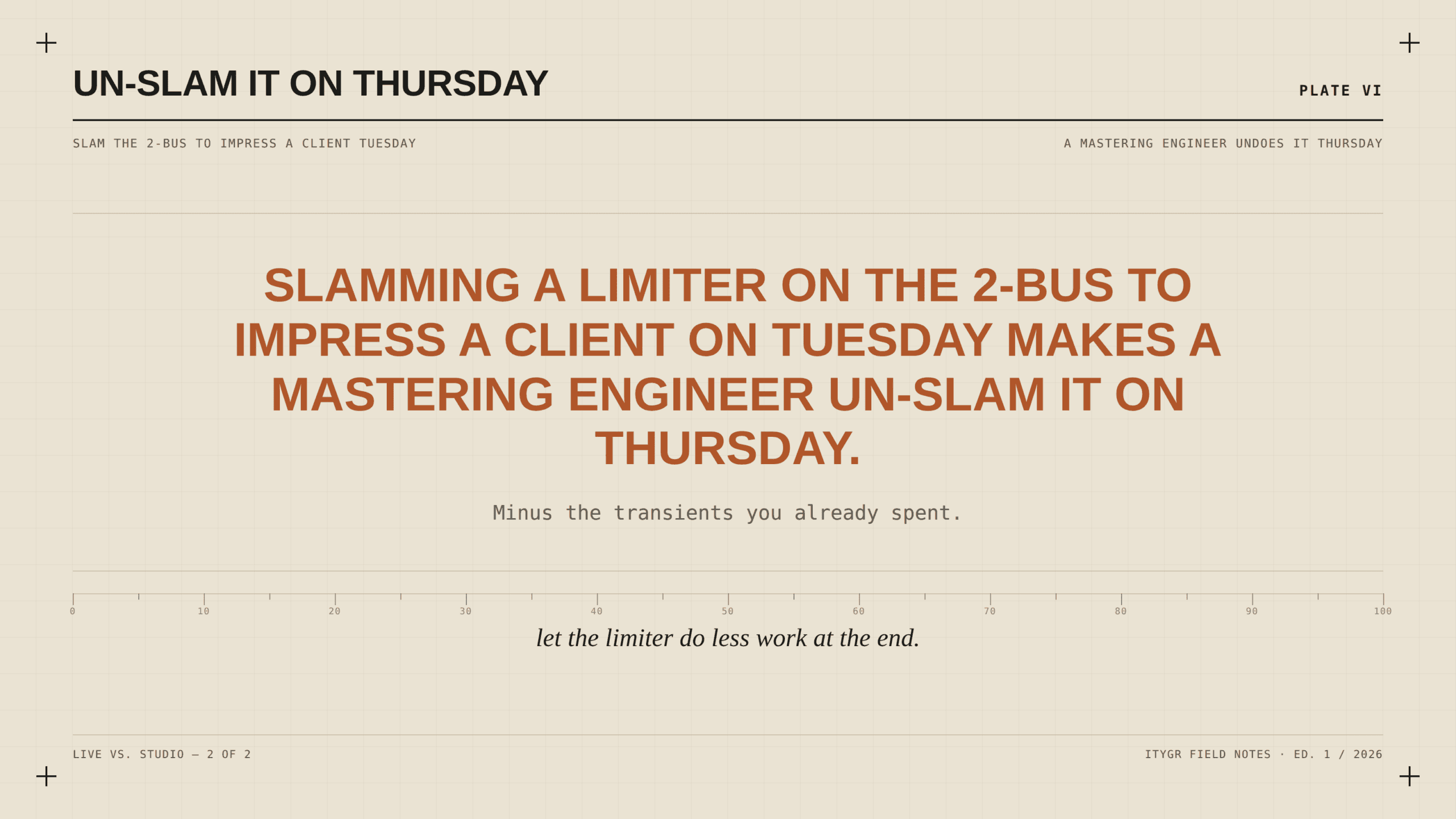
Mix into headroom and let mastering do its one job. Slamming a limiter on the 2-bus to impress a client on Tuesday makes a mastering engineer un-slam it on Thursday, minus the transients you already spent. Stop maxing master bus levels and let the limiter do less work at the end.
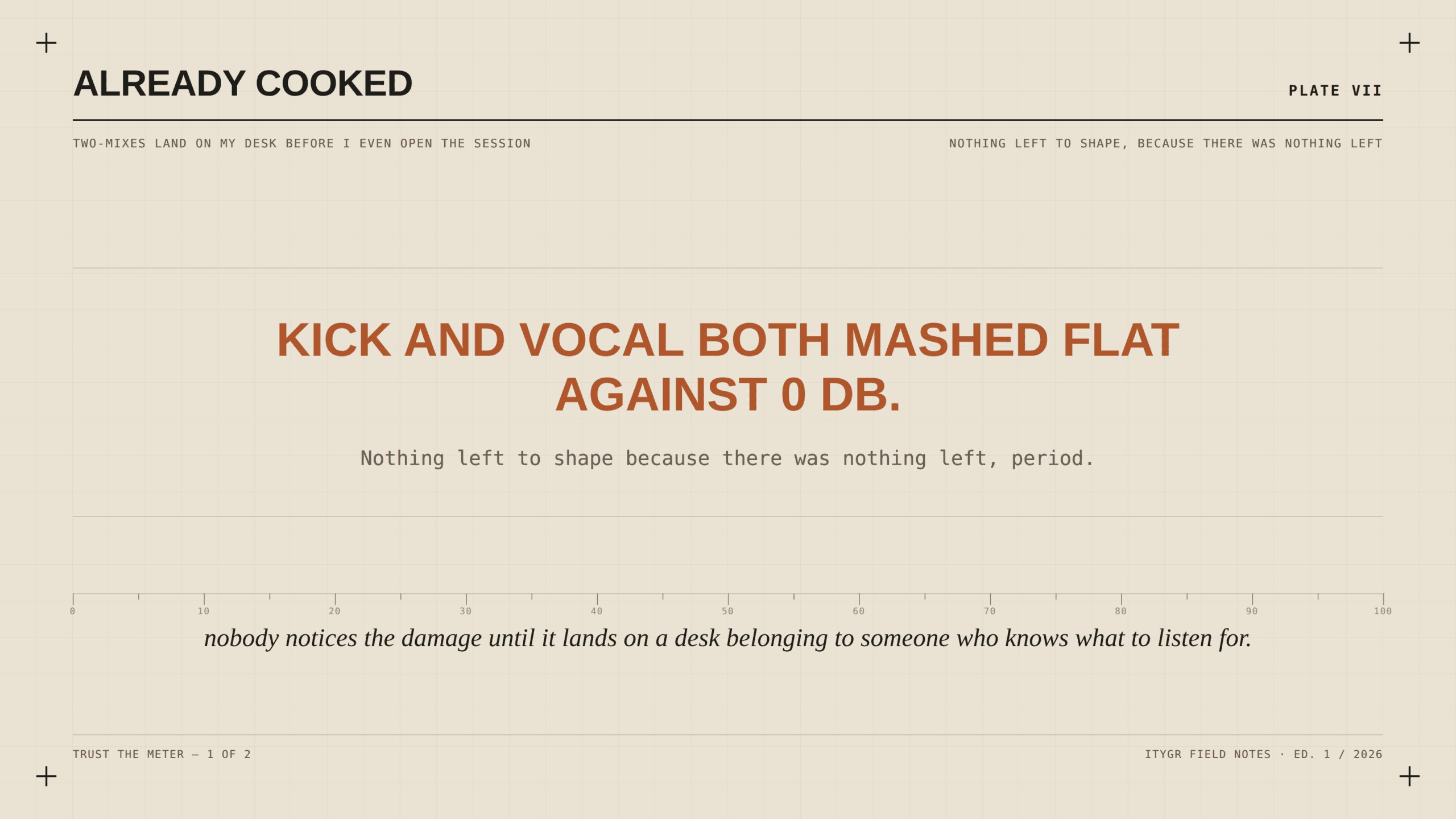
I’ve had two-mixes land on my desk already cooked before I even opened the session — kick and vocal both mashed flat against 0 dB, nothing left to shape because there was nothing left, period. Same story as a cheap DI box quietly eating your bass tone — nobody notices the damage until it lands on a desk belonging to someone who knows what to listen for.
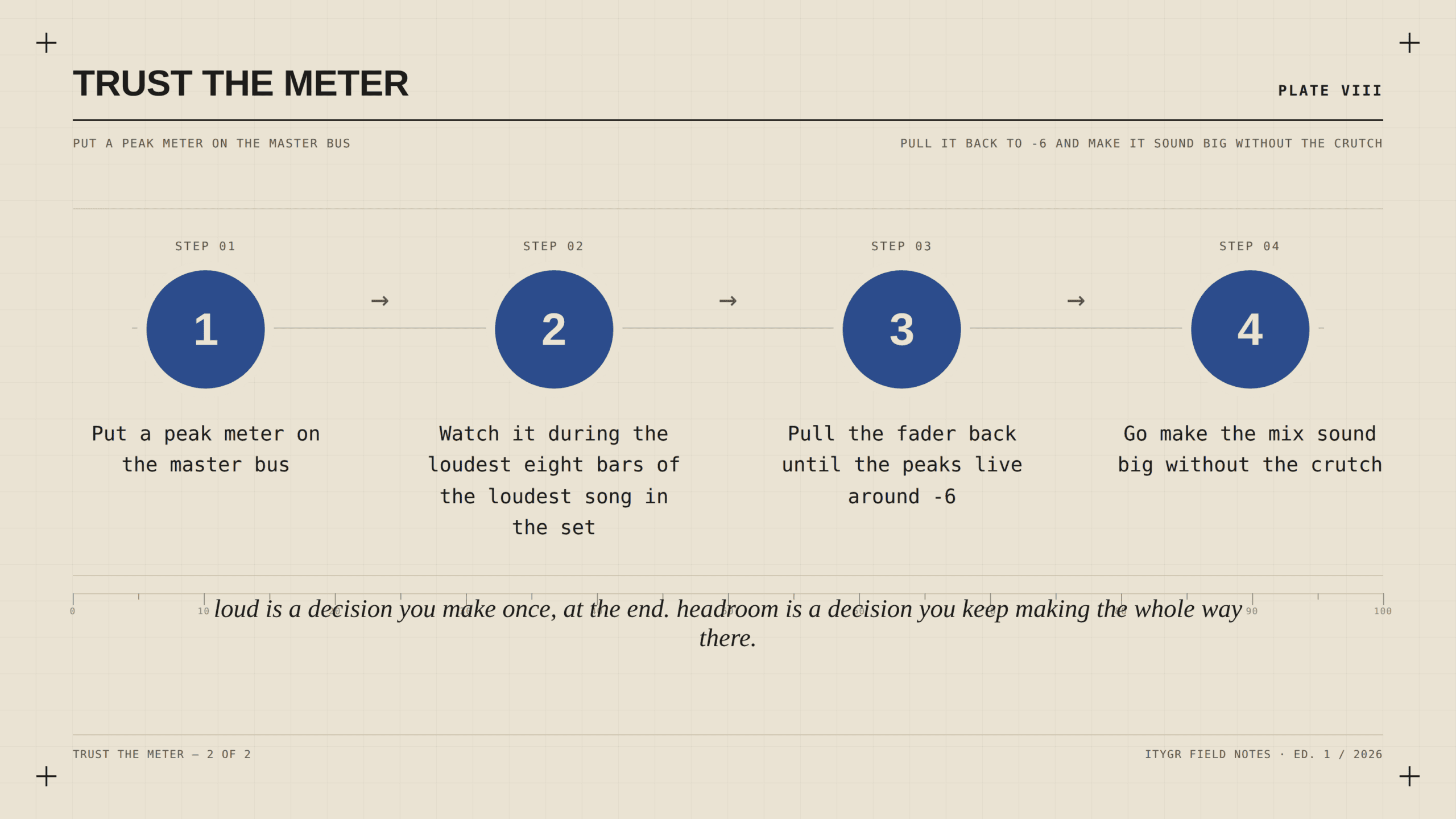
If you don’t trust your ears on this yet, trust the meter. Put a peak meter on the master bus and watch it during the loudest eight bars of the loudest song in the set. If it’s kissing 0 dB, you’re not mixing anymore — you’re just riding the ceiling and calling it a mix. Pull the fader back until the peaks live around -6, then go make the mix sound big without the crutch. It’s a different skill than turning things up, and it’s the one that actually matters. Stop maxing master bus levels — the meter will tell you when you have gone too far.
Loud is a decision you make once, at the end. Headroom is a decision you keep making the whole way there.