Phantom Power Etiquette: What +48V Actually Breaks (and Doesn’t)
+48V has a reputation, and like most reputations it’s 20% deserved. Phantom power is how condensers eat; it’s also the button volunteers treat like a missile launch. Let’s sort the physics from the folklore.
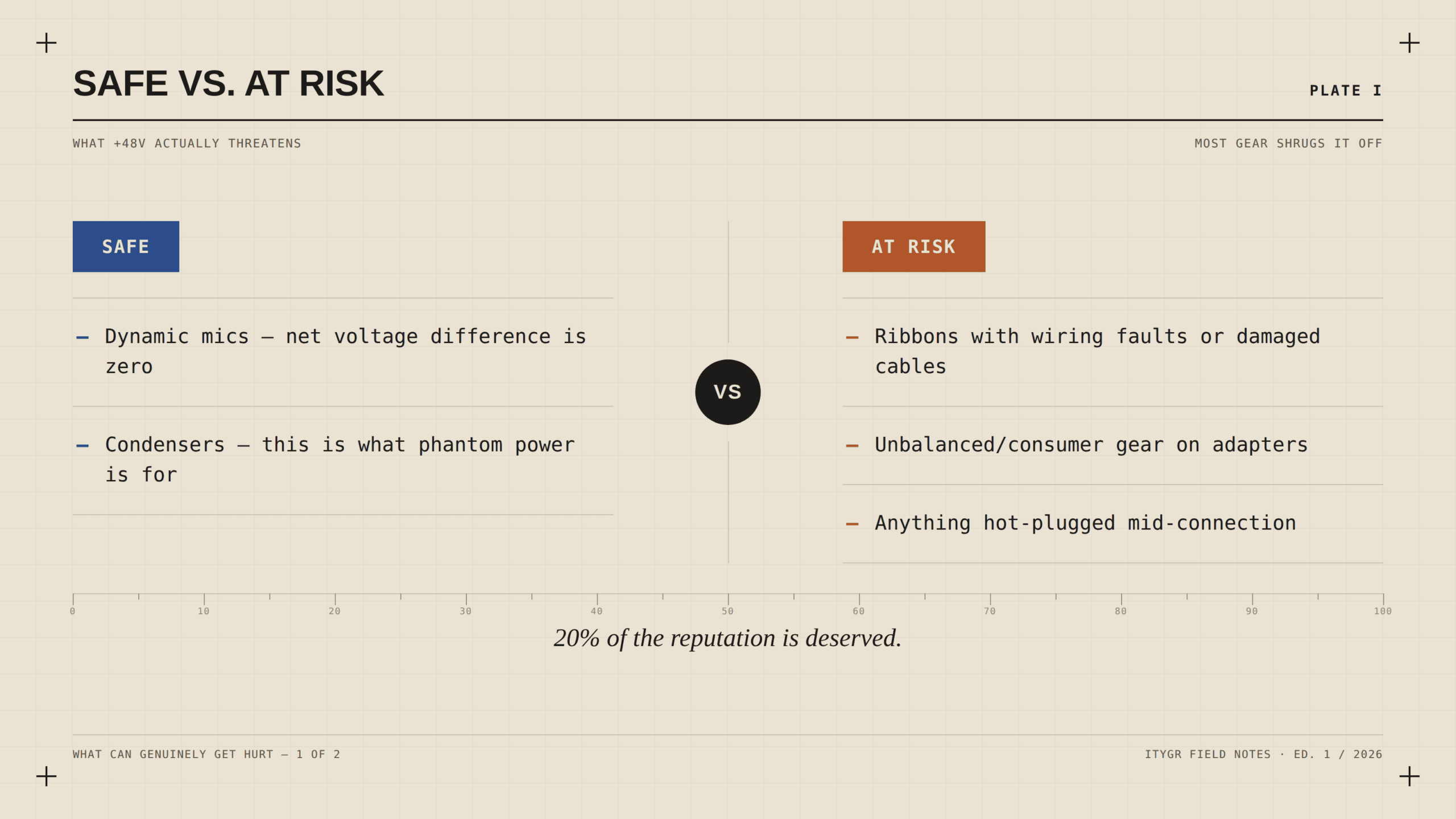
What it actually is: 48 volts DC applied equally to both signal pins of a balanced XLR. A balanced dynamic mic sees the same voltage on both pins — net difference of zero — which is why your SM57 shrugs it off. Condensers use it to polarize capsules and run electronics. This is settled, boring engineering.
What Can Genuinely Get Hurt
Ribbon mics with certain wiring faults or miswired/damaged cables (the classic ribbon-killer scenario), some unbalanced gear and consumer devices on adapters, and anything hot-plugged — that pop of a connection made mid-charge is a transient your drivers didn’t order. Modern ribbons are mostly protected, but “mostly” is doing work in that sentence when the mic costs a month’s rent.

The Etiquette, Two Seconds Each
Mute or pull the fader before toggling. Connect first, phantom after; phantom off, disconnect after. Know which channels feed ribbons or DIs that object. And label the weird stuff, because the next volunteer can’t honor rules nobody wrote down.


The One Habit Worth Building
Make muting before you touch phantom power as automatic as muting before you touch gain. Same category of habit, same payoff: fewer pops, fewer scares, fewer volunteers white-knuckling a button that doesn’t deserve the reputation. If gain structure is still a mystery on your team, start there — phantom power etiquette is downstream of the same discipline.

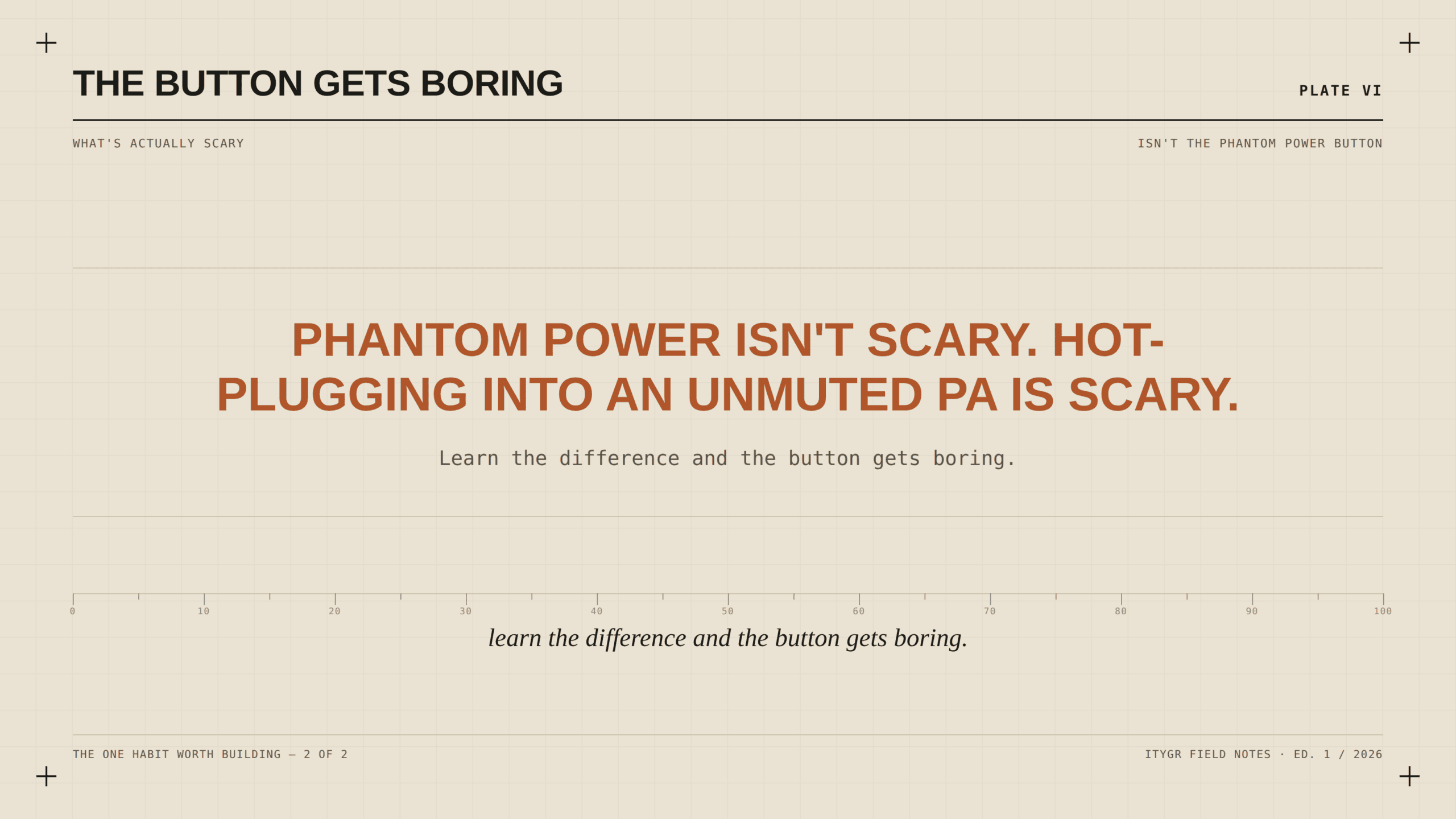
Phantom power isn’t scary. Hot-plugging into an unmuted PA is scary. Learn the difference and the button gets boring.