The Myth of the “Set It and Forget It” EQ Curve
Somebody finds an EQ curve that sounds great, saves the preset, and expects it to keep sounding great forever. Then one week it just doesn’t, and the instinct is to blame the EQ. Personally, I blame all the people selling automatic templates…
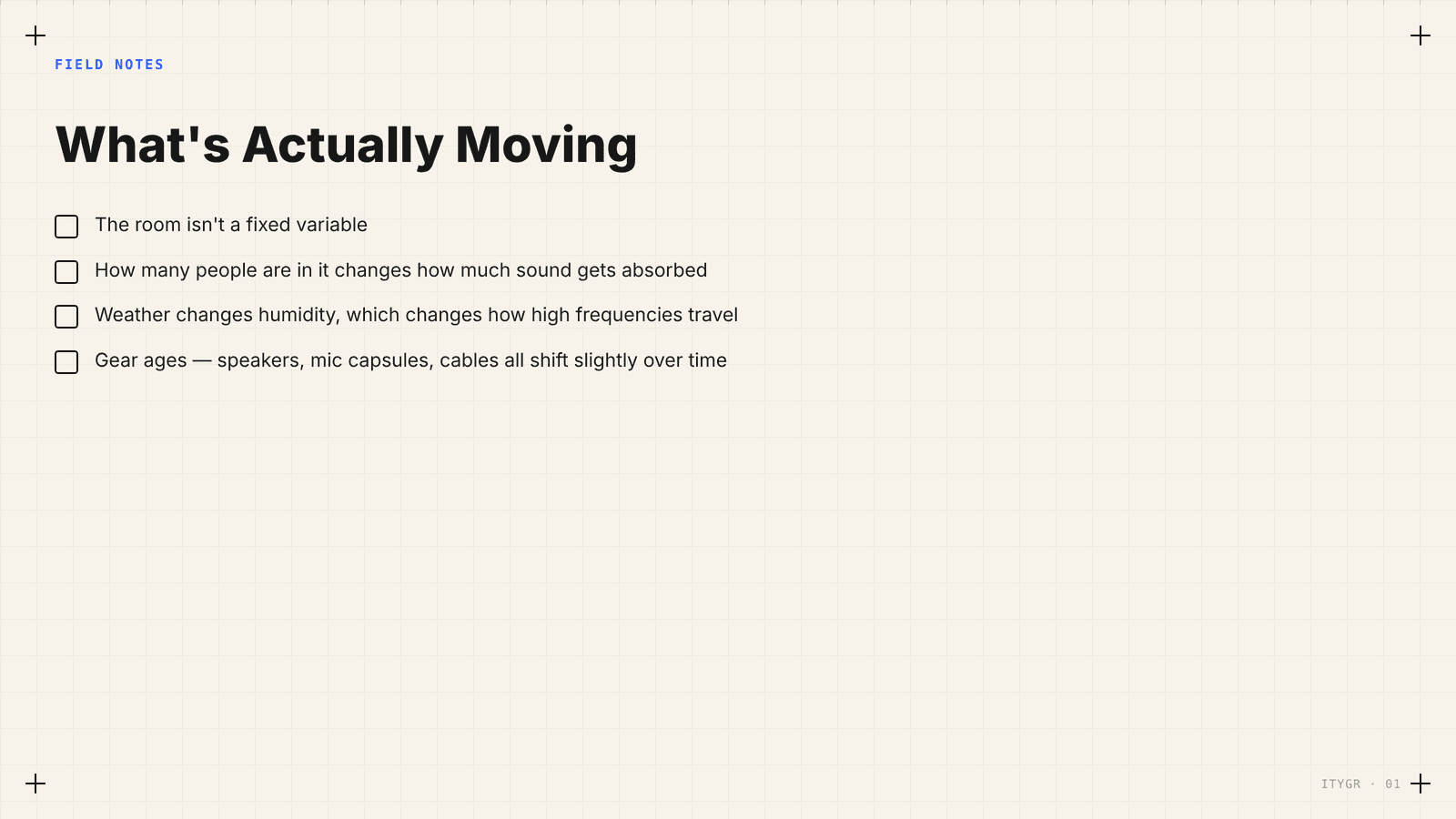
What’s actually moving
The room isn’t a fixed variable. How many people are in it changes how much sound gets absorbed. Weather changes humidity, which changes how high frequencies travel. Gear ages — speakers, mic capsules, cables all shift slightly over time. None of that is your EQ curve’s fault; it’s the room and the signal chain changing underneath a setting you assumed was permanent.

Why “set it and forget it” fails
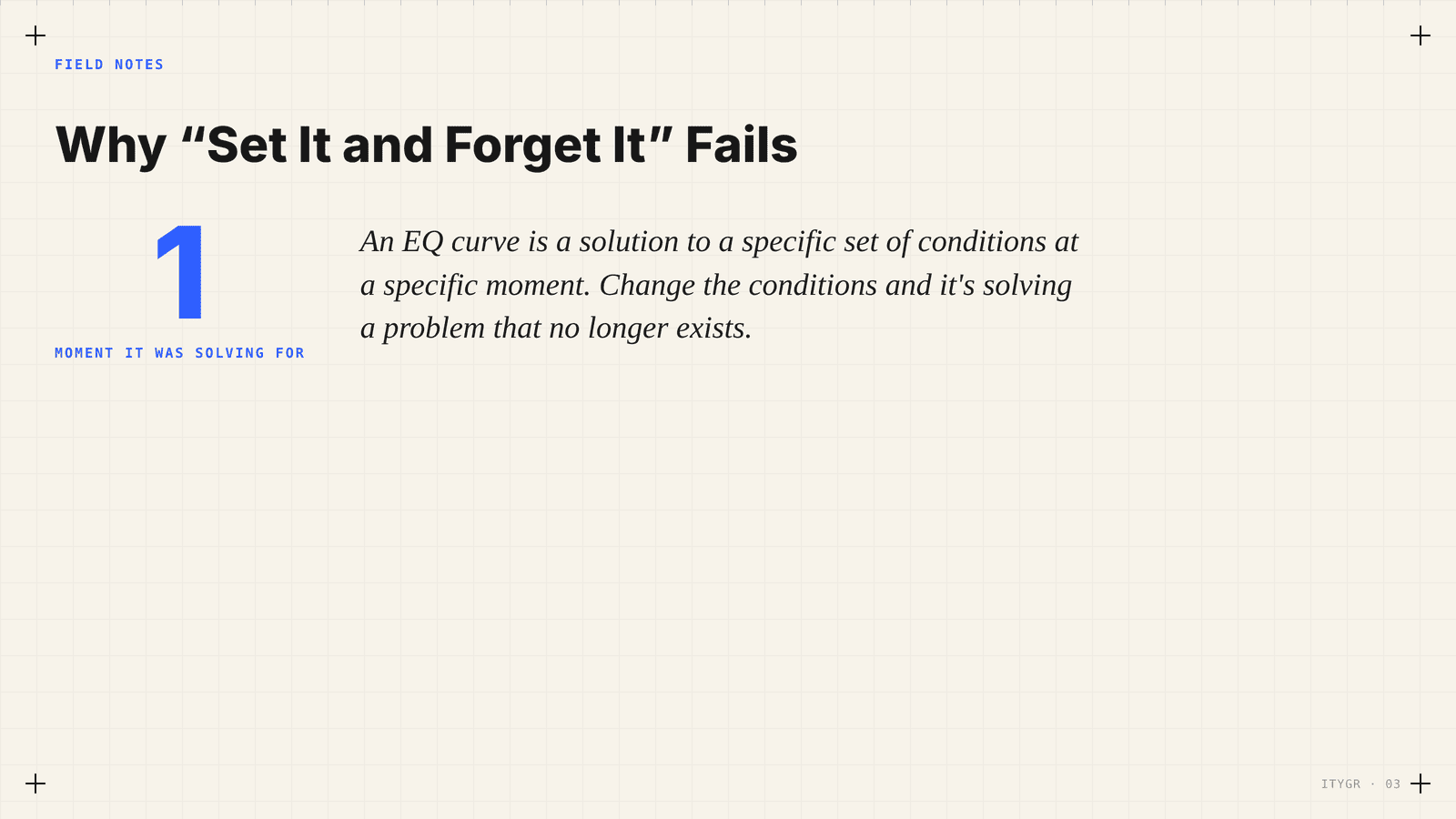
An EQ curve is a solution to a specific set of conditions at a specific moment. Change the conditions and the same curve is now solving a problem that no longer matches what’s actually happening in the room.
What to do instead
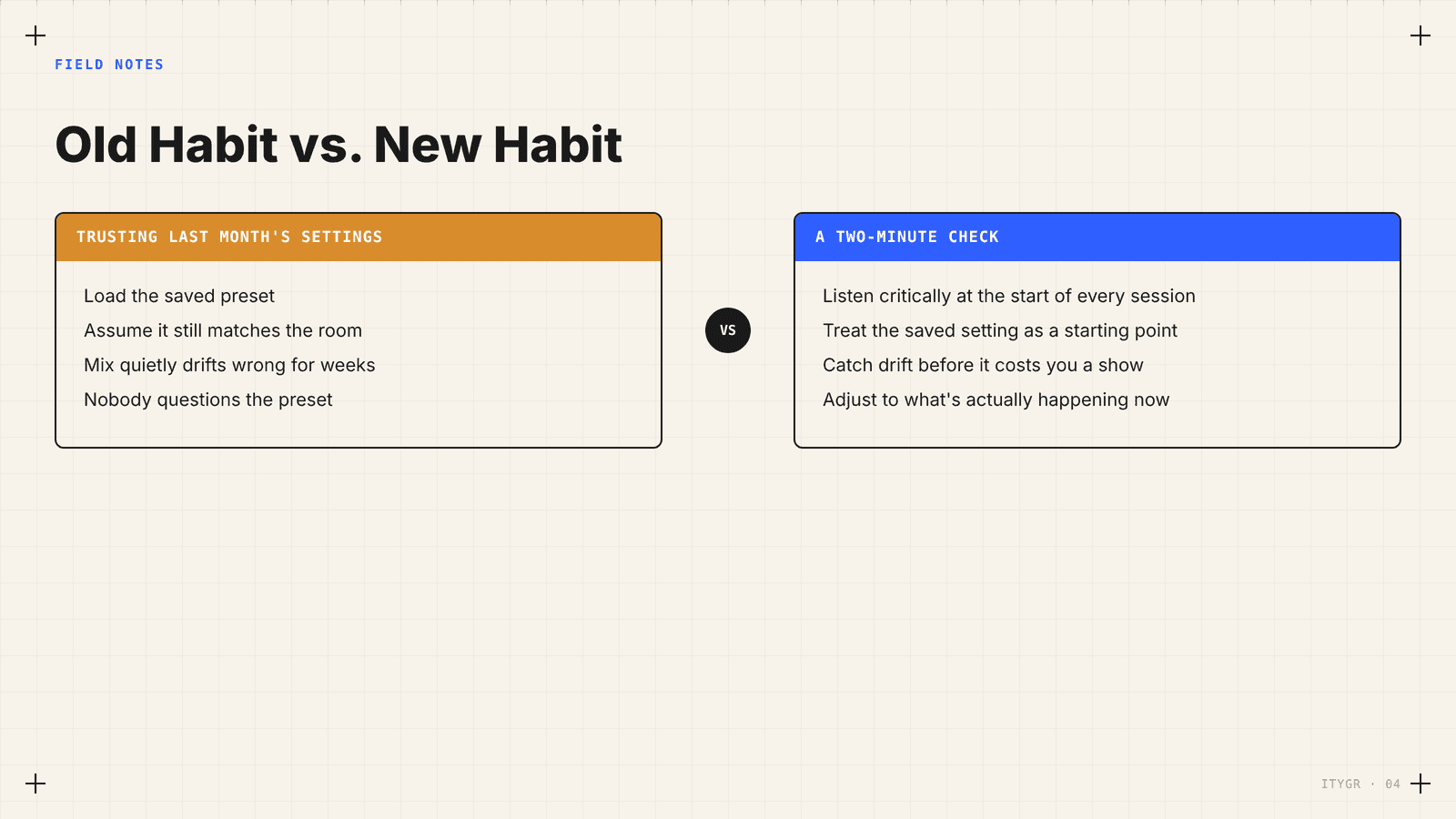
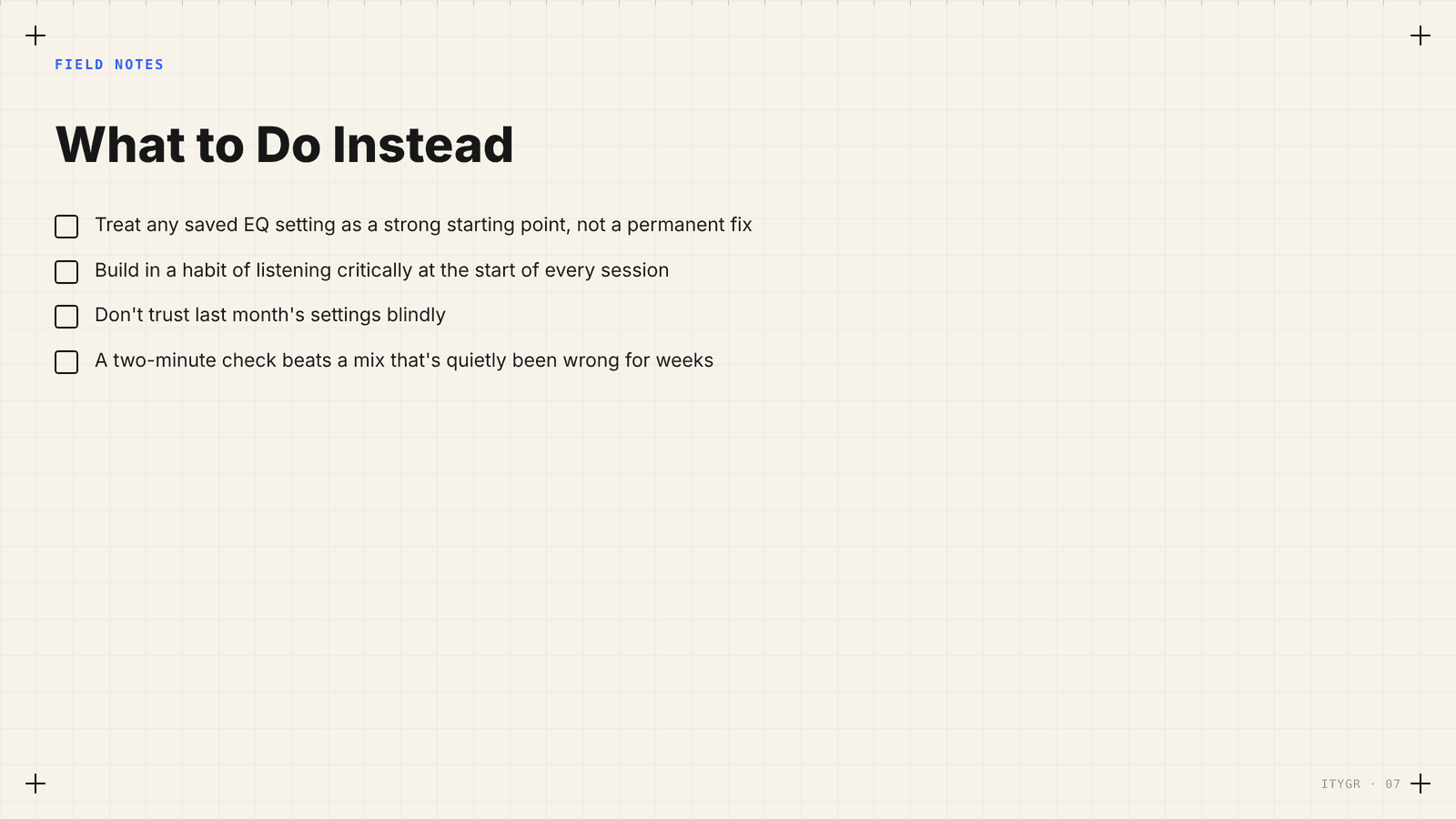
Treat any saved EQ setting as a strong starting point, not a permanent fix. Build in a habit of listening critically at the start of every session instead of trusting last month’s settings blindly — a two-minute check beats a mix that’s quietly been wrong for weeks because nobody questioned the preset.
The room keeps changing. Your ears, checking in regularly, are the only thing that actually keeps up with it.
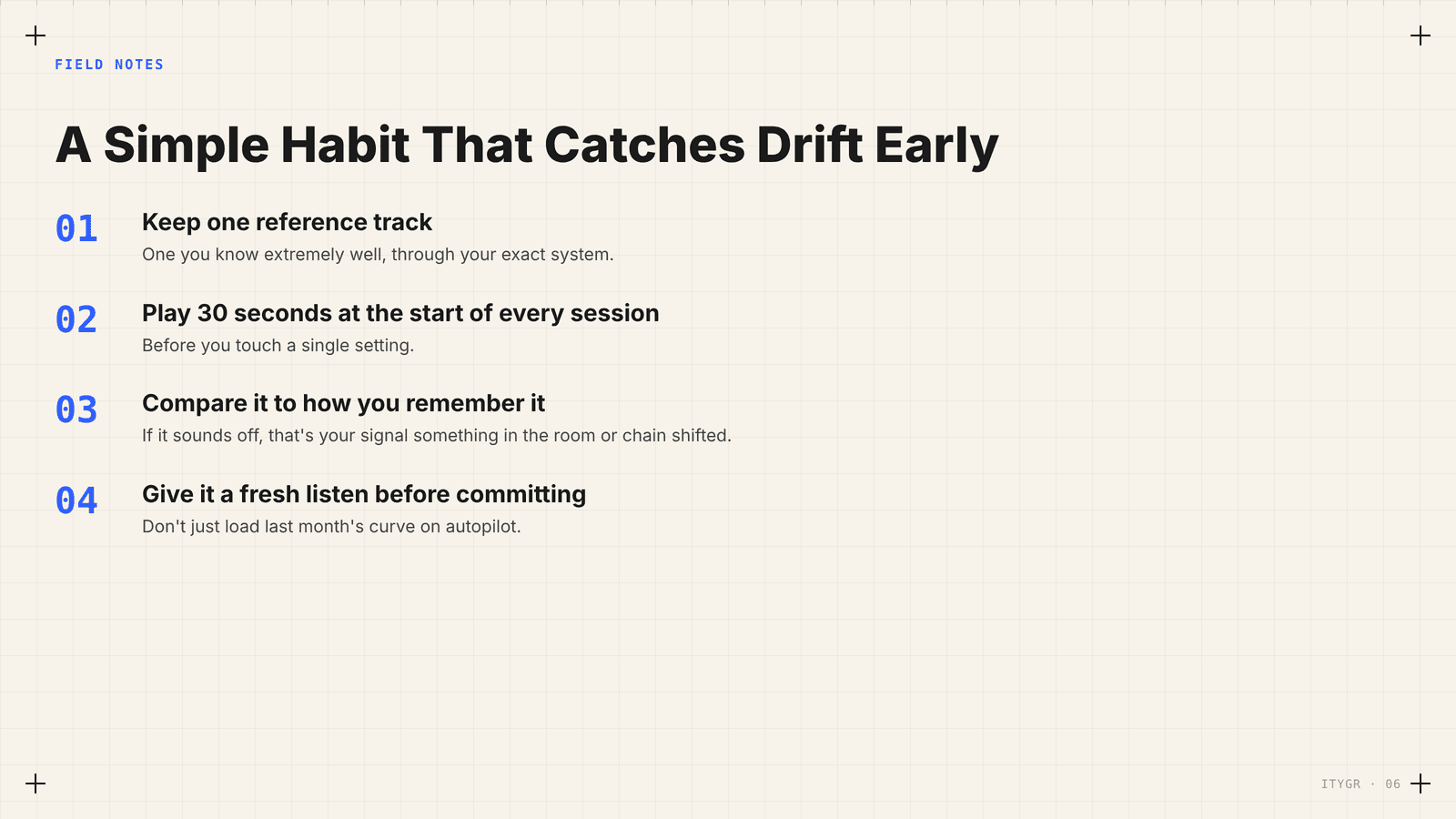
A simple habit that catches drift early
Keep one reference track you know extremely well — through your exact system — and play thirty seconds of it at the start of every session before you touch a single setting. If it sounds off compared to how you remember it, that’s your signal something in the room or the chain shifted, and it’s worth a fresh listen before you commit to last month’s curve.