Why Two Good Mixers Can Disagree and Both Be Right
Two experienced engineers can listen to the exact same mix and give you opposite notes. That’s not a sign either of them is wrong. It usually means you’re in taste territory, not rule territory.
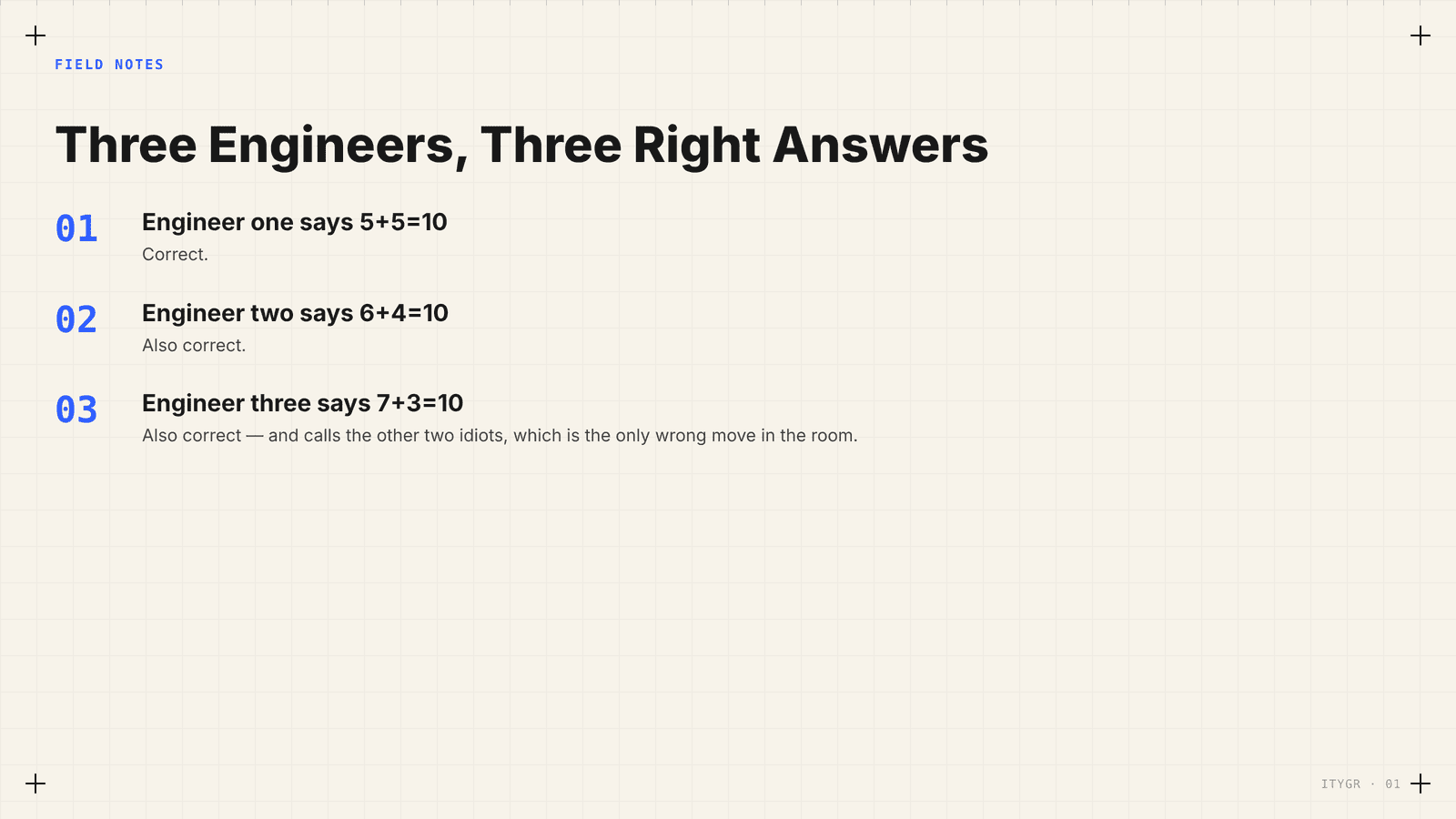
I was once told a story about how to competent audio engineers approach things, and that’s how I’ve explained it ever since. You have one guy come in and tells you that 5+5 = 10. The second guy comes in and tells you that 6+4 = 10. And the third guy comes in and tells you that 7+3 = 10 and that the other two guys were idiots. All three correct but all three different approaches.
Where the real rules live
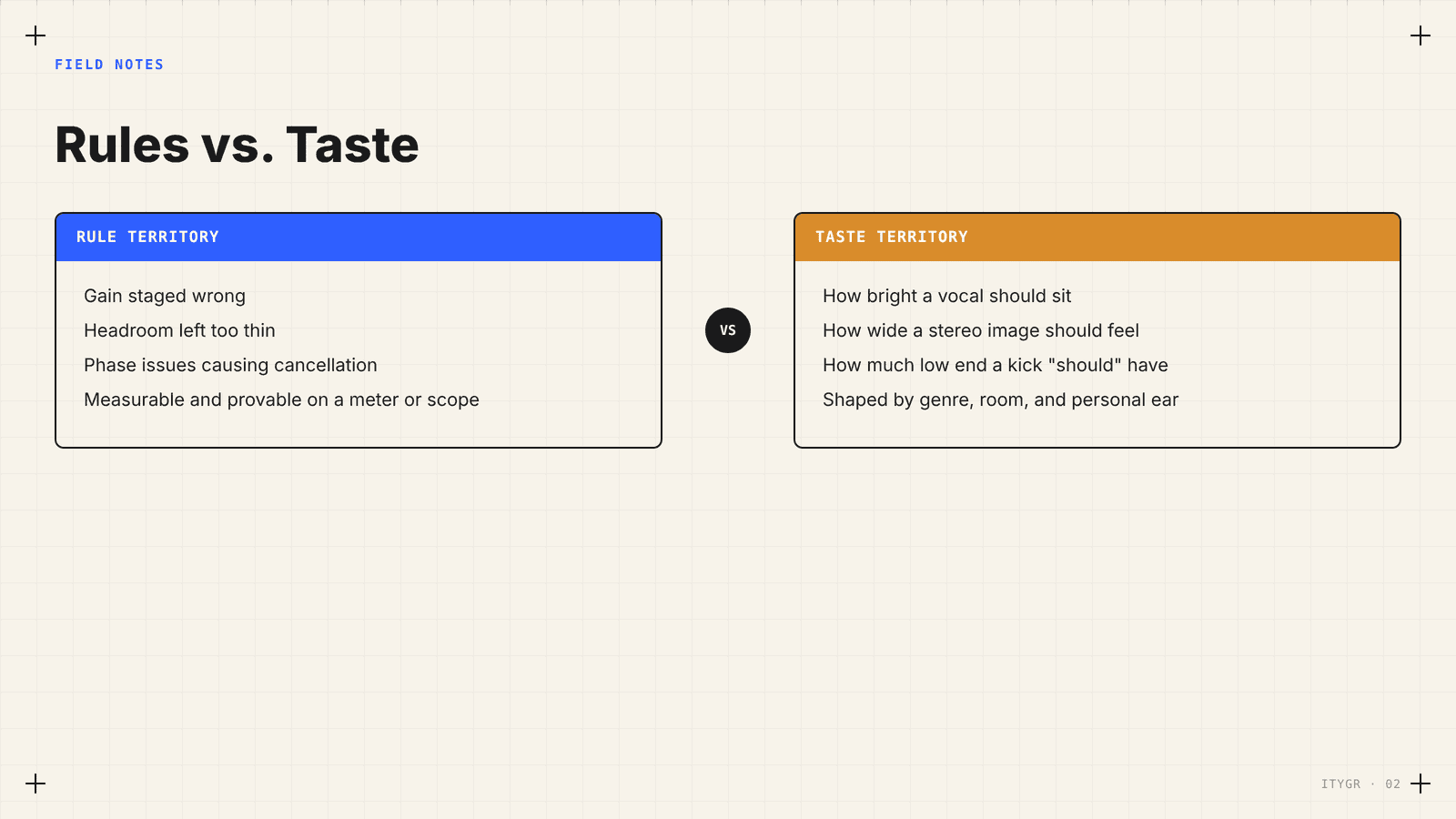
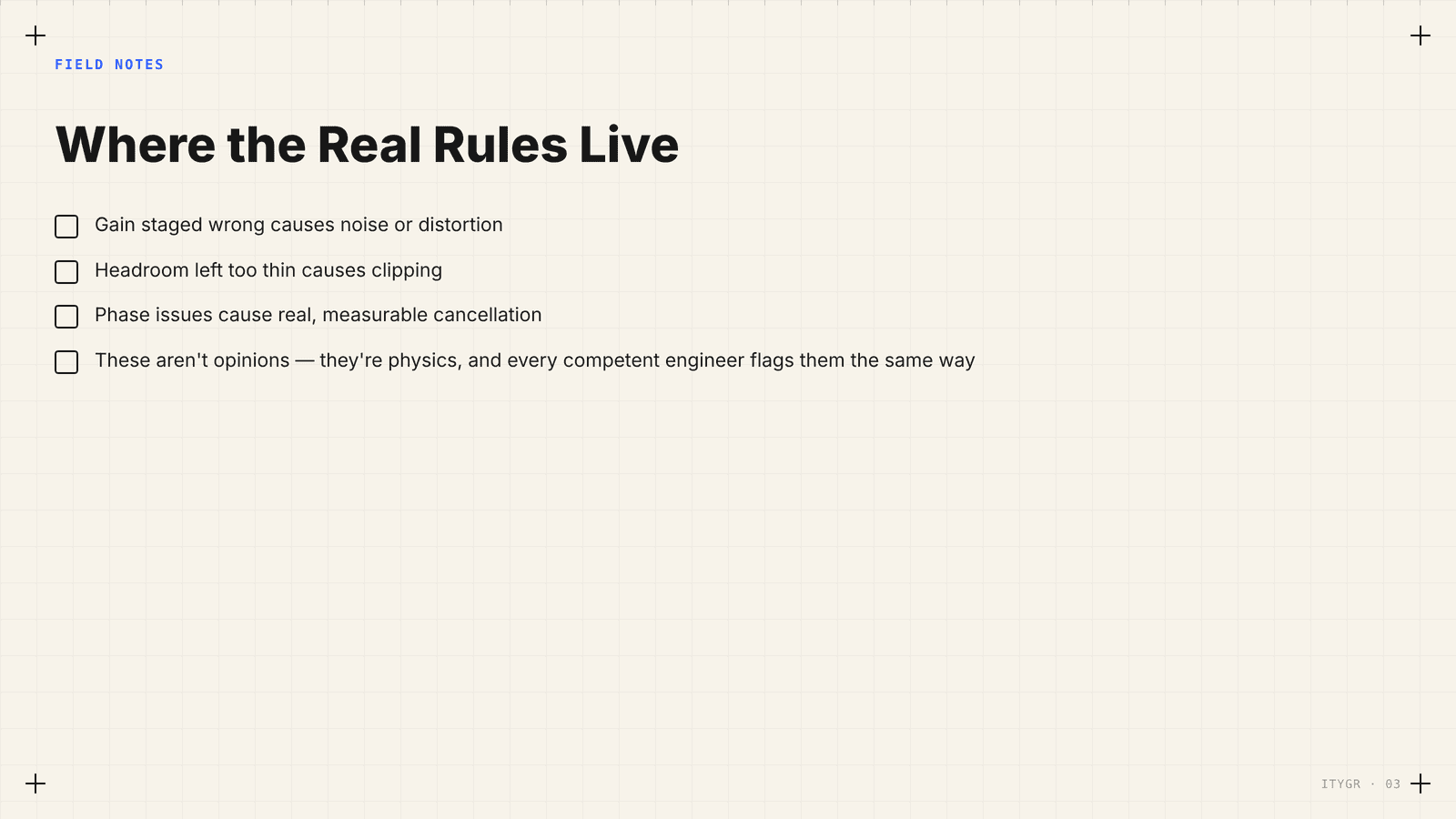
Some things in mixing are technically true regardless of preference: gain staged wrong causes noise or distortion, headroom left too thin causes clipping, phase issues cause real, measurable cancellation. Those aren’t opinions. They’re physics, and every competent engineer will flag them the same way.
Where taste takes over
How bright a vocal should sit, how wide a stereo image should feel, how much low end a kick “should” have — these are aesthetic calls shaped by genre, room, and personal ear, not universal correctness. Two engineers can both be technically sound and still land in different places here, because there isn’t one right answer.

Why this distinction matters
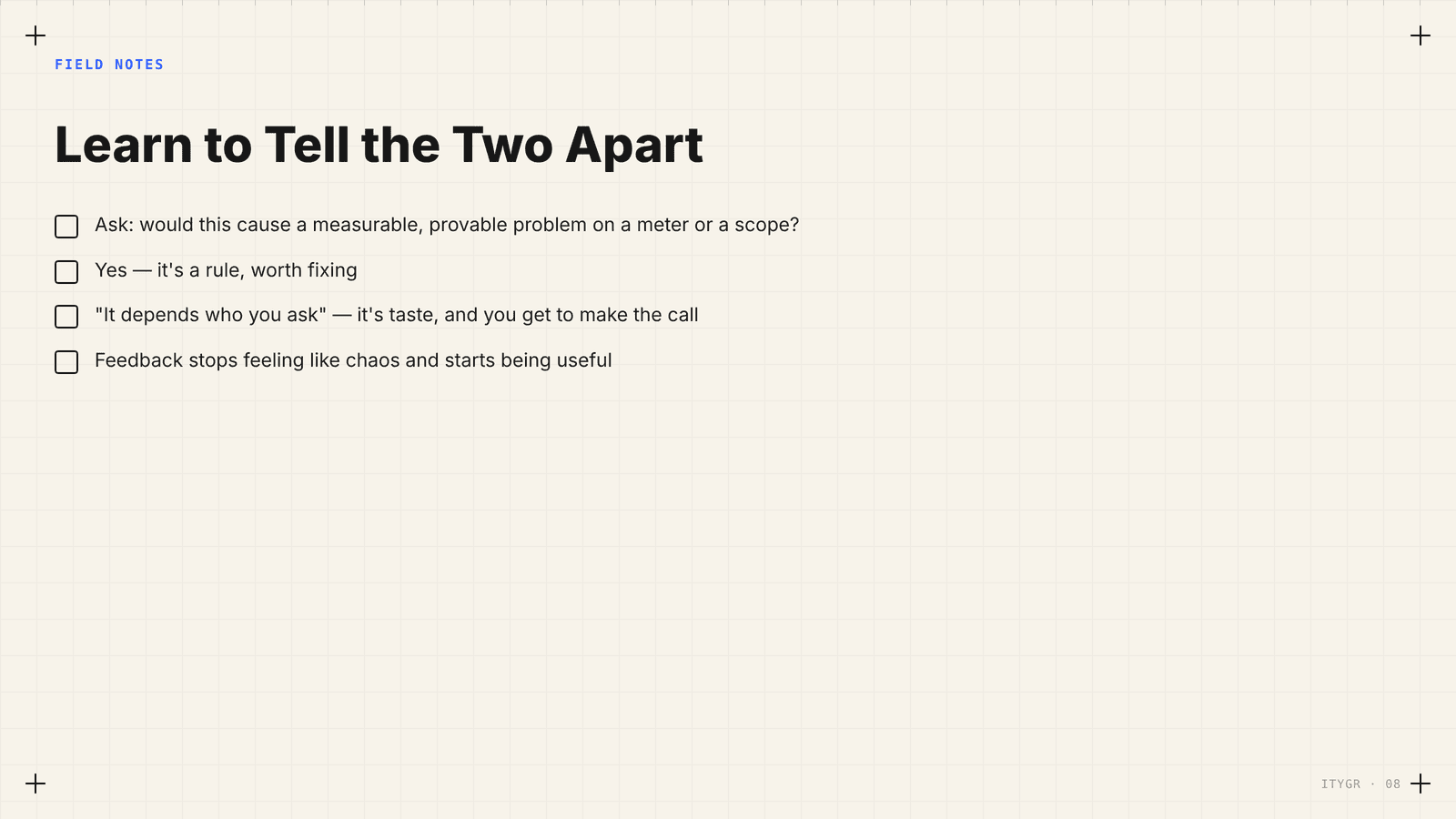
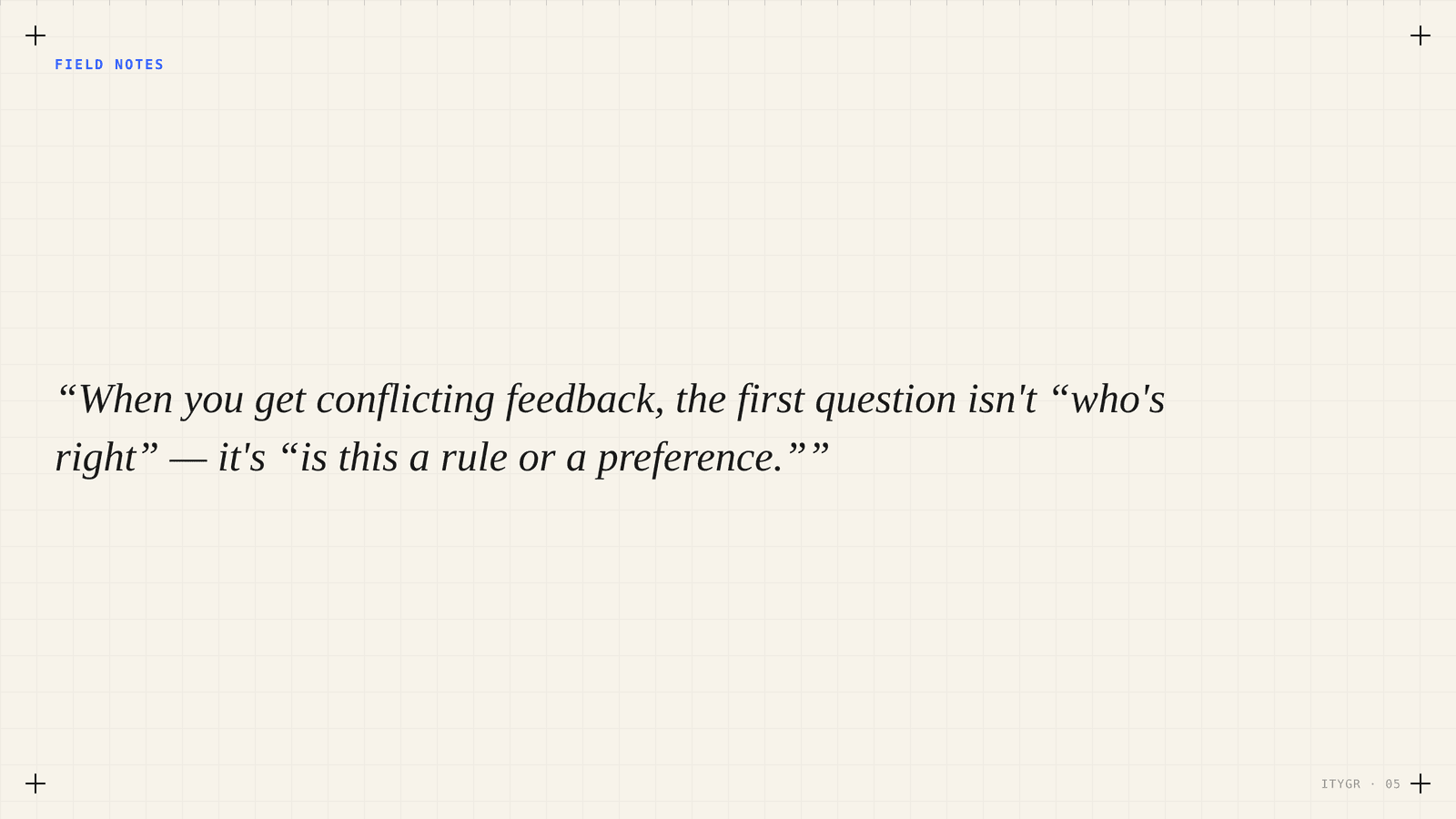
When you get conflicting feedback, the first question isn’t “who’s right” — it’s “is this a rule or a preference.” A rule disagreement means someone’s making a real technical error worth fixing. A taste disagreement means you get to make the call, because it’s genuinely your mix to shape.
Learn to tell the two apart, and feedback stops feeling like chaos and starts being useful.
A quick question that sorts most feedback fast
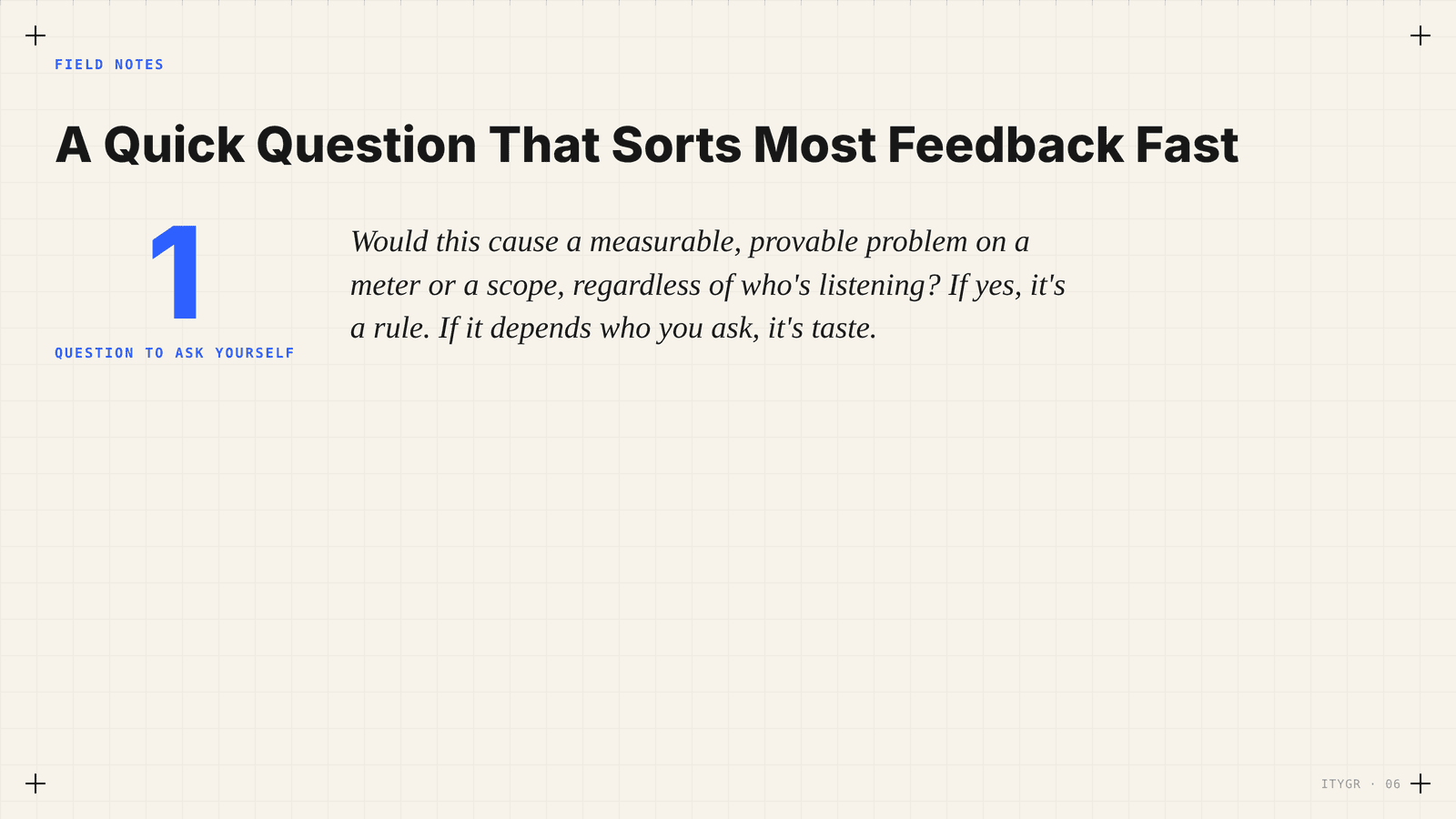
Ask yourself: “would this cause a measurable, provable problem on a meter or a scope, regardless of who’s listening?” If yes, it’s a rule, and worth fixing. If the honest answer is “it depends who you ask,” it’s taste, and the disagreement isn’t actually a disagreement about right and wrong — it’s just two people with different ears making different valid calls.