Vintage Gear Worship Is Mostly Nostalgia Marketing
Vintage gear nostalgia marketing sells a story that most players never question. Every gear forum has the same thread eventually: “nothing sounds like the old stuff anymore.” Vintage preamps, vintage compressors, vintage consoles, all supposedly carrying some tonal magic that modern manufacturing simply can’t replicate. I get why the story is appealing. I don’t think it’s mostly true. Vintage gear nostalgia marketing is the whole reason that thread never dies.
How Vintage Gear Nostalgia Marketing Sells the Myth

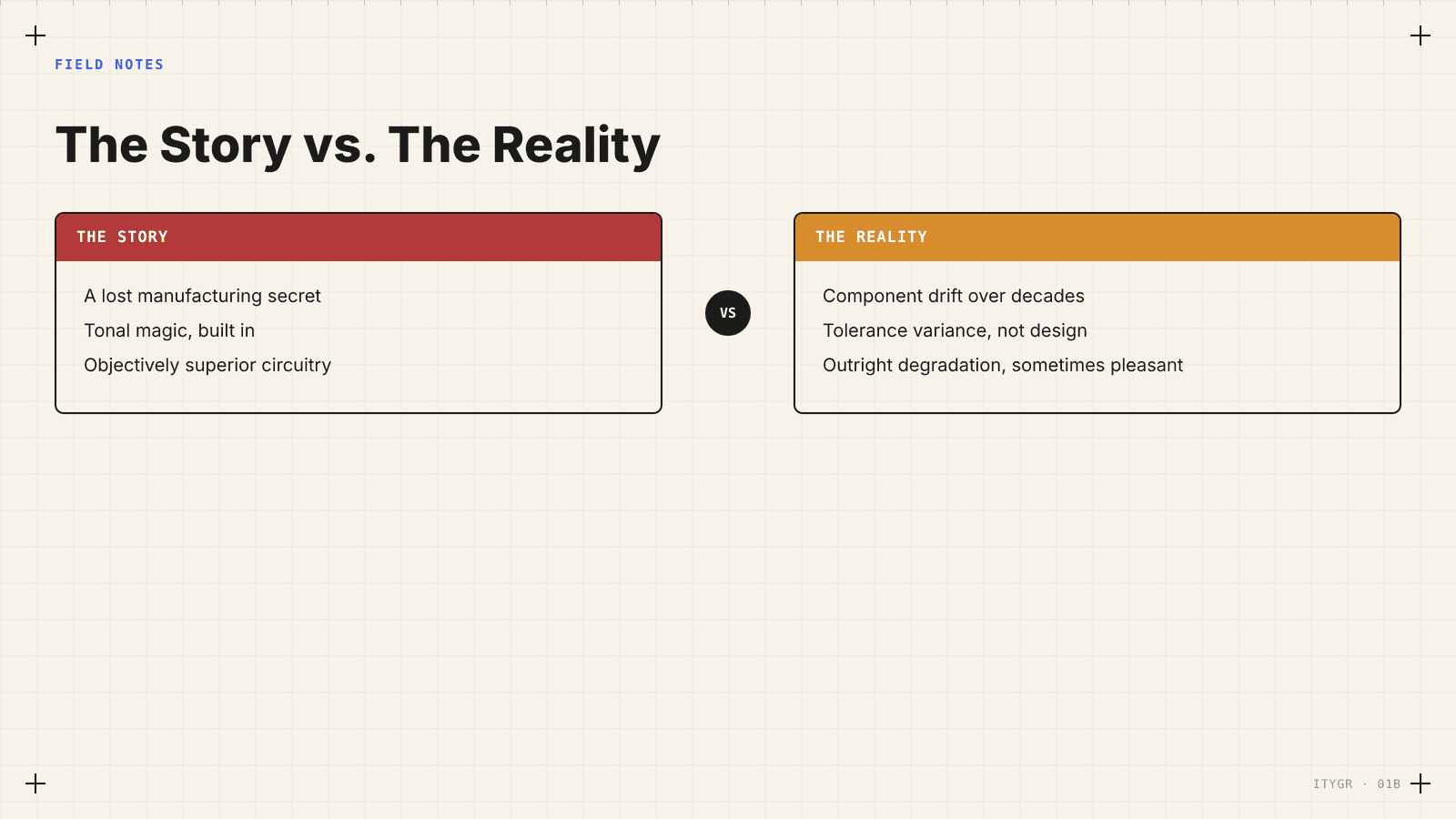
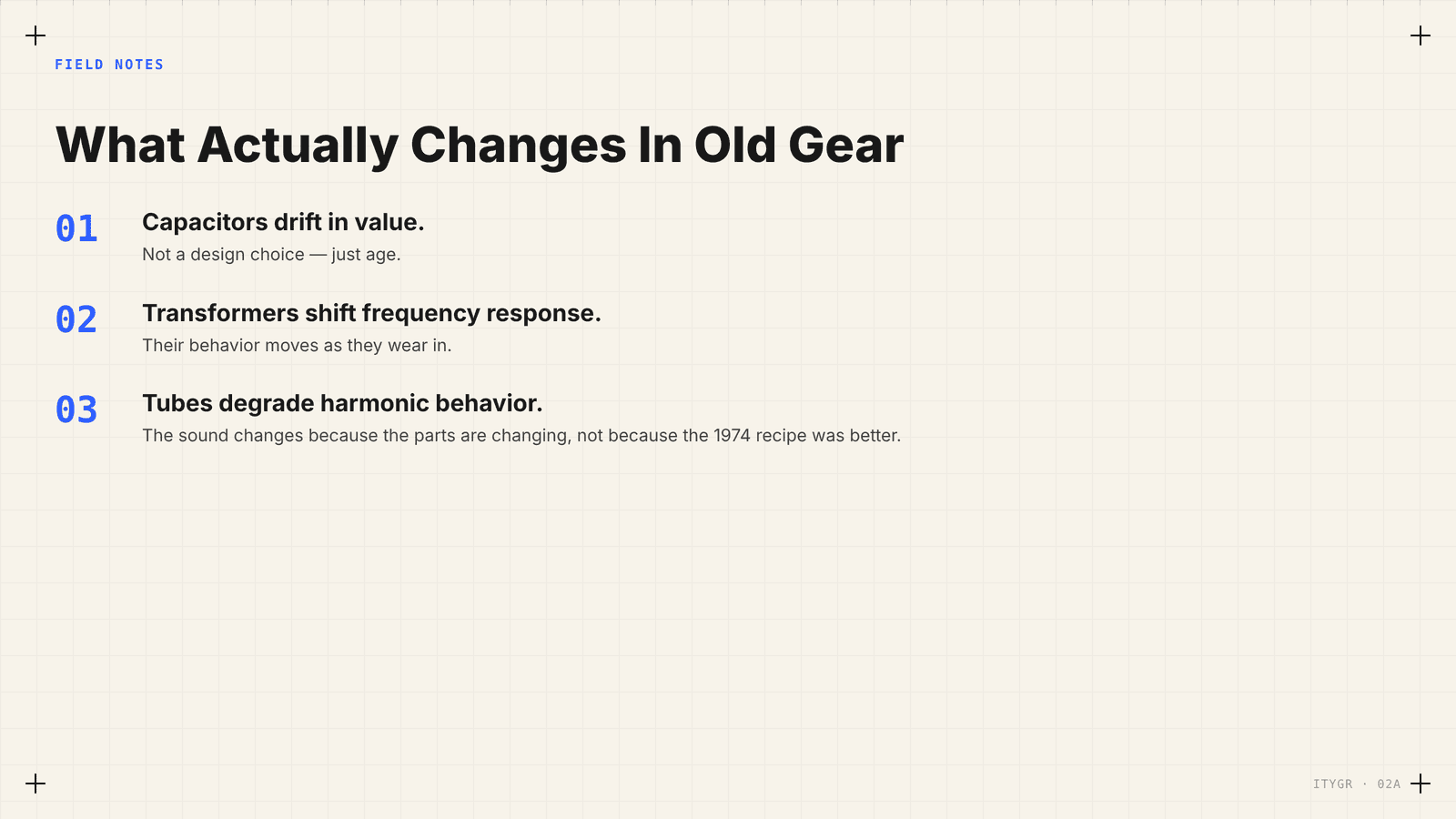
Here’s the actual, unglamorous reason a lot of vintage gear sounds distinct: decades of component drift, tolerance variance, and outright degradation, not a manufacturing secret that got lost to time. Old capacitors drift in value. Transformers age in ways that shift their frequency response. Tubes degrade and change their harmonic behavior as they wear. Some of that drift genuinely sounds pleasant — nobody’s arguing it sounds bad. But “pleasant because it degraded in a specific, somewhat random way” and “objectively superior because of how it was built” are two very different claims, and the marketing around vintage gear consistently sells you the second one when the honest answer is closer to the first.
That’s vintage gear nostalgia marketing doing exactly what it’s designed to do.
Modern manufacturing tolerances are, in almost every measurable way, tighter and more consistent than what was coming off assembly lines decades ago. Modern transformers, modern converters, modern component matching — genuinely better by the numbers, across the board. A well-built modern preamp modeled after a classic circuit will often measure closer to that circuit’s original, as-designed spec than an actual 50-year-old unit will, because the original unit has drifted a long way from its own spec sheet by now.


None of this means vintage gear sounds bad. Some of it sounds genuinely great, and if you love a piece and it’s in your budget, use it, no argument there. What I’m actually pushing back on is the idea that the sound is coming from some lost manufacturing secret rather than from decades of components aging in a particular direction — and that a modern piece is somehow starting from a lesser place just because it was built this year instead of in 1974.

Buy vintage because you love a specific piece and what it does. Don’t buy it because you’ve been told modern gear is incapable of sounding as good. That story sells a lot of overpriced gear to people chasing a magic that’s mostly just component drift with a great origin story attached. That’s the honest version, without the vintage gear nostalgia marketing attached.
Keep reading