Parallel Compression for Vocals: When It Works, When It’s a Crutch
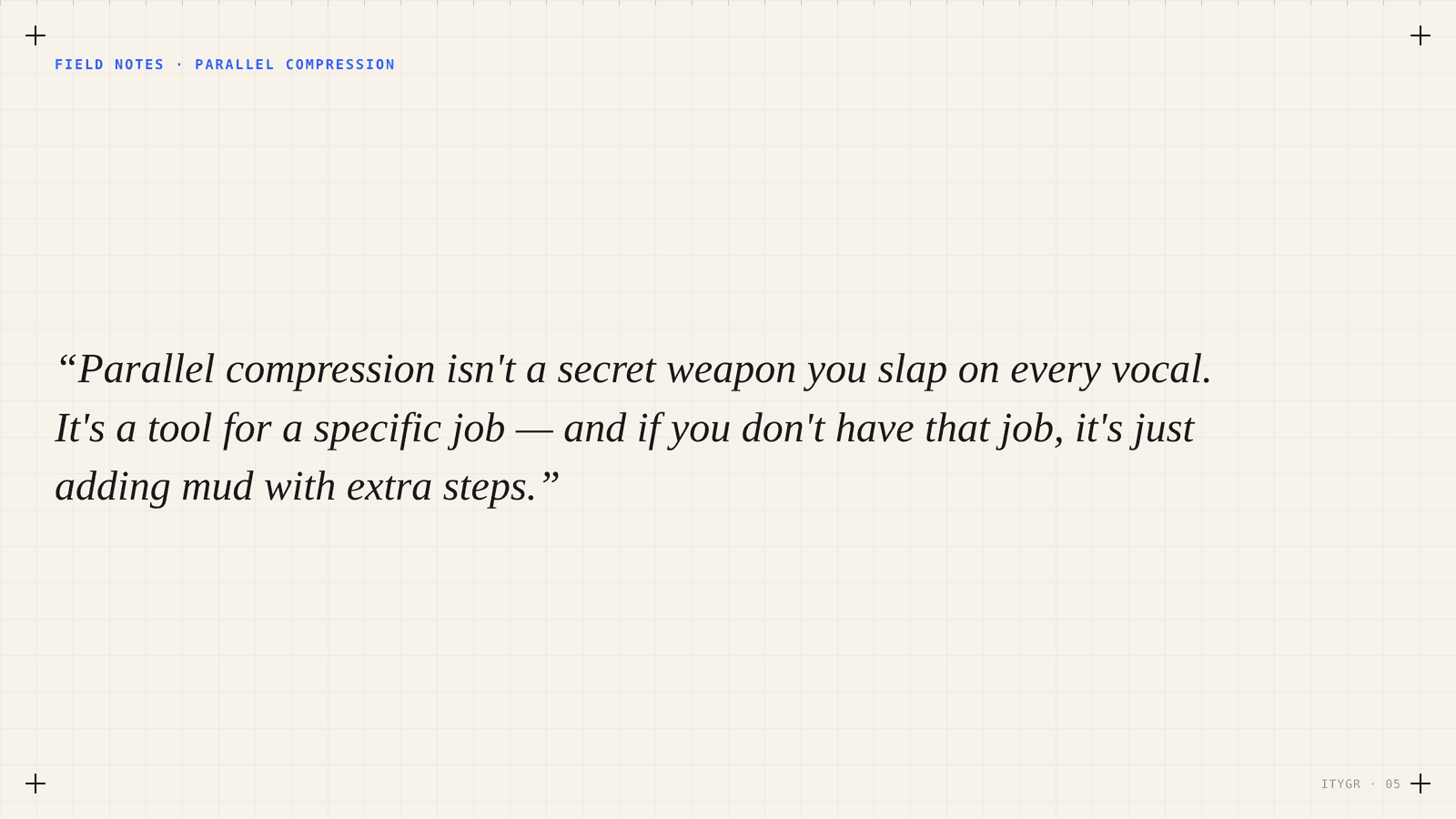
Parallel compression for vocals is one of the most misunderstood tools in mixing. Parallel compression gets talked about like it’s a secret weapon you slap on every vocal and everything suddenly sounds like a record. It’s not that. It’s a tool for a specific job, and if you don’t have that job, it’s just adding mud with extra steps.
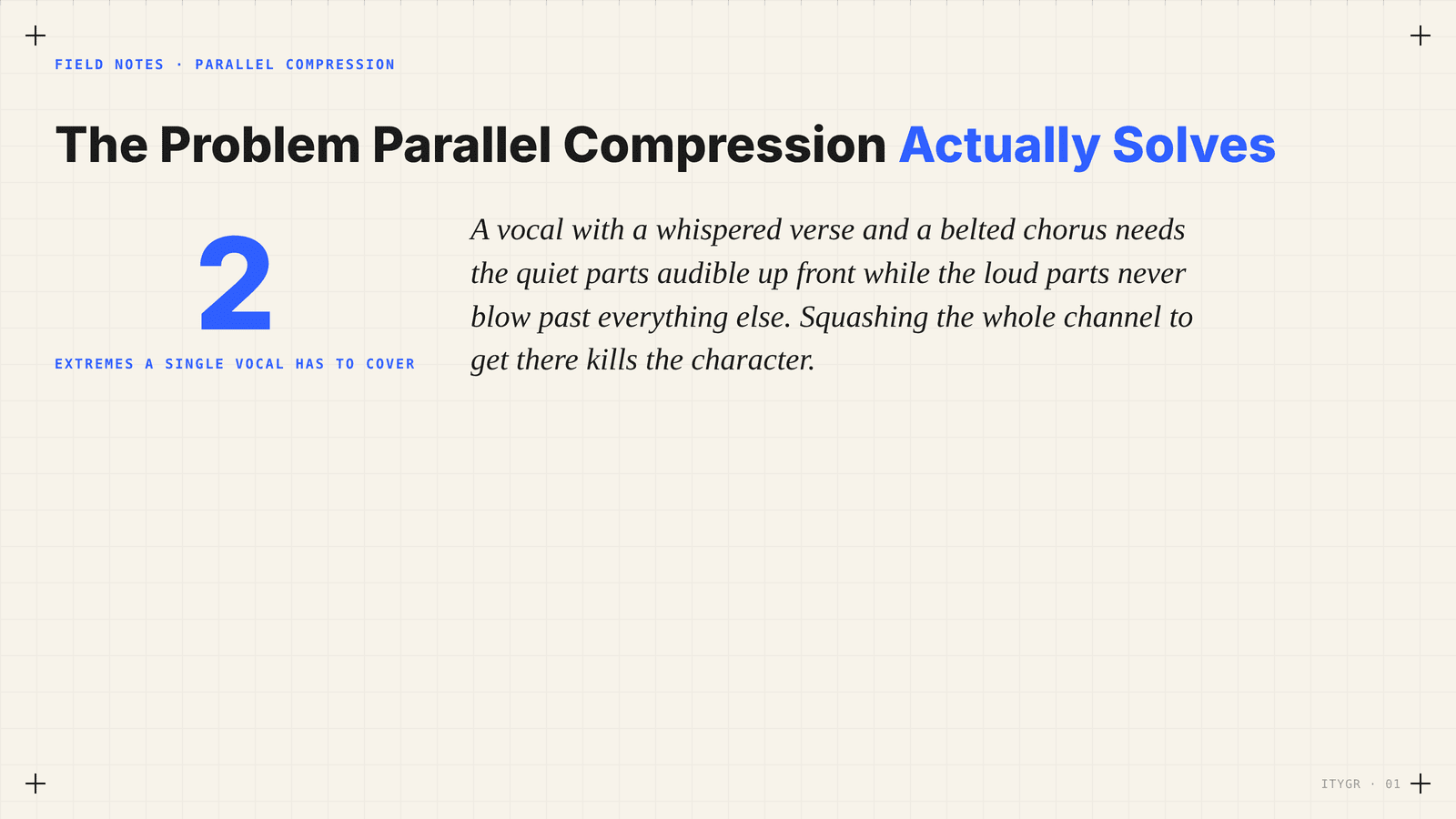
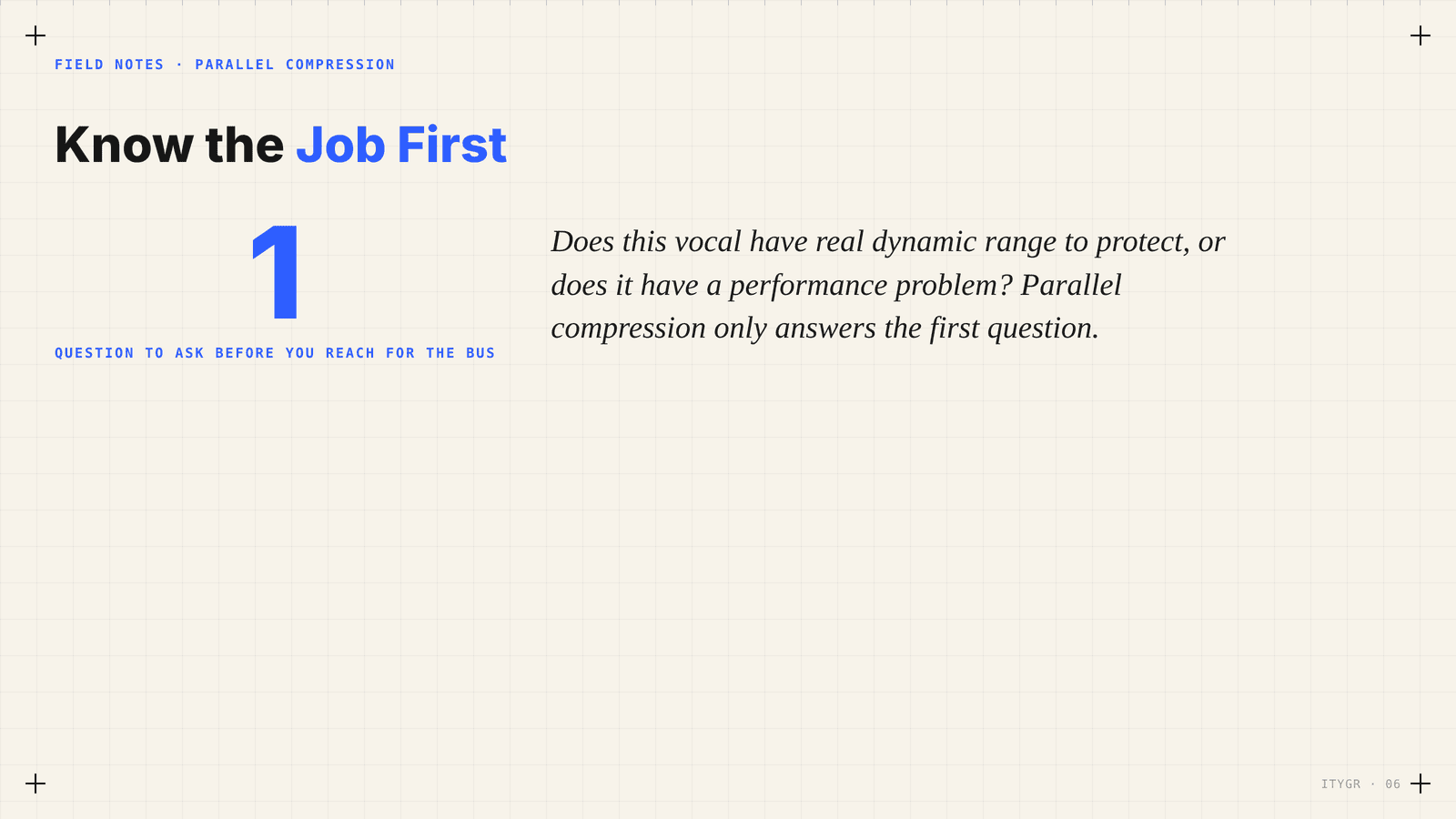
The actual problem parallel compression solves: you’ve got a vocal with big dynamic range — whispered verse, belted chorus — and you need the quiet parts to sit up front and audible while the loud parts don’t blow past everything else in the mix. Straight compression on the main vocal chain can do this too, but push it hard enough to really tame that range and you start losing the transient snap, the breath, the texture that makes a voice sound like a person instead of a processed signal. That is the exact problem parallel compression for vocals is built to solve.
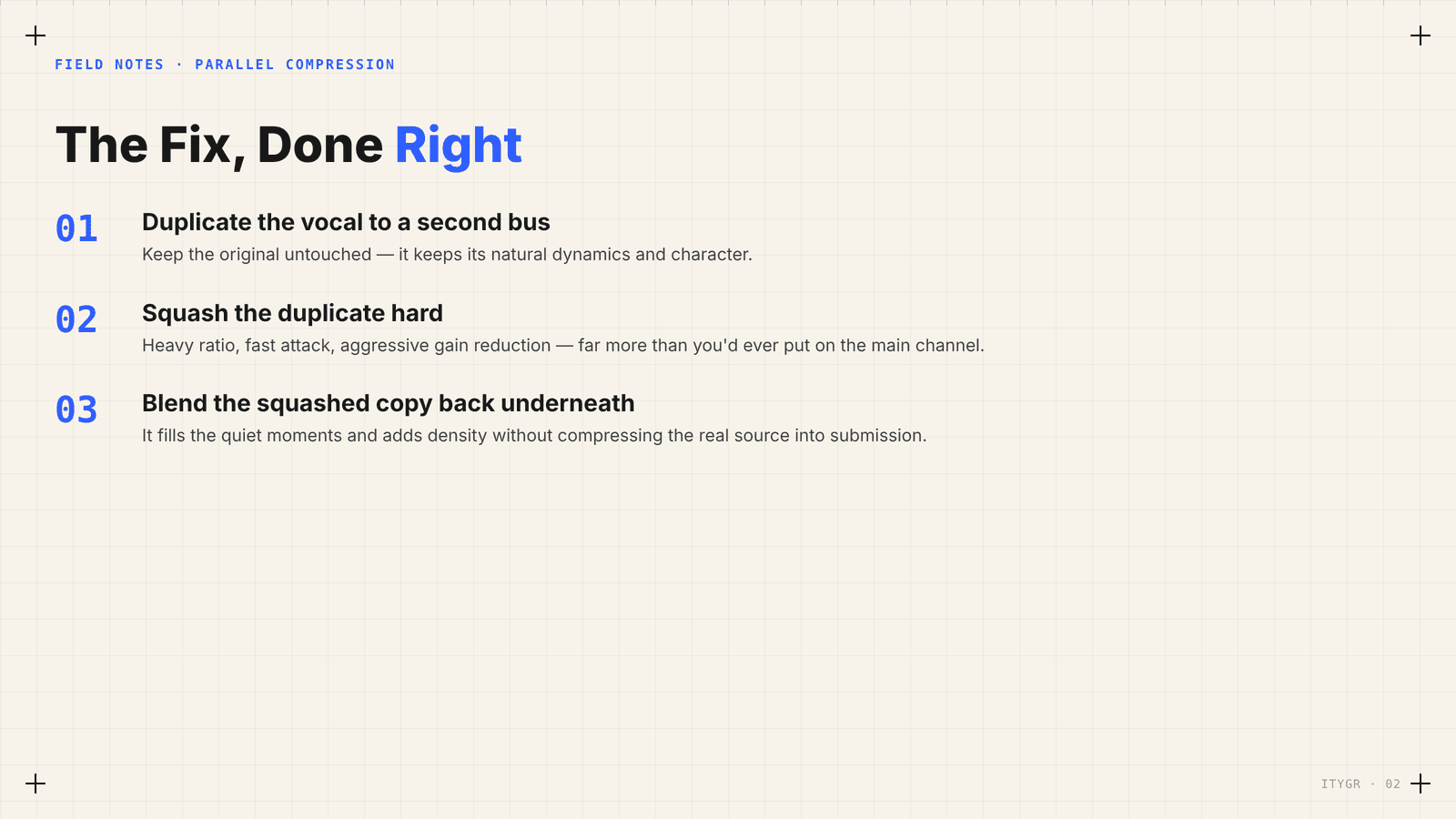
The Fix: Parallel Compression for Vocals Done Right
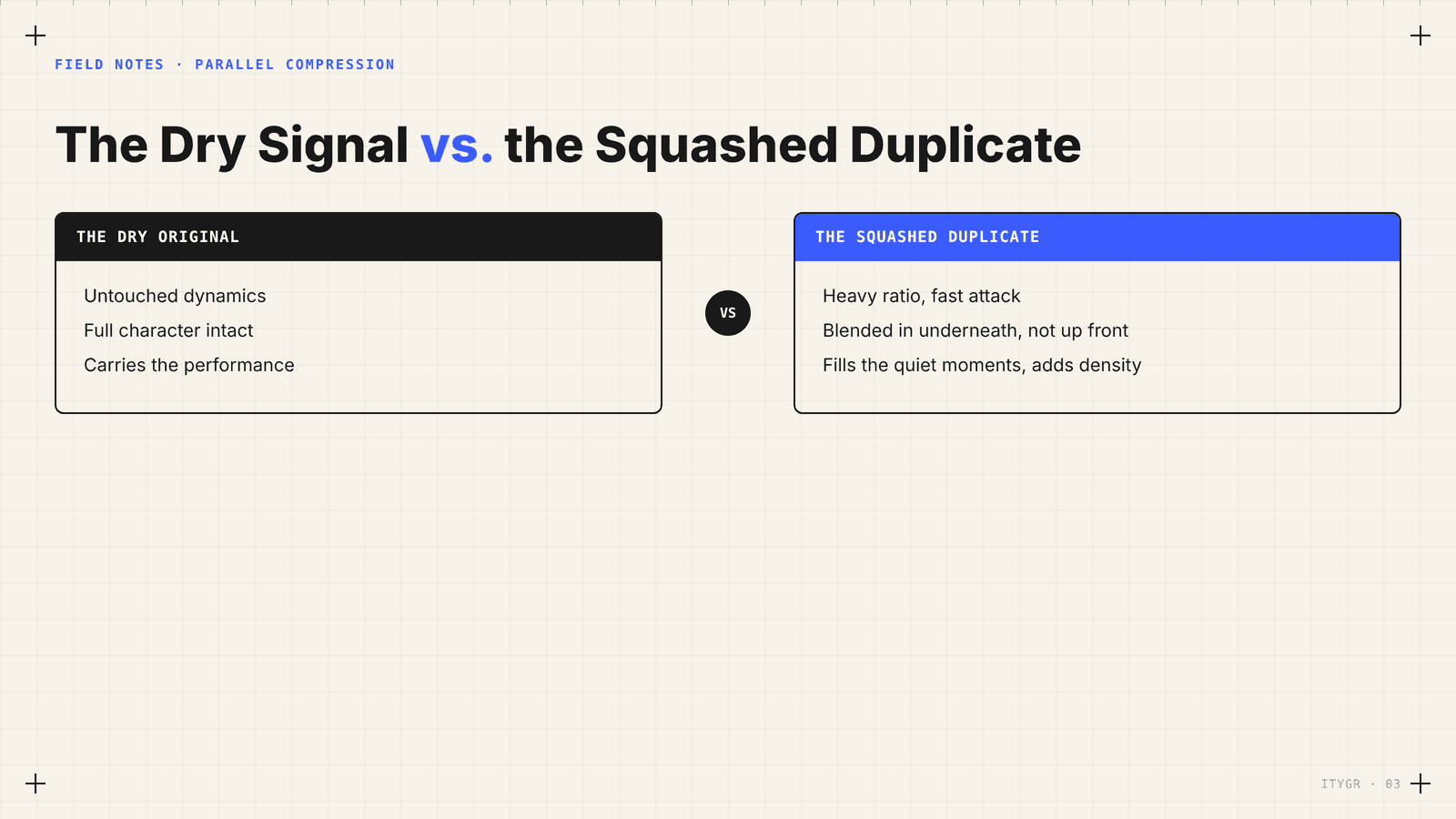
Parallel compression sidesteps that trade-off. You duplicate the vocal to a second bus, squash that duplicate hard — we’re talking heavy ratio, fast attack, aggressive gain reduction, way more than you’d ever put on the main channel — and blend it back under the untouched original. The dry signal keeps its natural dynamics and character. The squashed duplicate underneath it fills in the quiet moments and adds density without you ever compressing the actual source into submission.
When It’s a Crutch
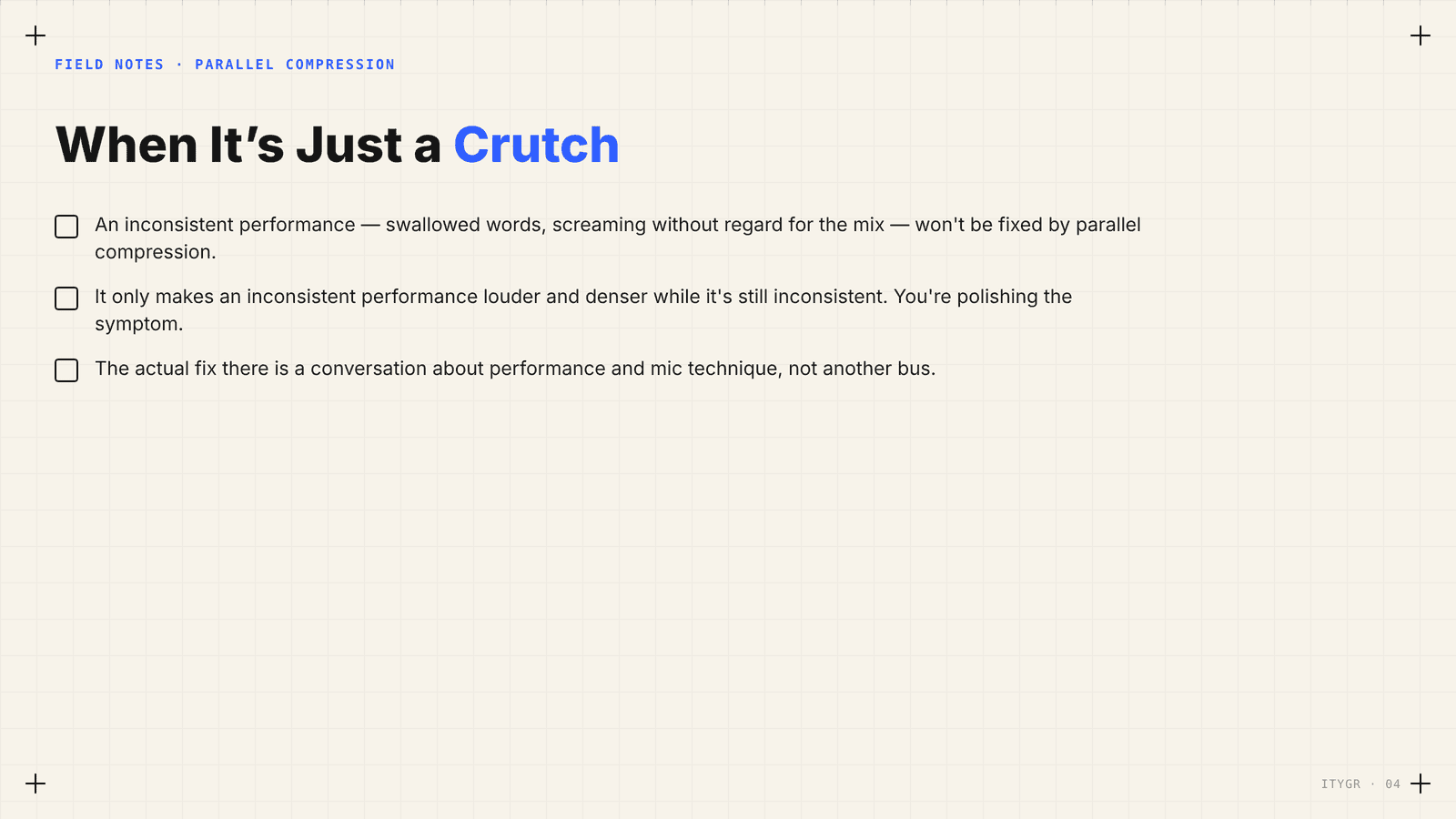
If your singer’s actual dynamic control is inconsistent — swallowing words in verses, screaming choruses without any sense of the mix around them — parallel compression will not fix that. It’ll just make an inconsistent performance a little louder and a little denser while still being inconsistent. You’re polishing the symptom. The actual fix there is a conversation about performance and mic technique, not a mix bus. That is a sign parallel compression for vocals is being used as a crutch.
Parallel compression is for a genuinely dynamic, controlled performance that needs its softest details to translate through a PA system without those details getting eaten by everything else happening in the mix. That only matters if the foundation underneath the vocal is solid to begin with — see our notes on building the mix from the drums up. If the performance is already inconsistent on its own, no compression trick, parallel or otherwise, is going to be a substitute for that conversation. Used that way, parallel compression for vocals stays a tool, not a crutch.
Use it when the problem is dynamics you want to preserve. Skip it, or address the real issue, when the problem is actually inconsistency you’re trying to smooth over with a plugin instead of a rehearsal.
Keep reading