Your Church Doesn’t Need a New Console. It Needs Gain Structure.
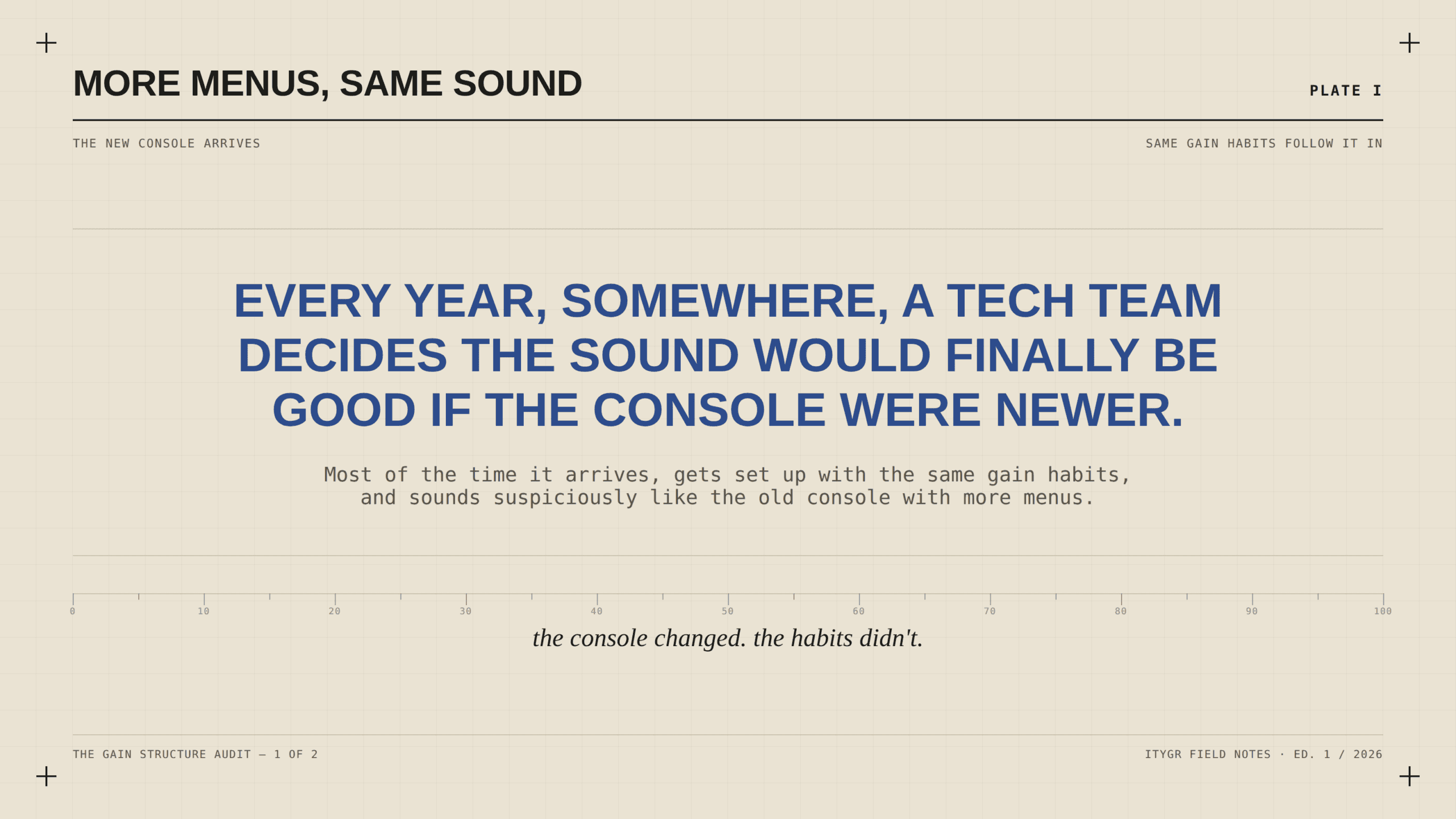
Gain structure is the fix most tech teams skip. Every year, somewhere, a tech team decides the sound would finally be good if the console were newer. Sometimes that’s even true. Most of the time the new console arrives, gets set up with the same gain habits, and sounds suspiciously like the old console with more menus.
The Gain Structure Audit
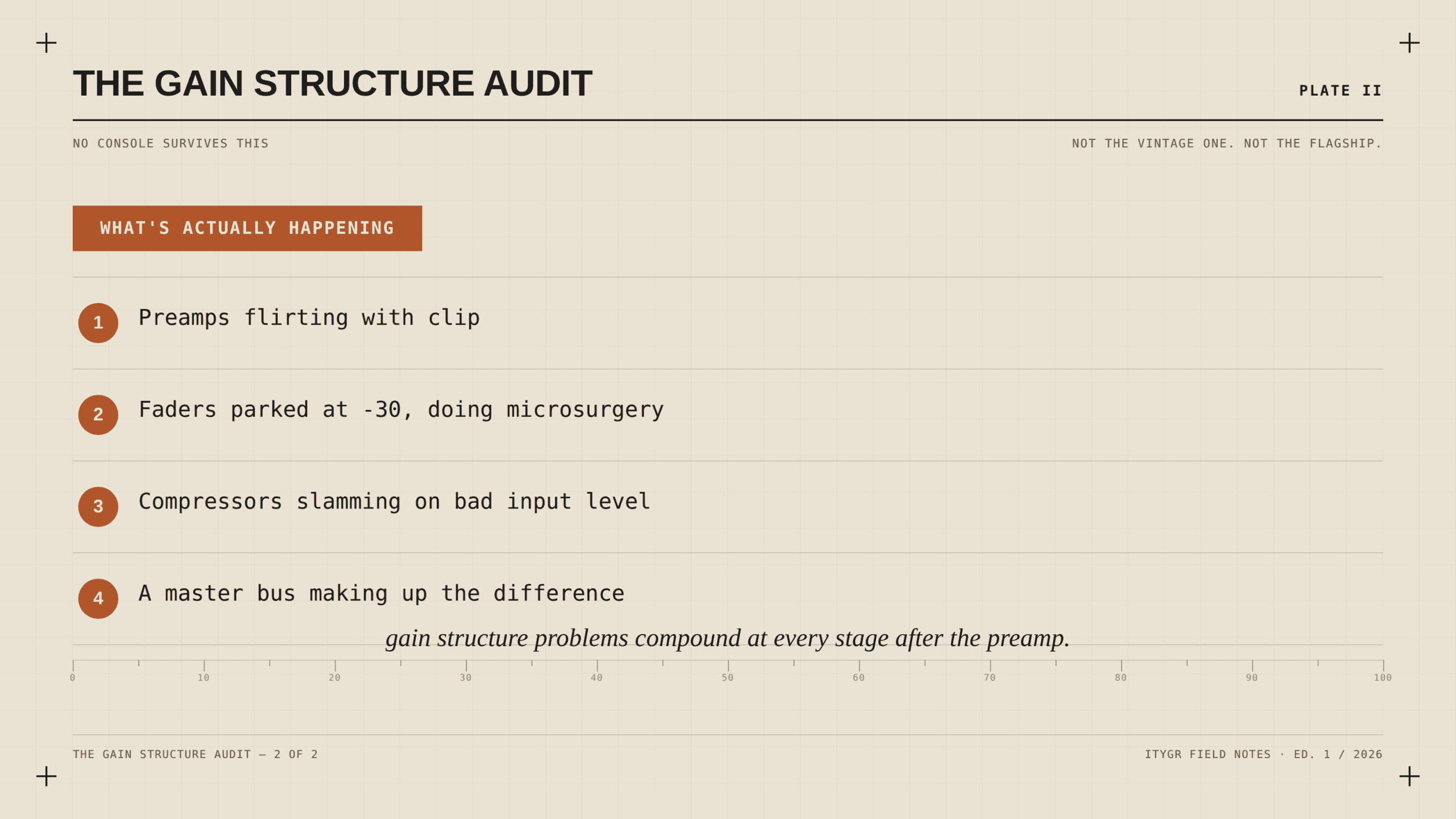
Preamps flirting with clip because “the meters look healthy,” faders parked at -30 doing microsurgery, compressors slamming because input level was never right, and a master bus making up the difference. No console survives that. Not the vintage one, not the flagship, not the one in the brochure. Gain structure problems compound at every stage after the preamp.
The free afternoon that beats the five-figure purchase

Line check every input, set preamp gain for healthy average level with real headroom, get faders living near unity where they have resolution, and only then judge what the system actually sounds like. Do this once, properly, and the “we need an upgrade” conversation usually changes subject.
I’ve walked into booths mid-service and just watched the meters for five minutes before touching a single knob. Nine times out of ten it’s the same story: somebody rode the master fader down to tame a hot mix instead of asking why the mix was hot to begin with. Fix the gain at the source and the master fader stops doing a job it was never built for. Fixing gain structure first makes every other decision easier.

To be fair to new consoles: sometimes you genuinely need more channels, better routing, or recallable scenes for volunteers — legitimate reasons, and scenes are how good gain structure survives between Sundays. Buy for those. Don’t buy to outrun physics. If your team wants help actually doing this right, that’s most of what my live sound course covers.
Gain structure is the cheapest upgrade in audio. It costs one afternoon and all of your ego.