Backups Are a Worship Value
Every worship tech backup plan starts the same way: assuming failure, not hoping around it. Nobody puts “redundancy” on the vision board. It doesn’t demo well. But if the mission is a distraction-free room where people can actually engage, then the backup plan isn’t a technical detail — it’s part of the ministry.
The theology of a spare cable
Everything on a stage will eventually fail. Cables, batteries, computers, the one adapter that holds the whole system together. Planning for that isn’t faithlessness in the gear; it’s honesty about it. Grace for machines looks like a plan B.

The Worship Tech Backup Plan In Practice
A spare vocal mic staged and muted. Fresh batteries at set positions, not “probably in the drawer.” The click and tracks able to run from a second source. A printed input list, because the day the tablet dies is the day you learn who memorized the patch. If the rig is digital — and ours is — know exactly what happens when a computer hiccups mid-bridge, before it does. It’s the same logic behind the tech rider I hand every room I load into: spell out what backup gear has to exist before you ever need it, so nobody’s improvising at the worst possible moment.


The test
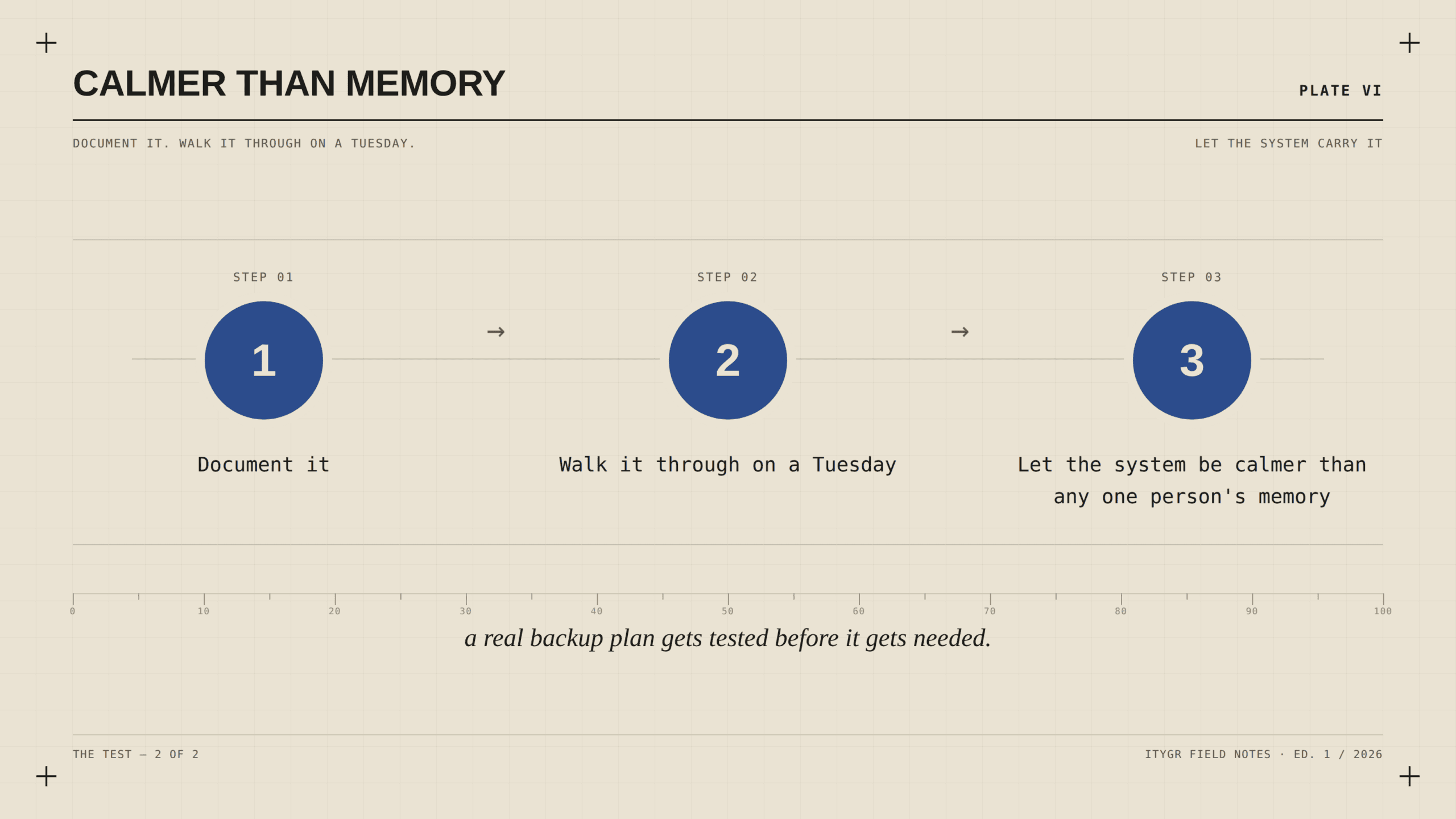
Could a volunteer recover the service without you? If the answer is no, the backup plan is you, and you are not redundant. Document it, walk it through on a Tuesday, and let the system be calmer than any one person’s memory. A real worship tech backup plan gets tested before it gets needed.

One more thing worth building into that Tuesday walkthrough: a short written note taped inside the rack or clipped to the stage box, listing which spare goes where and how to swap it under pressure. Not a manual — three lines, max. The volunteer troubleshooting a dead in-ear pack mid-song isn’t going to read a manual. They’ll glance at a sticky note. That is the whole point of a worship tech backup plan.


Excellence isn’t when nothing fails. It’s when something fails and almost nobody finds out.