The Studio Brain: Studio One, Melodyne, and a Pile of Waves
The studio brain Studio One sits at the center of every session here. People ask what we mix on like the answer is going to be a secret weapon. It’s not. It’s Studio One, Melodyne, a pile of Waves plugins, and Arturia’s Analog Lab for sounds — a stack picked for one reason: students can stop thinking about the software and start thinking about the music faster. I genuinely love this stack, top to bottom, and that includes the pile of Waves in the middle of it. If you ask why, the studio brain Studio One answer is always the same: less friction.
Studio One is the hub because it stays out of the way. Drag-and-drop everything, no ceremony between “I have an idea” and “the idea is recorded.” When you teach recording, every extra click is a place a beginner falls off. Fewer places to fall off means more finished songs, and finished songs are the entire point. That is exactly what the studio brain Studio One setup is built to protect.
Melodyne is the pitch-correction scalpel, and it comes with a lecture. We tune vocals the way you’d season food — to taste, not to death. Melodyne’s superpower is that it makes surgical correction possible, which means it also makes restraint possible: fix the two notes that hurt, leave the human in everything else. If the vocal comes out sounding like a ringtone, that wasn’t Melodyne’s fault.
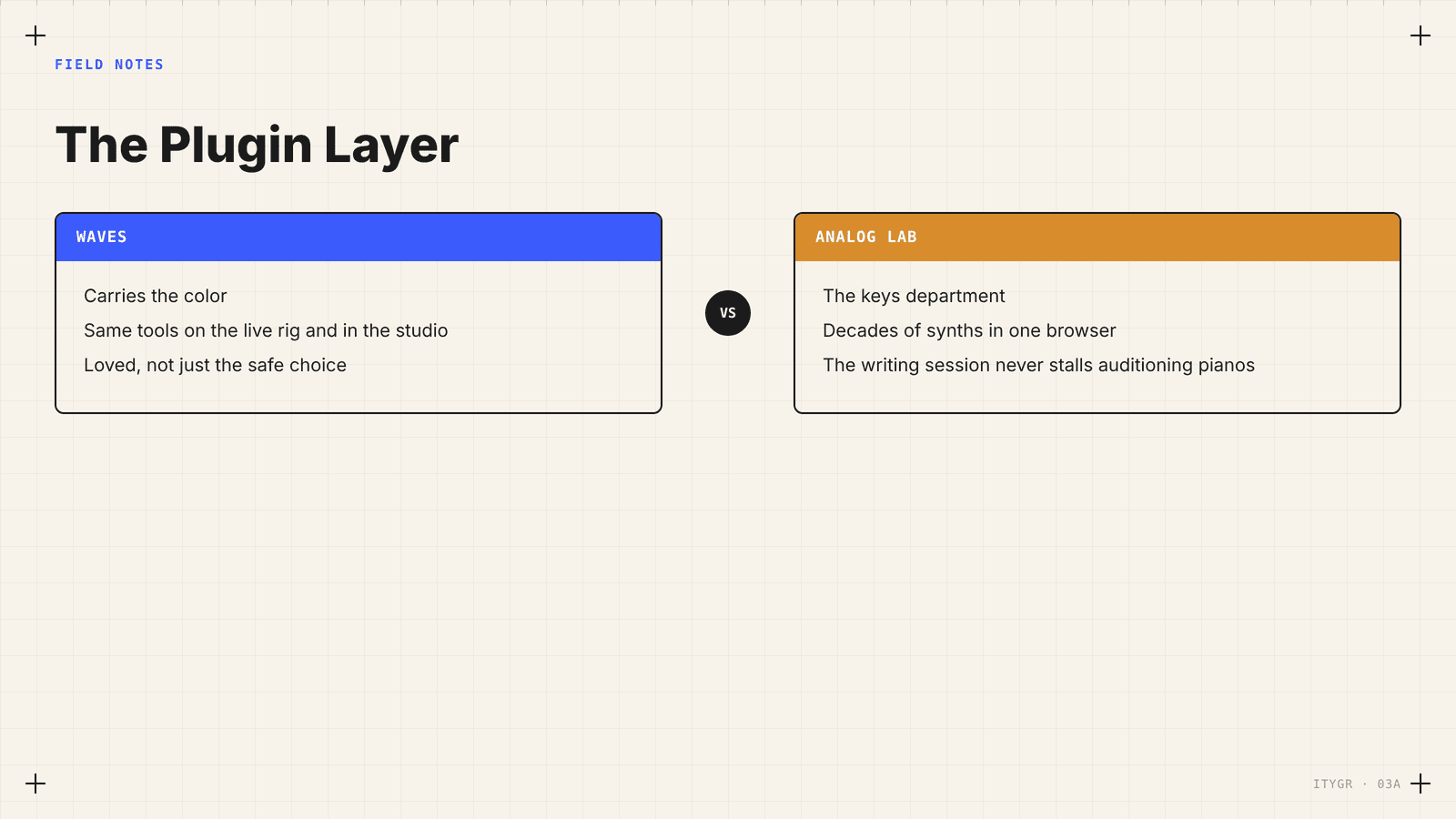
The Waves plugins carry the color, and honestly, they might be the part of this stack I’m most attached to. Same tools on the live rig and in the studio — which means a student who learns a compressor on Sunday already knows it on Tuesday. I didn’t add Waves to this lineup because it was the safe or obvious choice. I added it because I genuinely love how it sounds, and once you build your ear around it, most other plugin racks feel like a downgrade. And Analog Lab is the keys department: decades of synths in one browser, so the writing session never stalls while someone auditions their fourteenth piano. That color is a core part of the studio brain Studio One workflow around here.

The Studio Brain Studio One Philosophy
Since a stack is really a philosophy: pick tools that reward taste over tweakery, standardize so knowledge transfers between rooms, and spend the money you saved on better monitoring and more mic options — the two places where hardware still wins arguments. Every choice in the studio brain Studio One philosophy comes back to reducing friction.
The stack doesn’t make the record. It just decides how much friction stands between the idea and the take.

Gear in this post
Studio One (PreSonus), Waves plugins, and Analog Lab (Arturia) are available direct from their makers — we couldn’t confirm a current, matching Amazon listing for any of them, so they’re not linked here.
Melodyne (Celemony) — check the current price on Amazon
Some posts on this site use affiliate links; when they appear, they’re marked, and purchases support Itygr at no extra cost to you.
Keep reading