Gain-Stage Before You Touch a Single EQ Knob
You bought the plugin. You watched the video. You know the frequency for “boxy” and the frequency for “harsh,” and you’ve got a shelf move for “air” that you use on literally everything. That’s what happens when you skip gain-stage before EQ — your mix still sounds like it’s fighting itself.
Here’s the thing nobody tells you in the plugin tutorial: most of what you’re EQ’ing out is a gain-staging problem you’re too impatient to fix properly.

If a channel is clipping into your converter, or worse, if it’s so hot that every plugin in the chain is being driven into its own version of distortion, no amount of surgical EQ is going to undo that. You’re not sculpting a sound at that point. You’re doing damage control on a sound that got hurt three steps earlier in the chain.
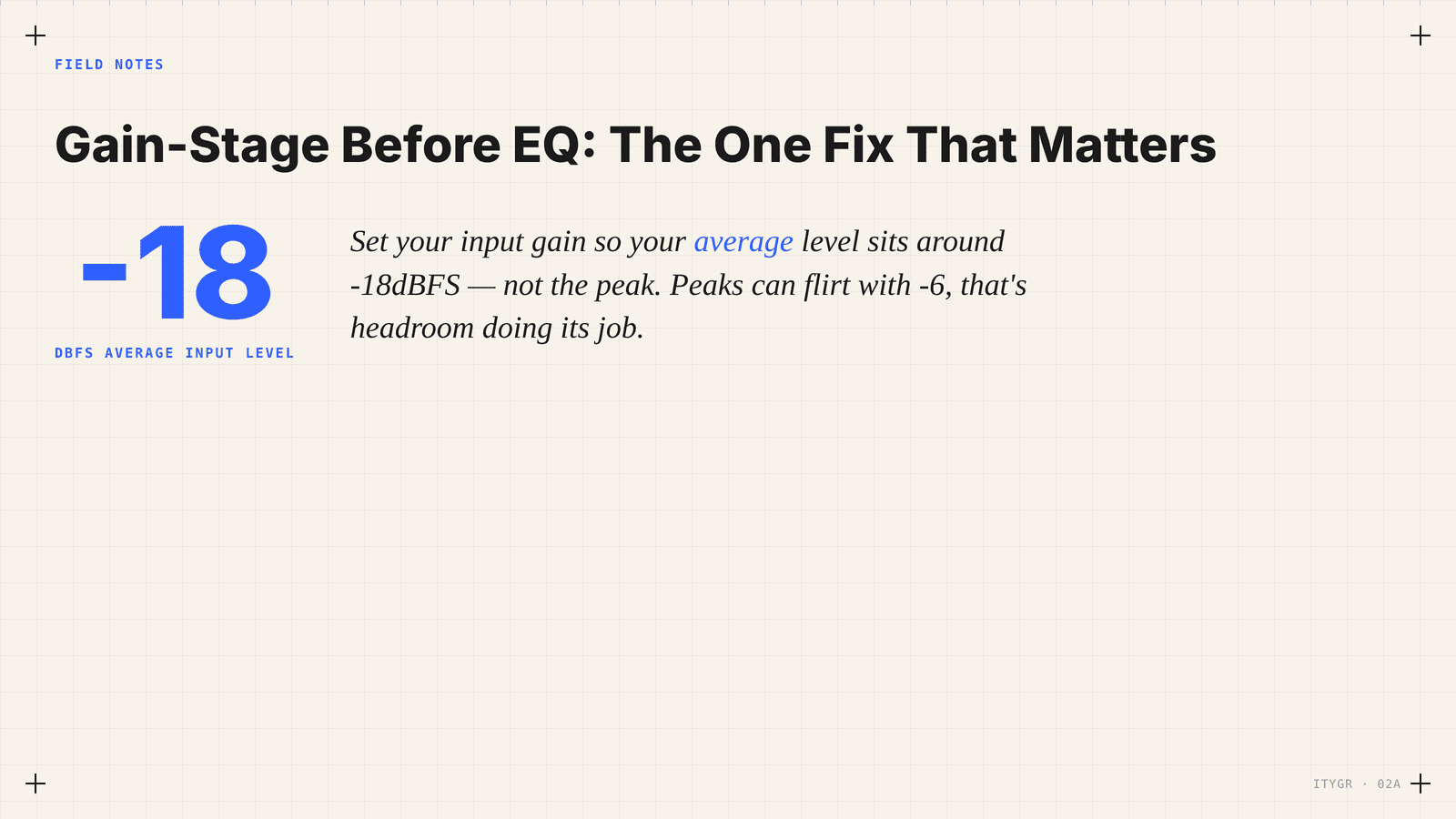
Gain-Stage Before EQ: The One Fix That Matters
Before you touch a single band on that EQ, do this instead:
Set your input gain so your average level sits around -18dBFS. Not the peak — the average. Peaks can flirt with -6, that’s fine, that’s headroom doing its job. But if your average is sitting up around -10 or hotter, you’ve already lost detail you’re never getting back.

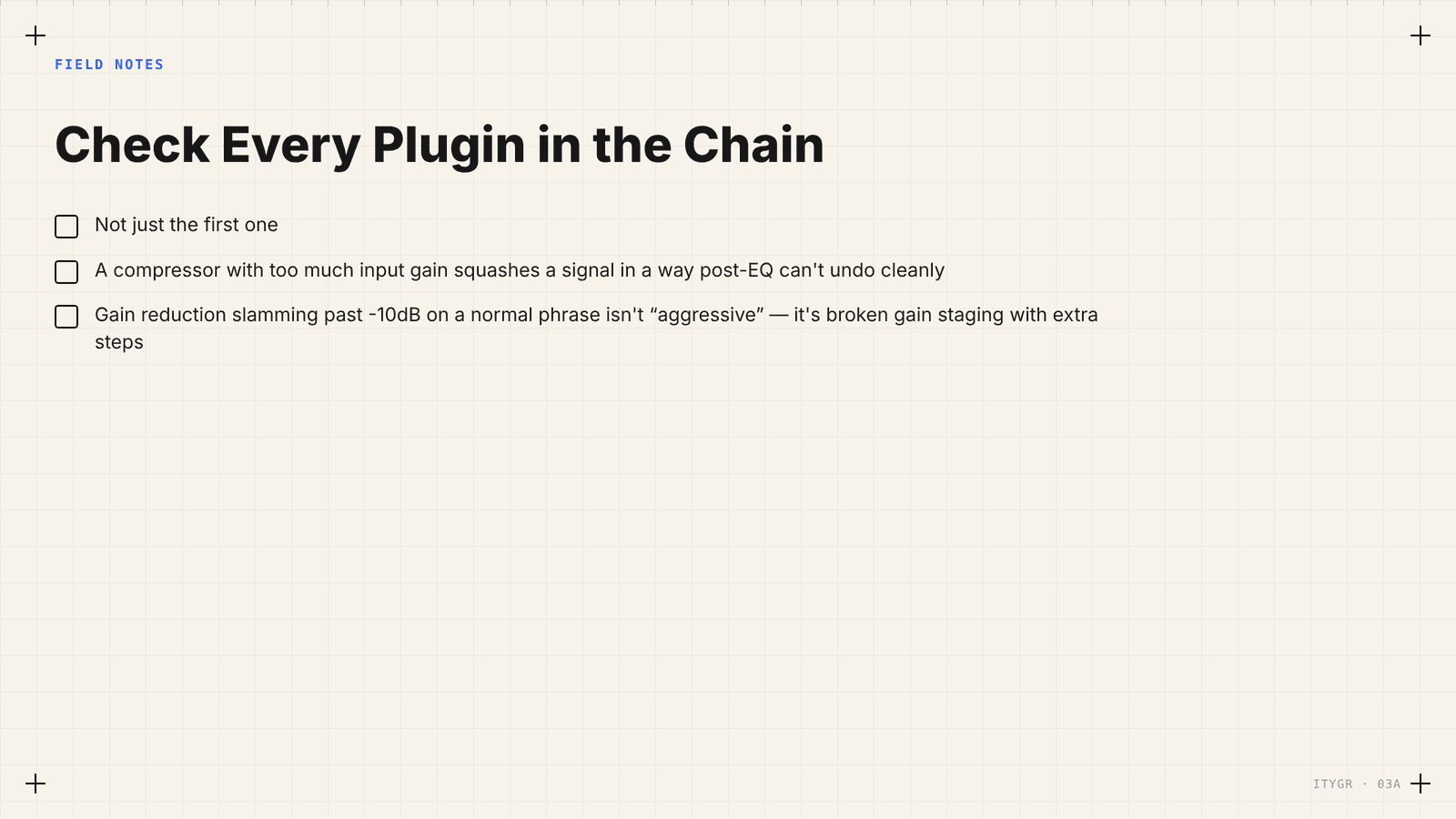
Check every plugin in the chain, not just the first one. A compressor with too much input gain will squash a signal in a way that no amount of post-EQ can undo cleanly. If your compressor’s gain reduction meter is slamming past -10dB on a normal phrase, that’s not “aggressive,” that’s broken gain staging with extra steps.
Then, and only then, reach for the EQ. You’ll find that half the “problems” you thought you had — the muddiness, the harshness, the thing that sounds like it’s “fighting for space” — get a lot smaller once the gain structure isn’t actively working against you.

I get why EQ is the first move for most people. It’s visual, it’s satisfying, you can see the curve doing something. Gain staging is boring. There’s no cool curve. It’s just numbers sitting where they’re supposed to sit. But boring is doing the actual work here, and the EQ move you make after fixing gain will almost always be smaller and cleaner than the one you were about to make before.
Try it on the next mix that’s stressing you out. Pull everything down, get your levels sitting where they should, and see how many of your “EQ problems” just quietly disappear. You’ll save yourself twenty minutes of chasing a frequency that was never actually the issue.

Keep reading