Ahead Sticks: The Case for Aluminum in a Wood-Stick World
Aluminum drumsticks are the trade nobody explains well. Wood drumsticks are a subscription service. Hard hitters know the ritual: buy a brick, snap them one by one, repeat until retirement. Ahead’s pitch is different enough that it reads like a trick — aluminum cores with replaceable polyurethane sleeves — so let’s treat it like gear, not merch.
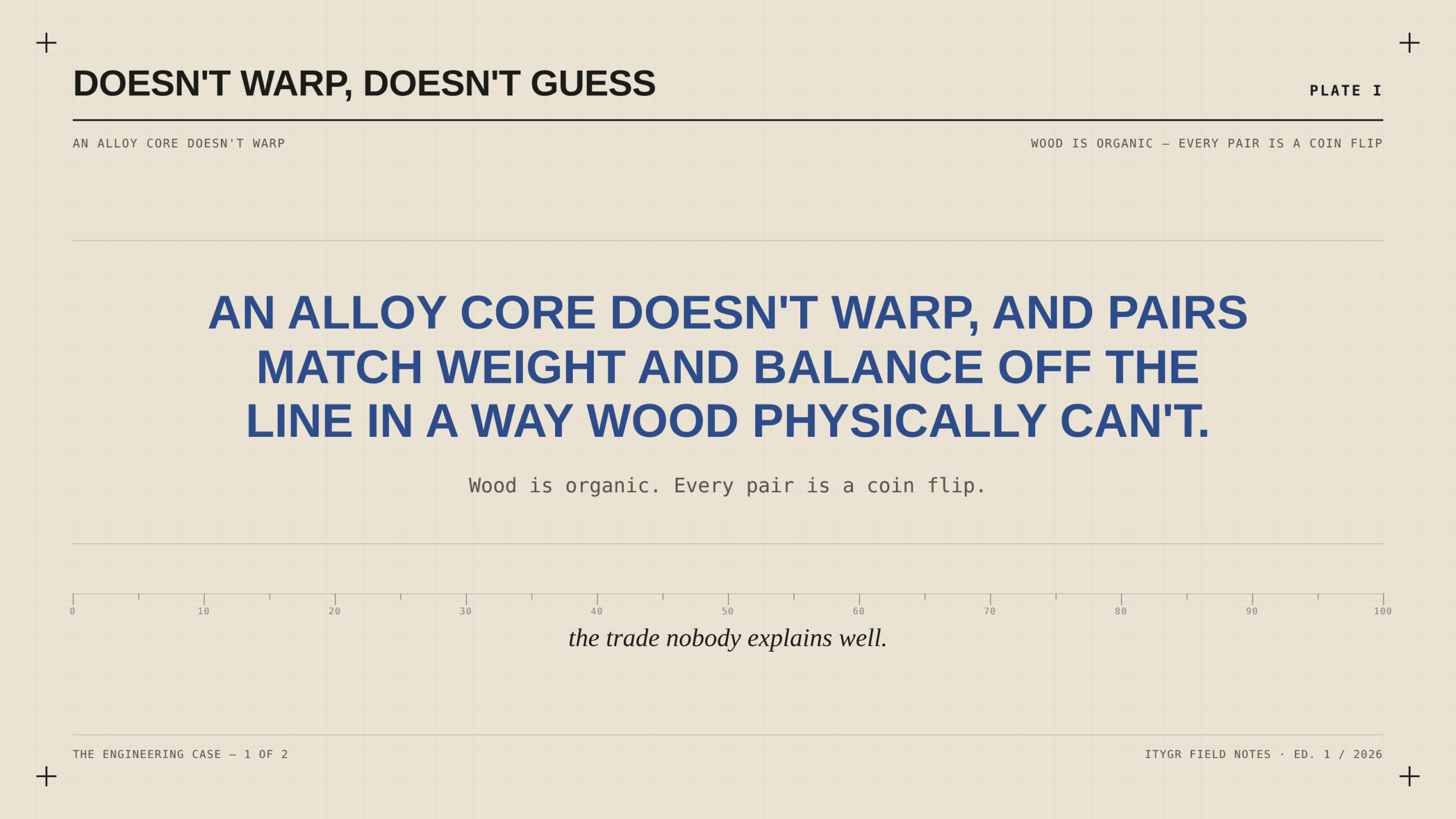
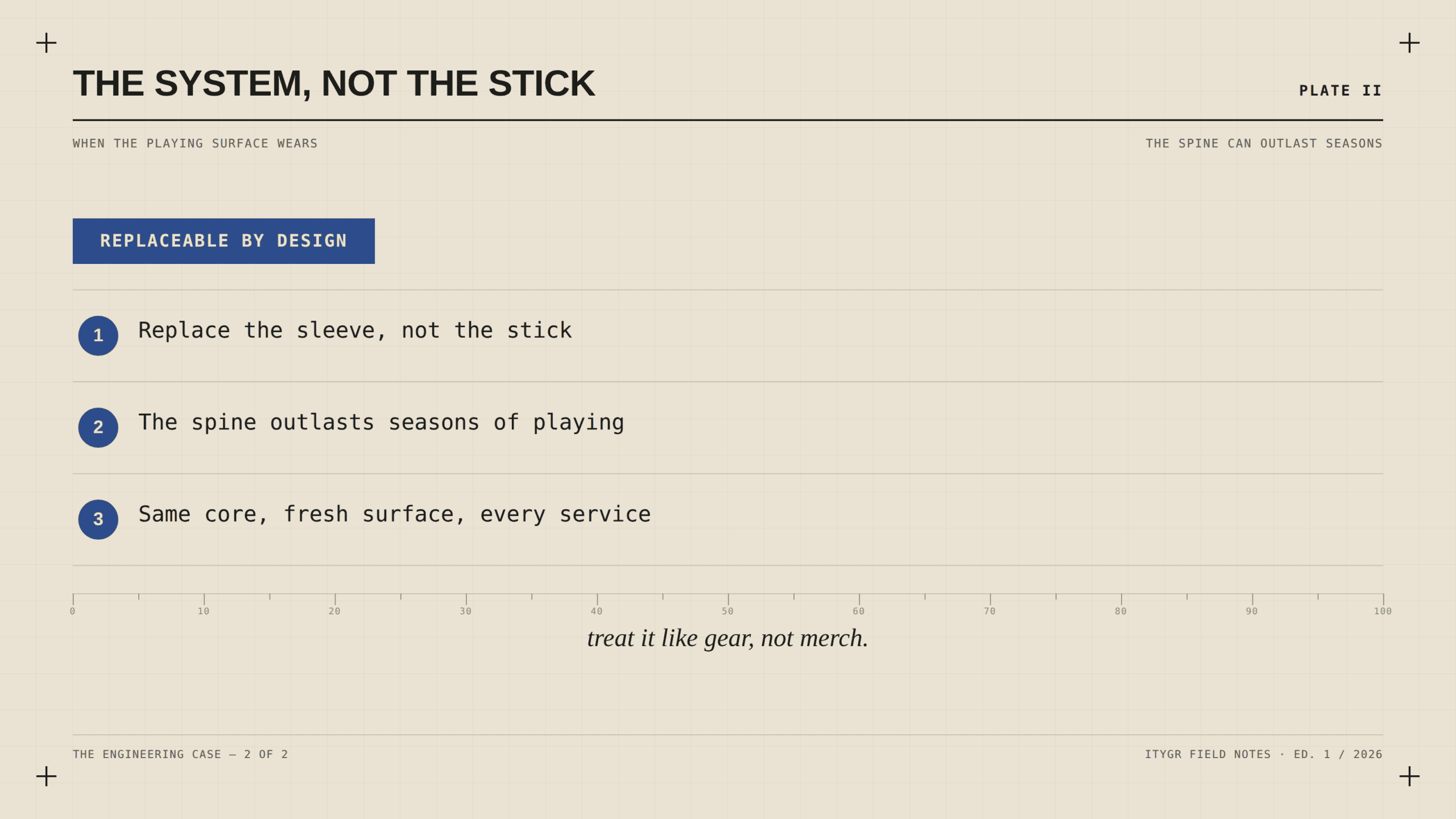
The engineering case: an alloy core doesn’t warp, and pairs match weight and balance off the line in a way wood physically can’t — wood is organic, every pair is a coin flip. When the playing surface wears, you replace the sleeve, not the stick. The spine of the stick can outlast seasons of playing.
Aluminum Drumsticks Behind a Kit
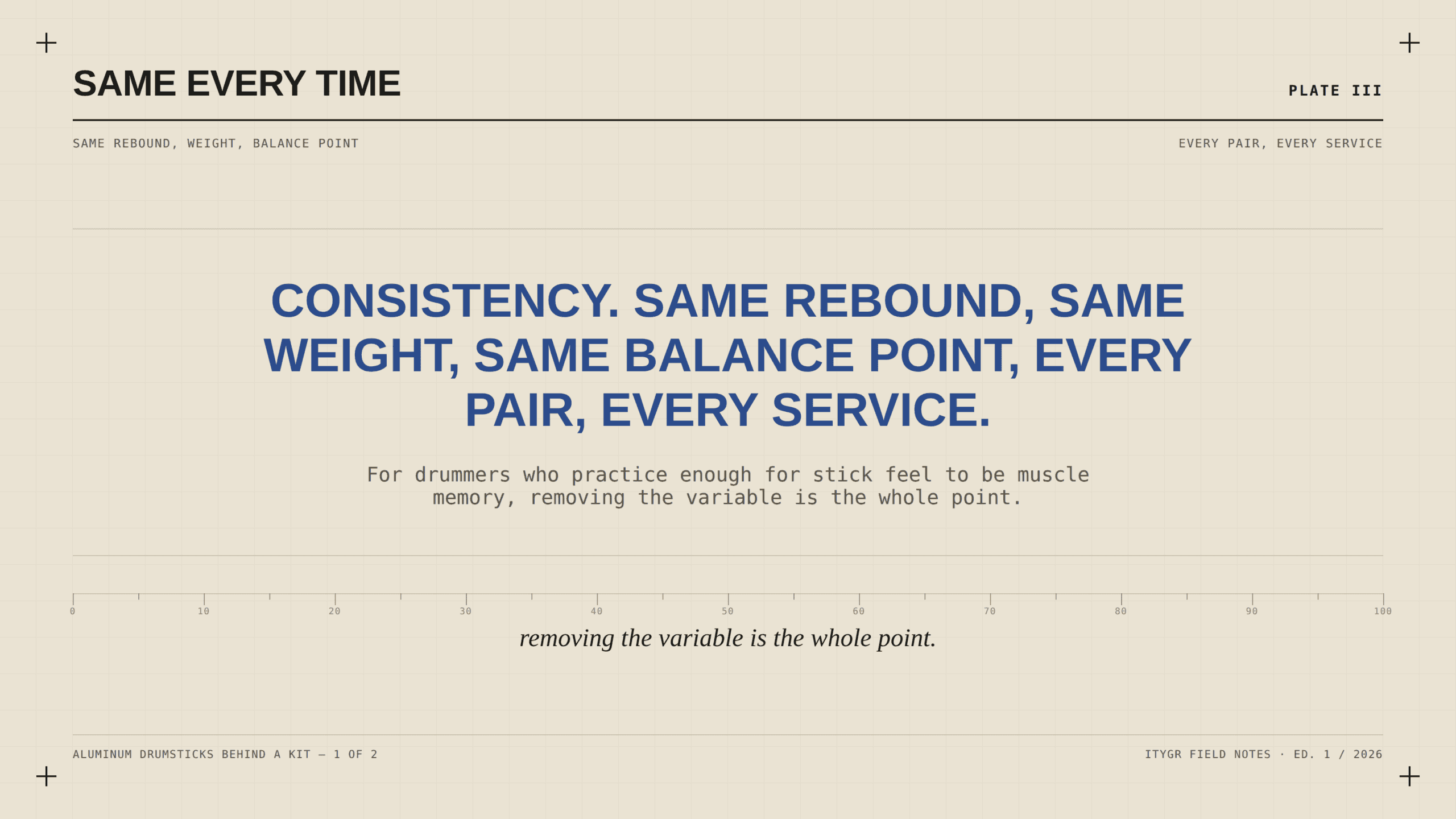
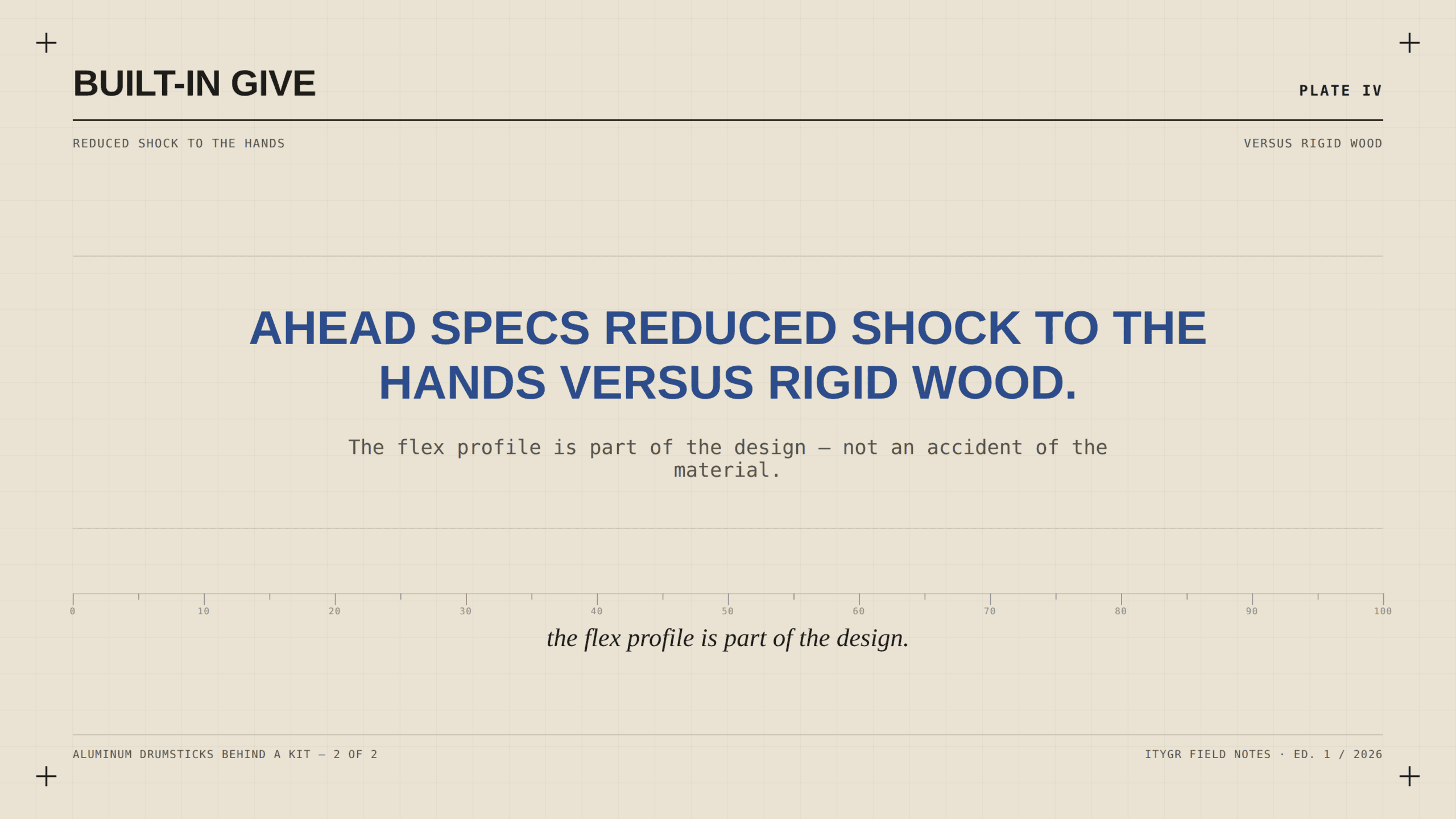
Consistency. Same rebound, same weight, same balance point, every pair, every service. For drummers who practice enough for stick feel to be muscle memory, removing the variable is the whole point. Ahead also specs reduced shock to the hands versus rigid wood — the flex profile is part of the design.
The Honest Trade
They feel different — slightly different rebound character, and rimshots ring differently on some drums. Up-front cost is higher; long-run cost usually flips for heavy hitters. Cymbal-wise, a worn sleeve exposes nothing sharp, but keep sleeves fresh anyway. It’s a system, and systems reward maintenance.

Who should actually buy aluminum drumsticks? Touring drummers who go through a pair every night are the clearest case — the math on aluminum drumsticks pays for itself inside a few months once broken wood sticks stop showing up as a recurring cost. Bedroom players who break a pair every year or two will feel the up-front price more and the payoff less. The honest answer is that aluminum drumsticks are a tool for a specific kind of player, not a universal upgrade, and treating them as either a gimmick or a miracle misses the point.

Wood sticks are romantic. Matched weight every single pair is romantic too, if you play for a living.