The 3:1 Rule: Mic Placement Math That Actually Matters
The 31 rule mic placement guideline is older than everyone reading this. Most mic-placement advice is vibes. This one is arithmetic, it’s older than everyone reading this, and it still prevents more mud than any plugin: the 3:1 rule.

The 31 Rule Mic Placement Formula
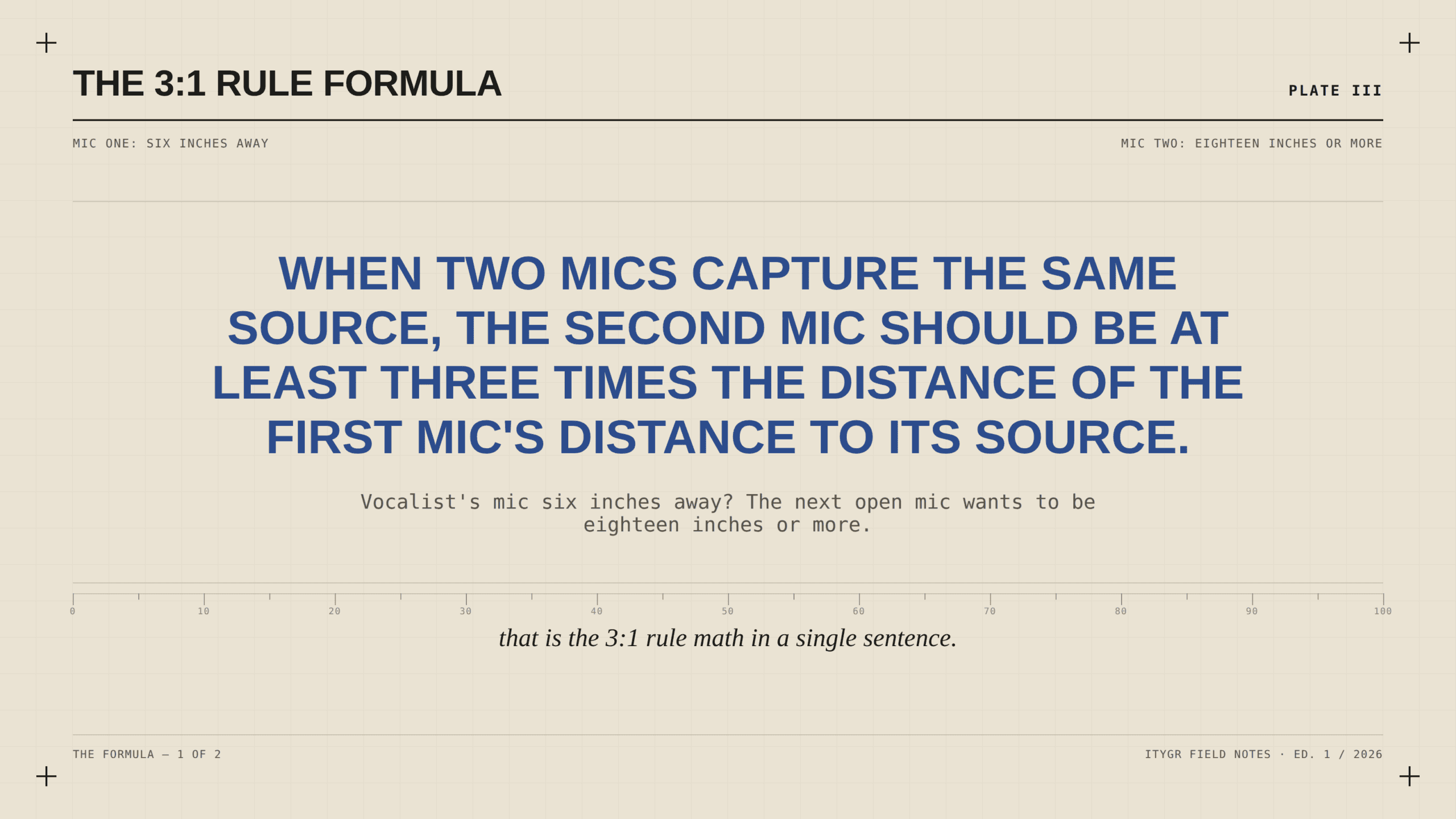
When two mics capture the same source area, the second mic should be at least three times the distance of the first mic’s distance to its source. Vocalist’s mic six inches away? The next open mic wants to be eighteen inches or more from that vocalist. That spacing drops the bleed low enough that phase cancellation stops eating your tone. That is the 31 rule mic placement math in a single sentence.
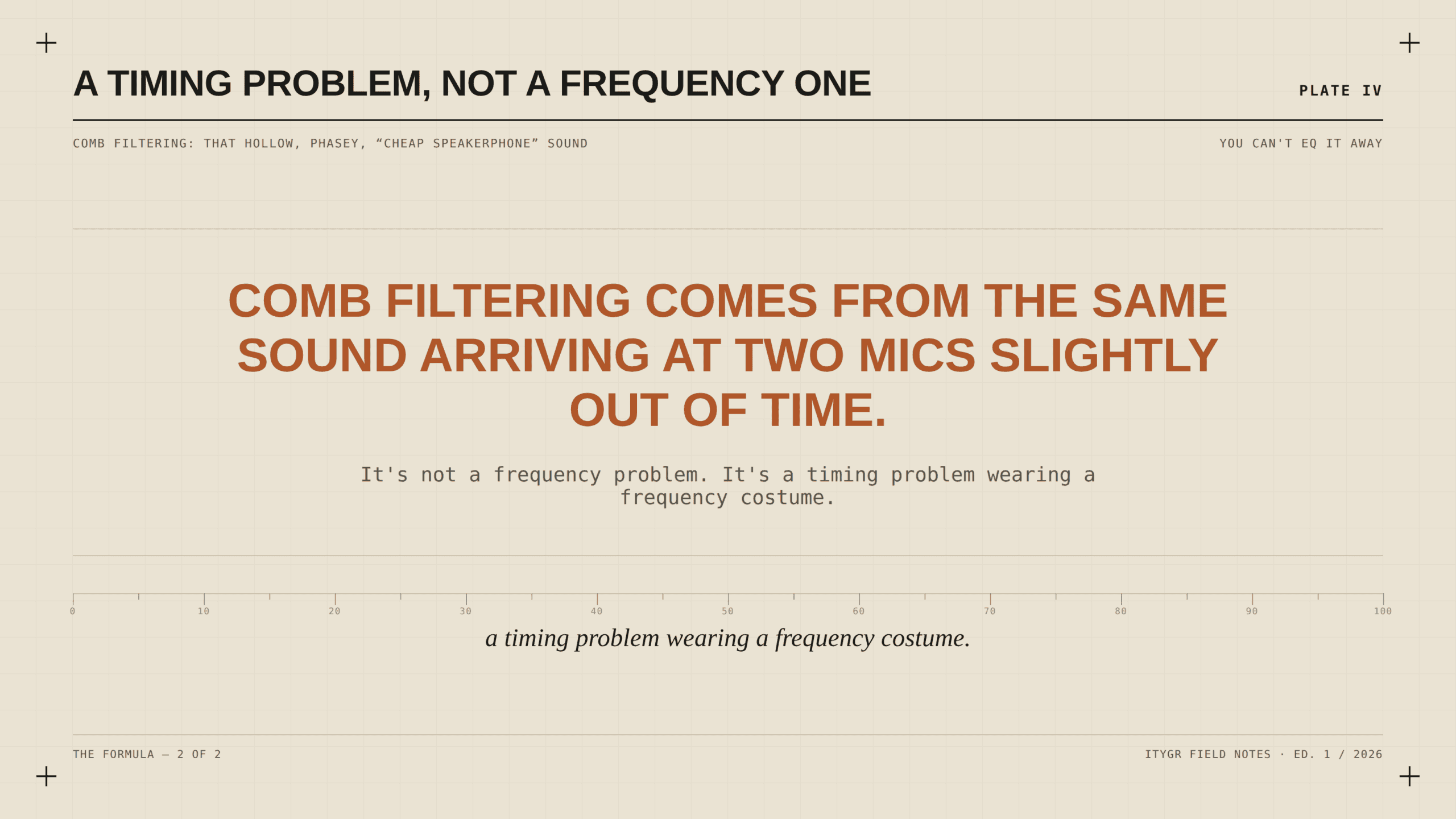
Why you care: comb filtering — that hollow, phasey, “why does this sound like a cheap speakerphone” effect — comes from the same sound arriving at two mics slightly out of time. You can’t EQ it away, because it’s not a frequency problem. It’s a timing problem wearing a frequency costume.
Where It Shows Up
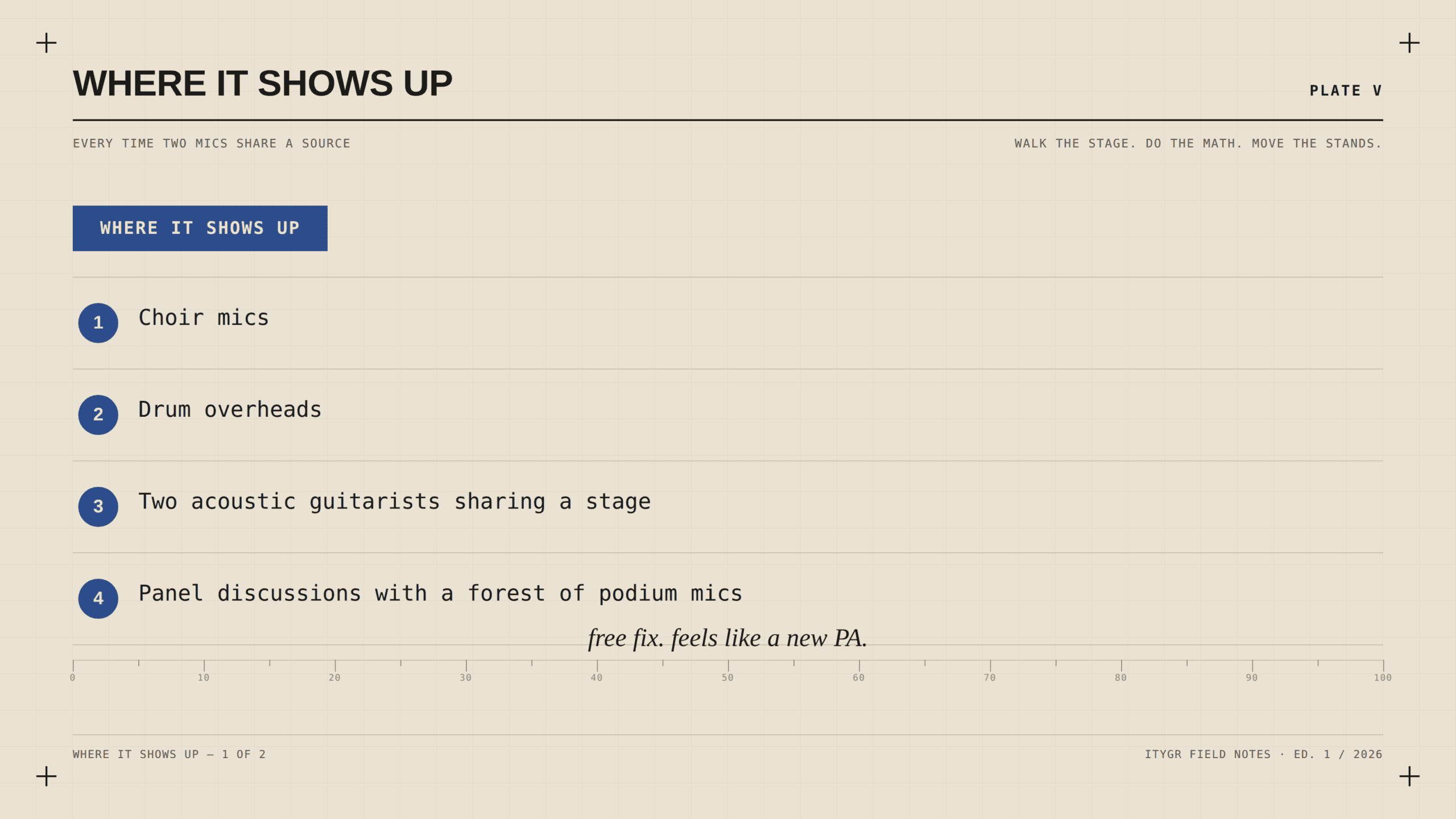
Choir mics, drum overheads, two acoustic guitarists sharing a stage, panel discussions with a forest of podium mics. Walk the stage, do the math, move the stands. Free fix. Feels like a new PA. The 31 rule mic placement guideline shows up every time two mics share a source.
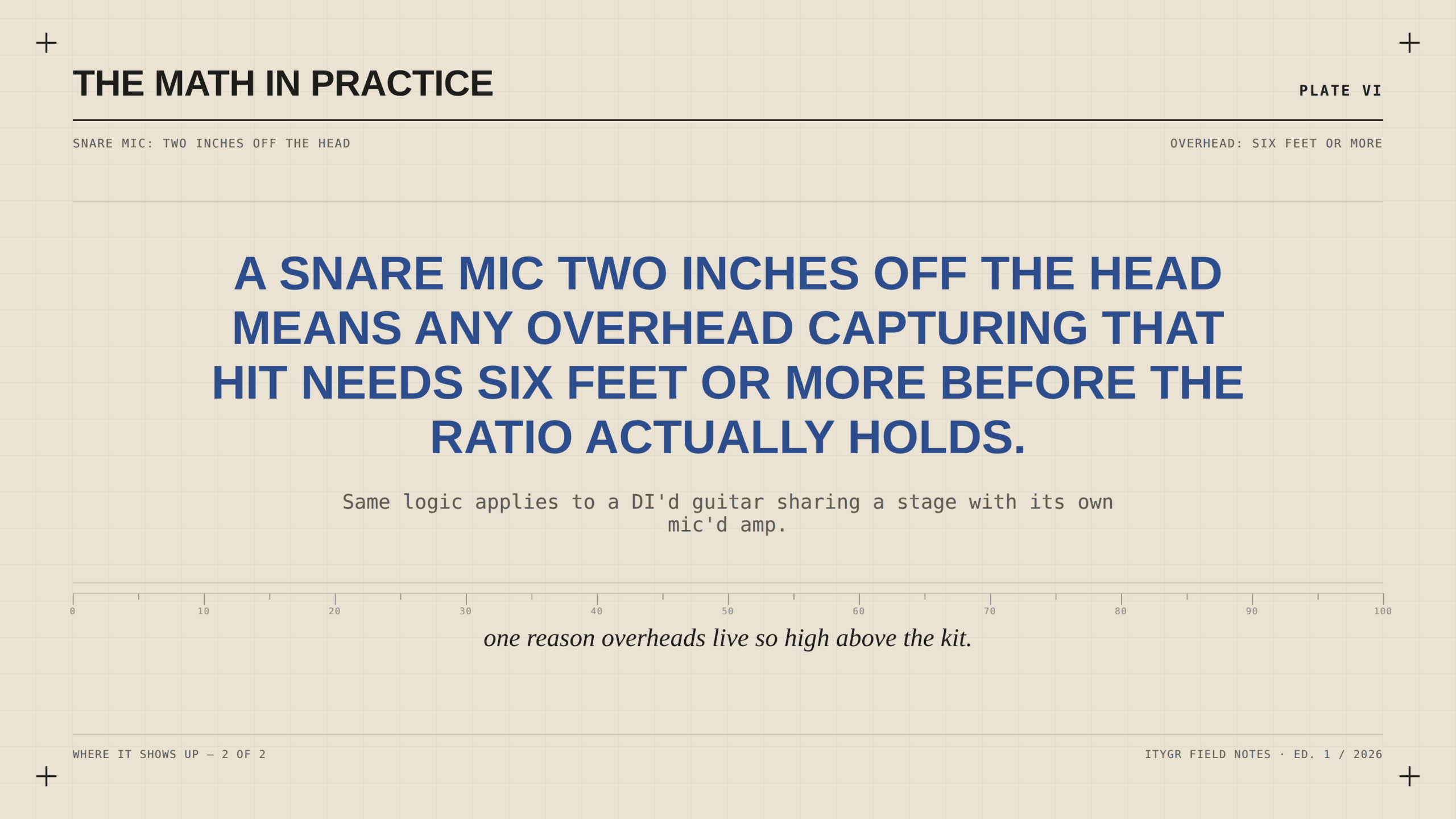
Here’s the math in practice: say your snare mic sits two inches off the head. Any overhead capturing that same snare hit needs to be six feet away or more before the 3:1 ratio actually holds — which is one reason overheads live so high above the kit instead of hovering at head height. Same logic applies to a DI’d acoustic guitar sharing a stage with its own mic’d amp: if the amp mic is a foot away, keep any nearby room mic three feet or further from that amp, or just skip the room mic and trust the DI.
When the stage is too small to hit the ratio — a four-piece jammed onto a six-foot riser — you won’t win with distance. Angle the mics instead, so the null side of a cardioid pattern faces the competing source instead of the front. It’s not as clean as real distance, but it beats doing nothing and blaming the console. For more setups like this, the rest of our Field Notes cover the small habits that save a soundcheck. Even then, the 31 rule mic placement logic still tells you which way to lean.

You can’t mix your way out of a placement problem. Move the mic; the plugin was never going to save you.