High-Pass (Almost) Everything: One Filter, Whole Mix Cleaner
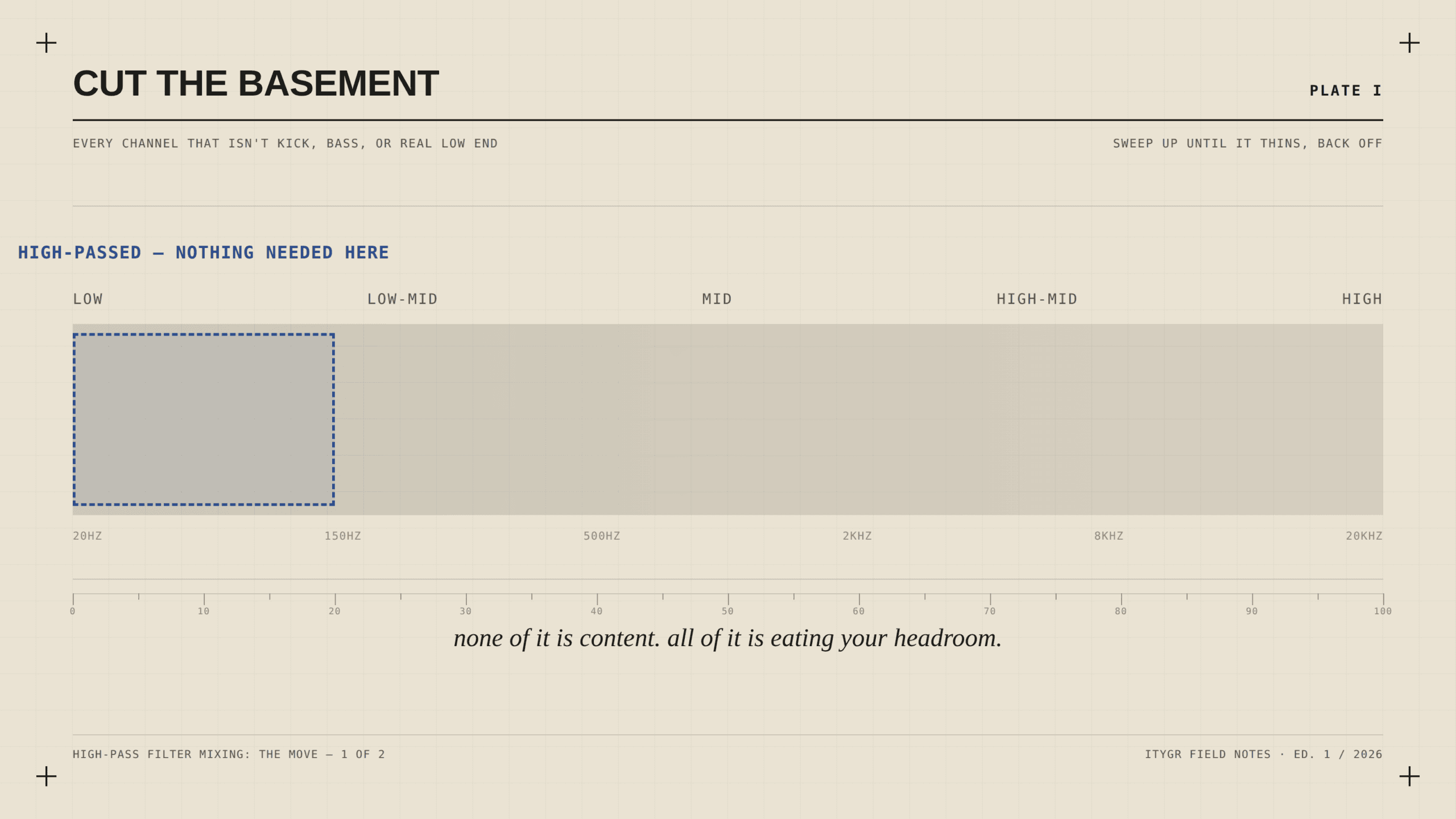
High-pass filter mixing is the single cheapest move in a live mix. Open up a live mix or a rough session and solo the low end. Under the music there’s a second, worse concert: stage rumble, mic handling, HVAC rumble, a vocal mic faithfully reproducing the kick drum from four feet away. None of it is content. All of it is eating your headroom.
High-Pass Filter Mixing: The Move
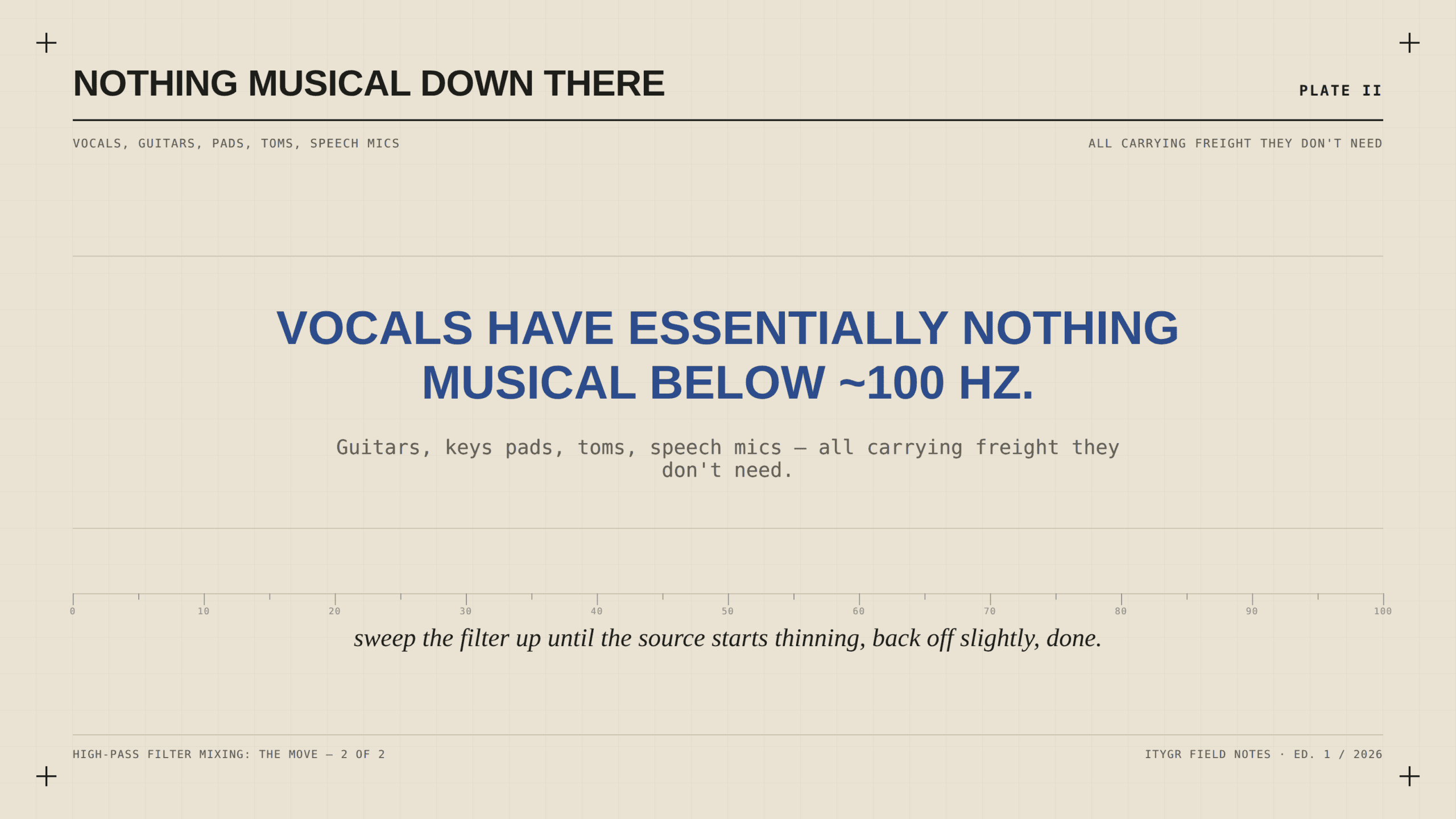
Engage the high-pass filter on nearly every channel that isn’t kick, bass, or something with real information down low. Vocals have essentially nothing musical below ~100 Hz; guitars, keys pads, toms, speech mics — all carrying freight they don’t need. Sweep the filter up until the source starts thinning, back off slightly, done.
Why It Works
Low frequencies carry the most energy per perceived loudness. Stack ten channels of subsonic garbage and the PA and your bus compressor work overtime on sound nobody hears as sound — they hear it as “mud” and “why is it so loud but not clear.” Clear the basement and the kick and bass suddenly own the floor they were fighting for.

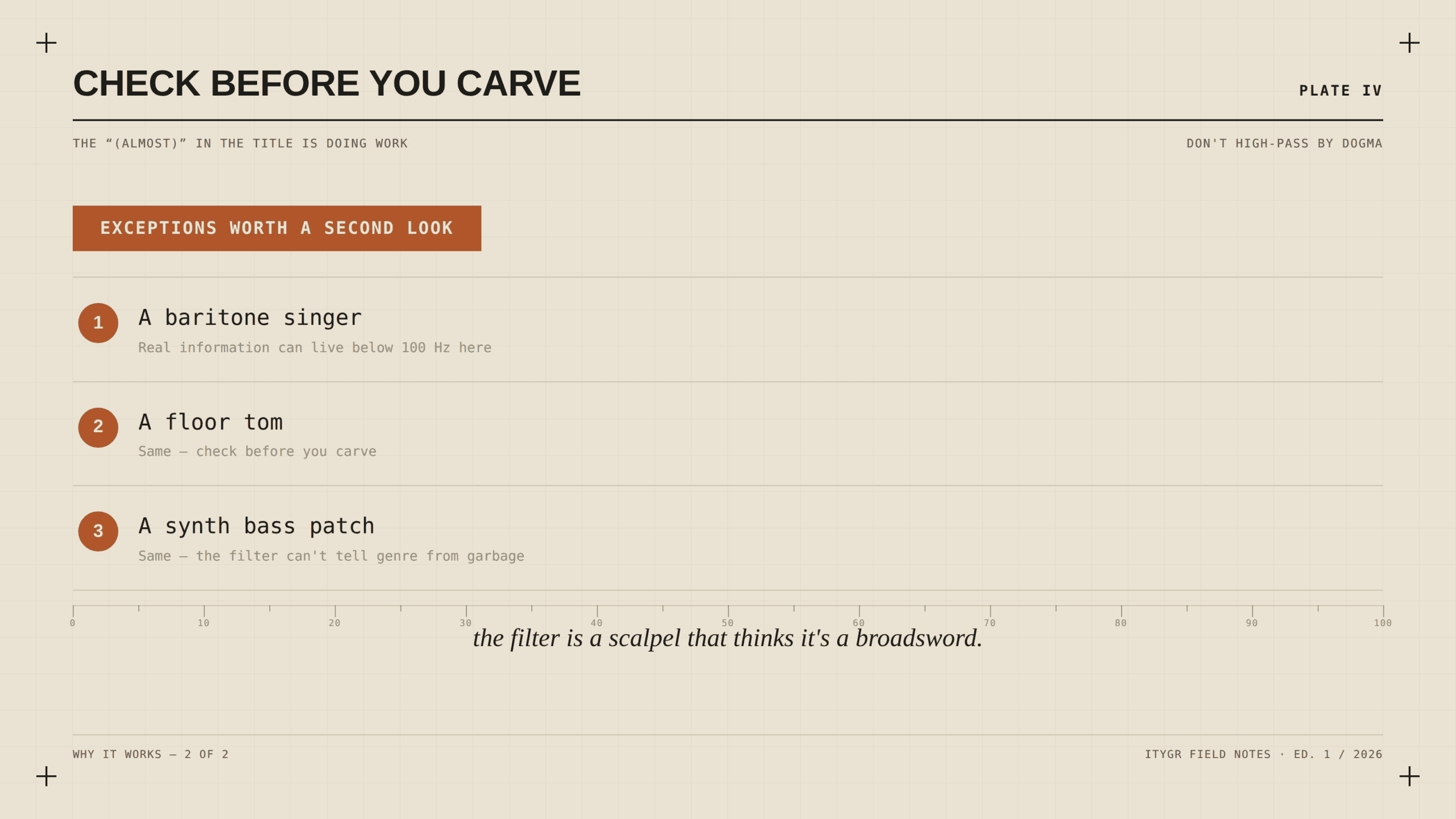
The (almost): don’t high-pass by dogma. A baritone singer, a floor tom, a synth bass patch — check before you carve. The filter is a scalpel that thinks it’s a broadsword; sweep with your ears on, not just the habit.
Where to Set It
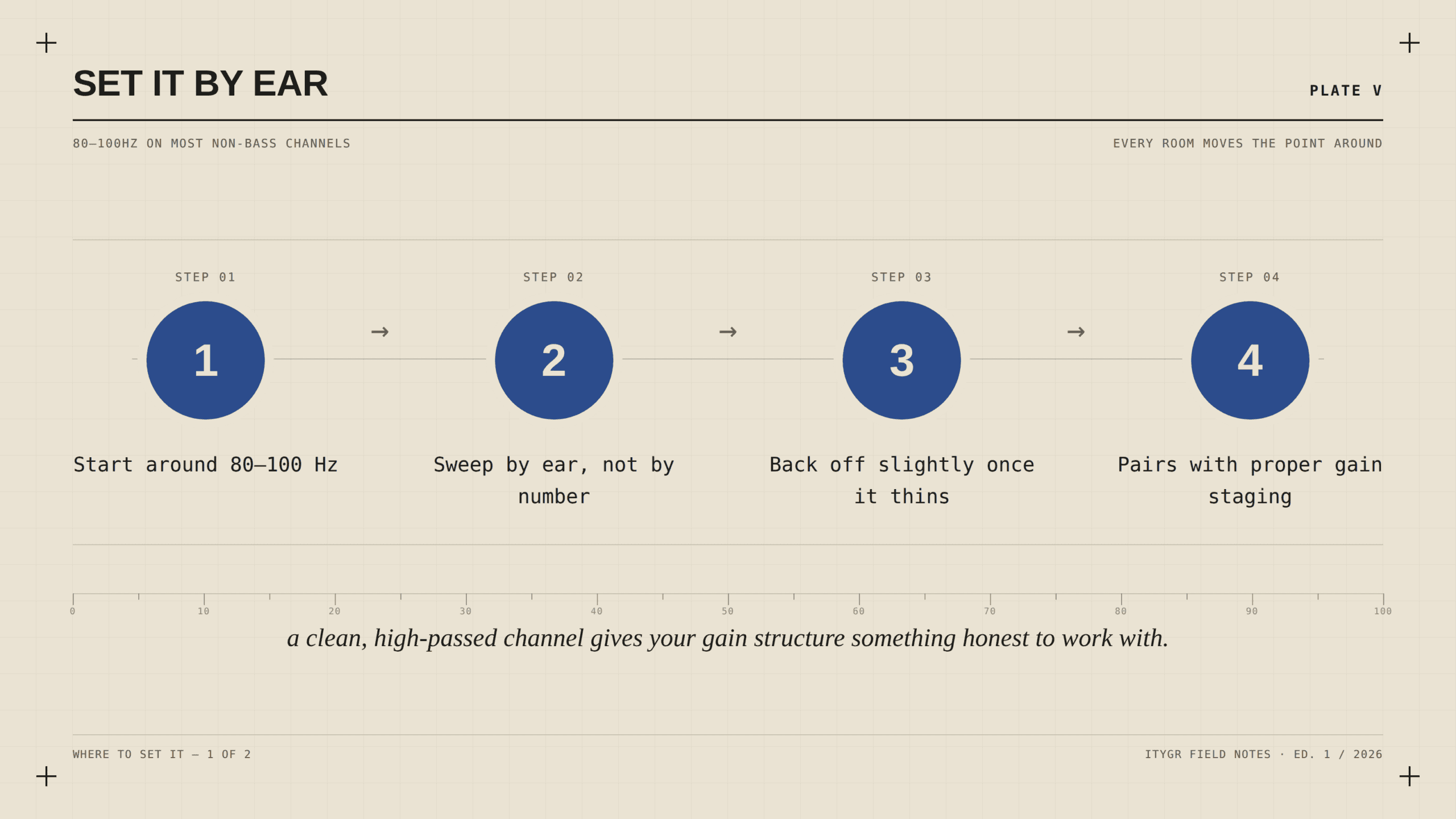
Start around 80–100 Hz on most non-bass channels and sweep by ear, not by number — every room and every voice moves that point around. This pairs directly with proper gain staging: a clean, high-passed channel gives your gain structure something honest to work with instead of fighting rumble it should never have seen. More on that here.
High-pass filter mixing is not a genre trick or a plugin gimmick — it is the fastest way to make a crowded stage sound like a produced record. Every channel that does not need sub-100Hz information is quietly stealing headroom from the channels that do. High-pass filter mixing habits, applied consistently across a show, is the difference between a mix that sounds loud and one that sounds clear at the same volume.
The fastest way to make the low end bigger is to give it fewer roommates.