Speaker and Cable Break-In: What’s Real, What’s Ritual
Speaker break-in is the one part of this myth that is actually real. “Give it 100 hours to break in” is audio’s favorite return-window-outlasting advice. Some of it has a real mechanism behind it. Some of it is a candle ceremony. Worth separating, calmly.
Speaker Break-In: The Real Part
A driver is a mechanical system with a suspension (the spider and surround), and mechanical suspensions loosen slightly with use. Measurable? Yes — small shifts in compliance and resonance, mostly early in the driver’s life. Audible? Sometimes, modestly, mostly in the low end. Manufacturers account for it. It is not the difference between a speaker you hate and a speaker you love.


The Ritual Part: Cables
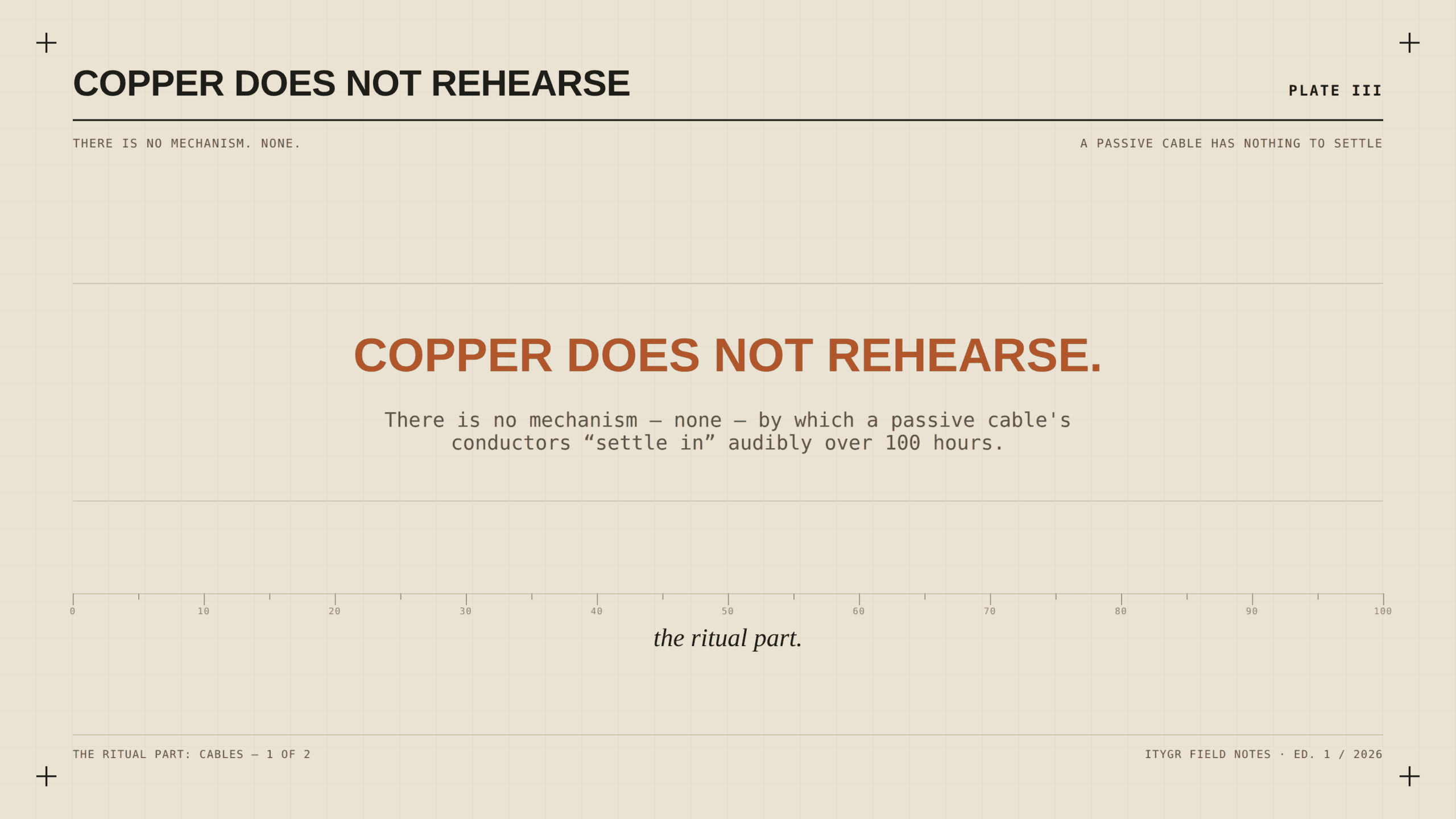
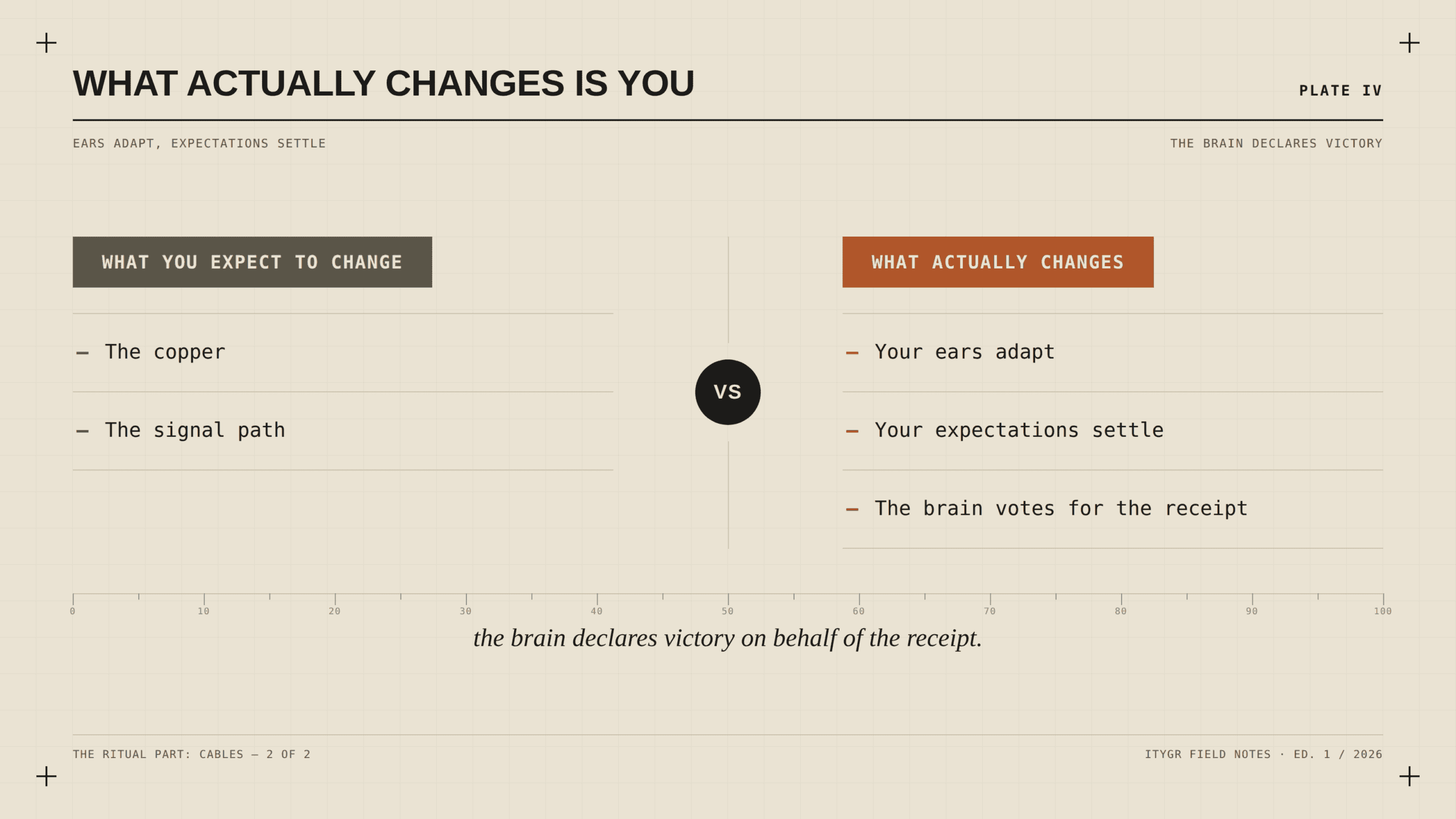
Copper does not rehearse. There is no mechanism — none — by which a passive cable’s conductors “settle in” audibly over 100 hours. What does change in that time is you: your ears adapt, your expectations settle, and the brain declares victory on behalf of the receipt.
The useful takeaway: if new monitors sound different in week two, fine — also check that week two didn’t come with new placement, new levels, and newly adapted ears. Trust mechanisms, verify with measurements, and let rituals be rituals. Candles are nice too; nobody claims they change the frequency response.
How to Actually Tell
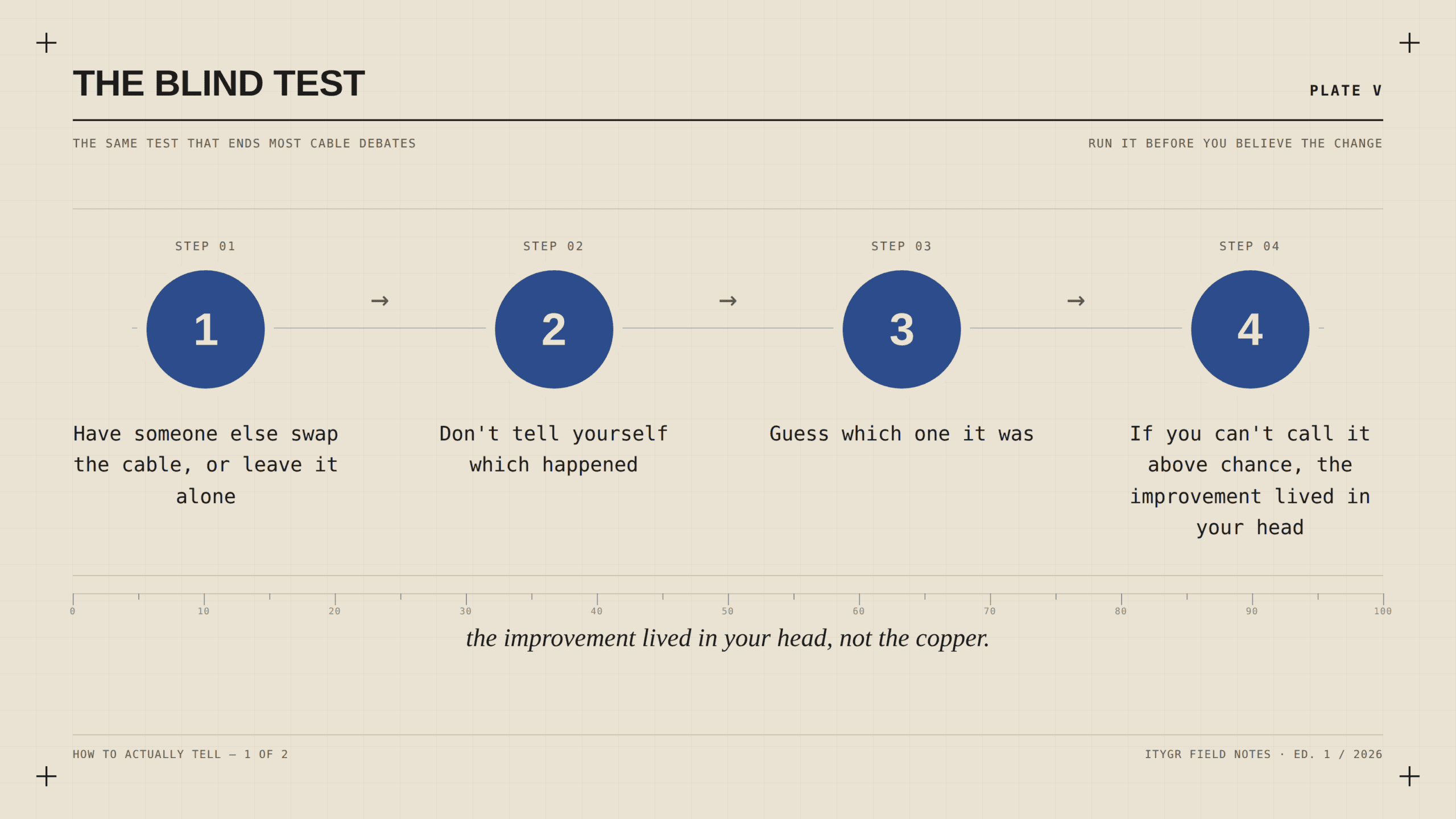
If you think you’re hearing a change, blind it. Have someone else swap the cable, or leave it alone, without telling you which. If you can’t call it above chance, the improvement lived in your head, not the copper — which is the same test that ends most expensive-cable debates. I go deeper on that one here.

Speaker break-in shows up as a small, measurable loosening of that suspension, not a magical transformation. Manufacturers already account for speaker break-in in their published specs, which is why a driver measured on day one and a driver measured after a hundred hours are not meaningfully different products. Treat speaker break-in as a real but minor mechanical fact, not a reason to avoid trusting your ears in the first week with new monitors.
Break-in is real for suspensions and imaginary for wire. Your ears break in more than either.