Always Print a Rough Mix Before the Artist Walks Out the Door
Always print rough mix copies before the artist leaves – that’s the one habit that changed everything for me. Early on, I’d wrap a tracking session, tell the artist “I’ll get you a mix soon,” and let them head out the door with nothing in hand. Felt efficient at the time – why hand over something rough when a better version was coming? Turns out that instinct cost me more than it ever saved.
Why You Should Always Print Rough Mix
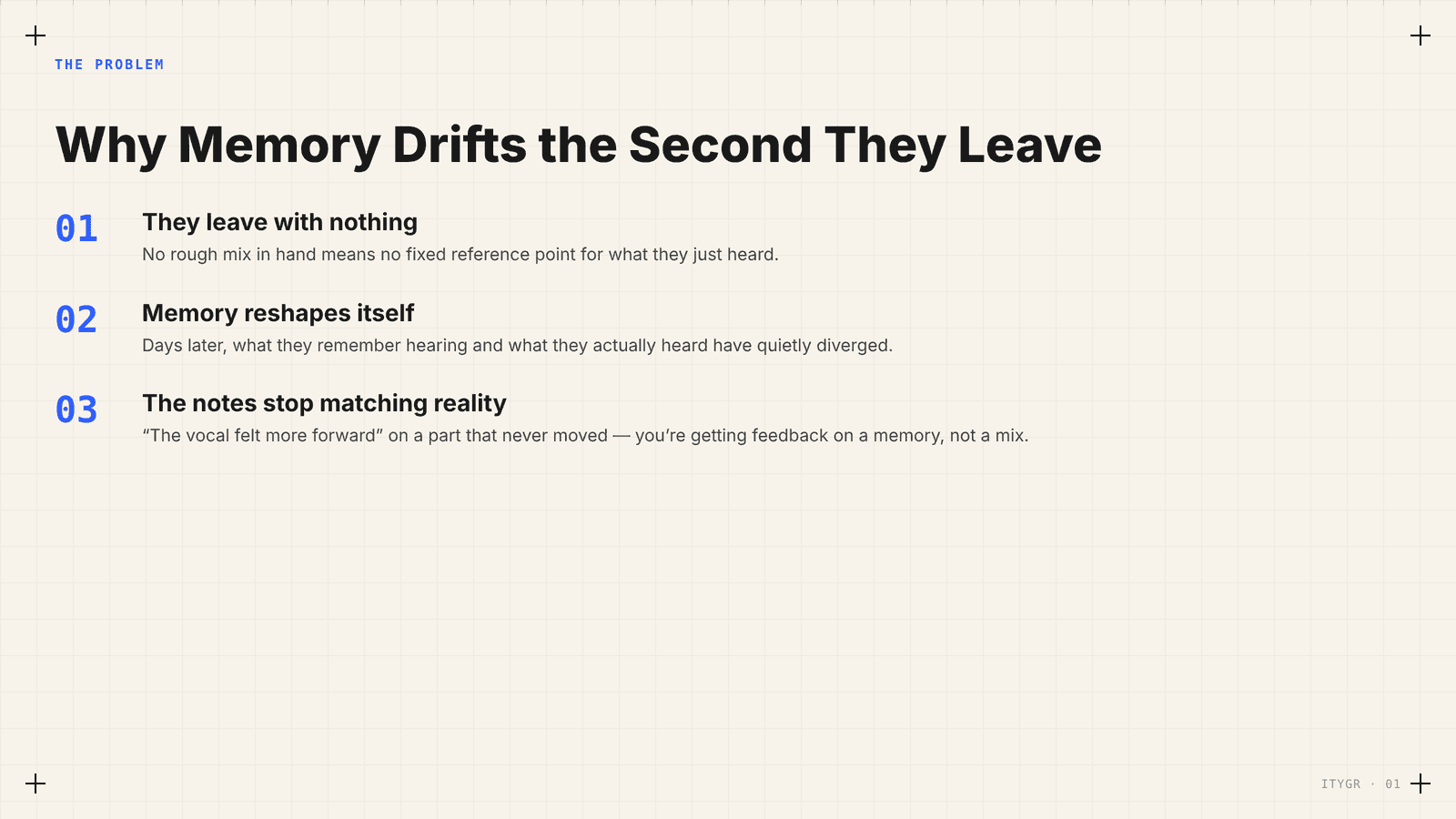
Here’s what actually happens without a rough mix in hand: the artist leaves, and their memory of what they just recorded starts drifting the second they walk out the door. By the time I sent a real mix days later, what they remembered hearing in the room and what they were actually hearing had quietly diverged. Notes would come back that didn’t match anything that happened in the session – “the vocal felt more forward” when it hadn’t moved, “I don’t remember that guitar part being that loud” on a part that had been sitting at the same level the whole time. I wasn’t getting feedback on my mix. I was getting feedback on a memory that had already started to fade and reshape itself. Print a rough mix and that drift stops before it starts.
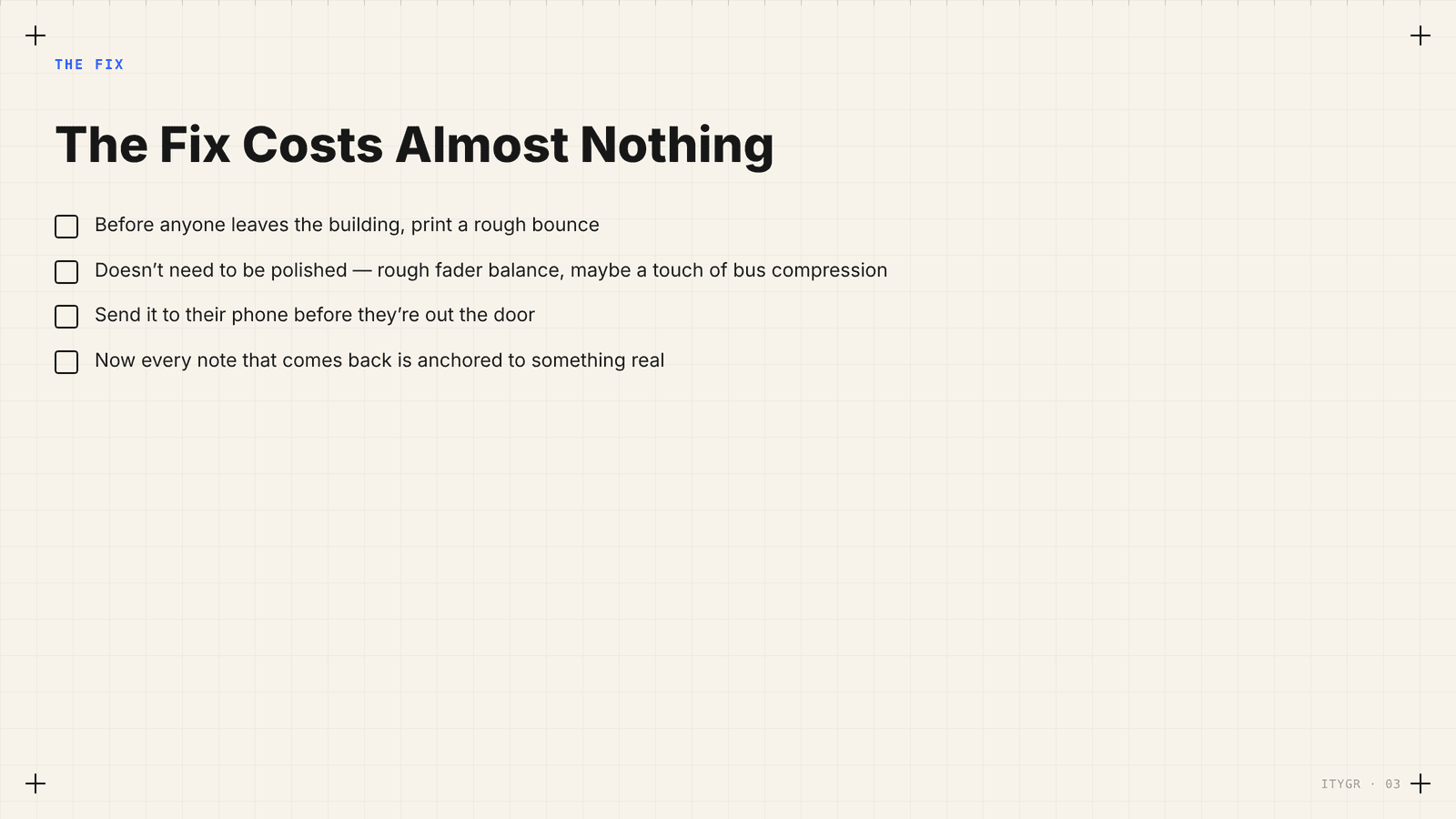
The fix costs almost nothing: before anyone leaves the building, print a rough bounce. Doesn’t need to be polished. Rough fader balance, maybe a touch of compression on the bus, nothing precious. Send it to their phone before they’re out the door. Now they have an actual reference instead of a fading memory, and every note that comes back afterward is anchored to something real instead of something remembered.
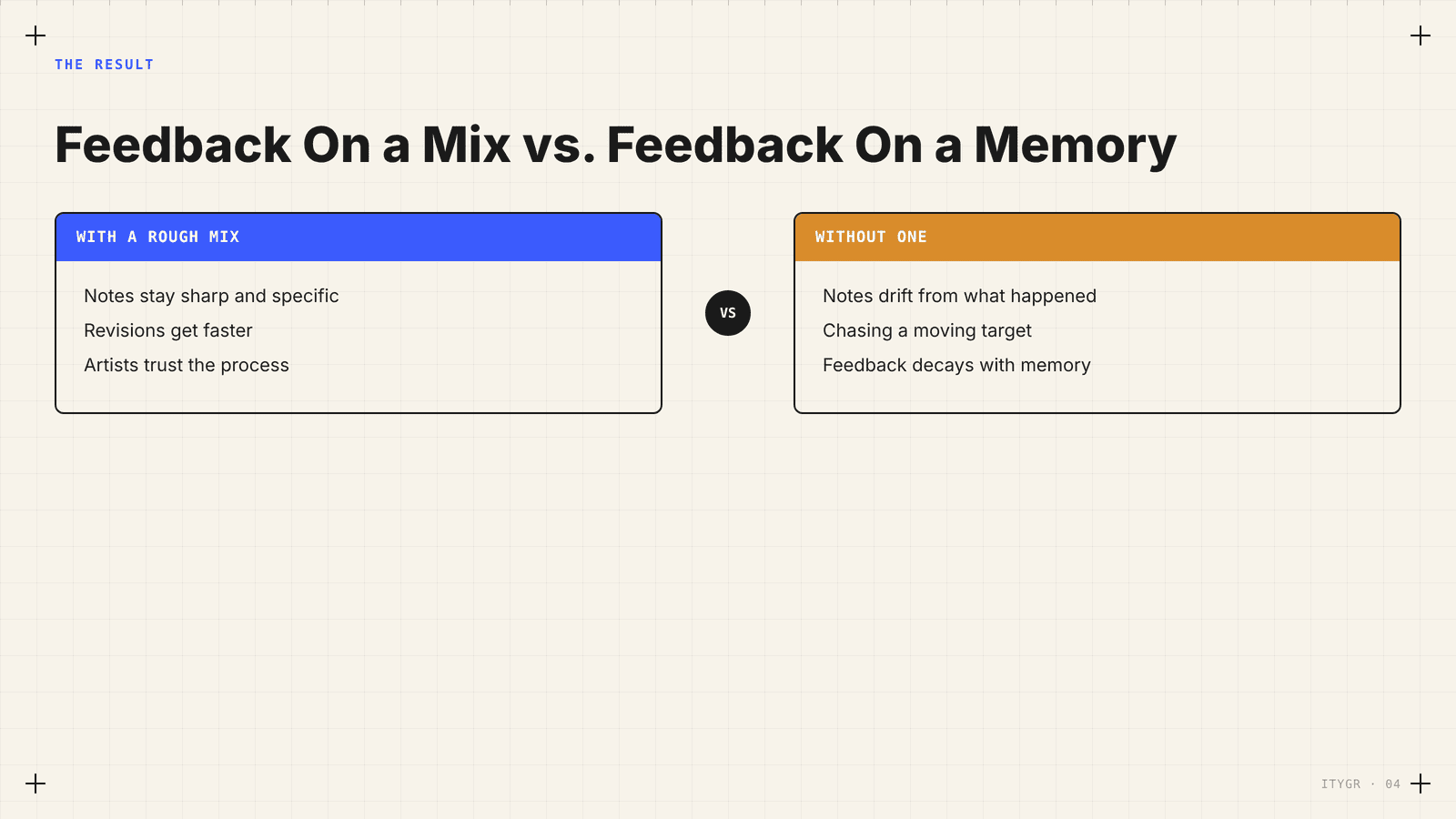
It changed the entire feedback loop. Notes got sharper and more specific because people were reacting to an actual mix instead of an impression of a session. Revisions got faster because I wasn’t chasing a moving target shaped by memory drift. And artists trusted the process more, because they walked out with something in hand instead of a promise.

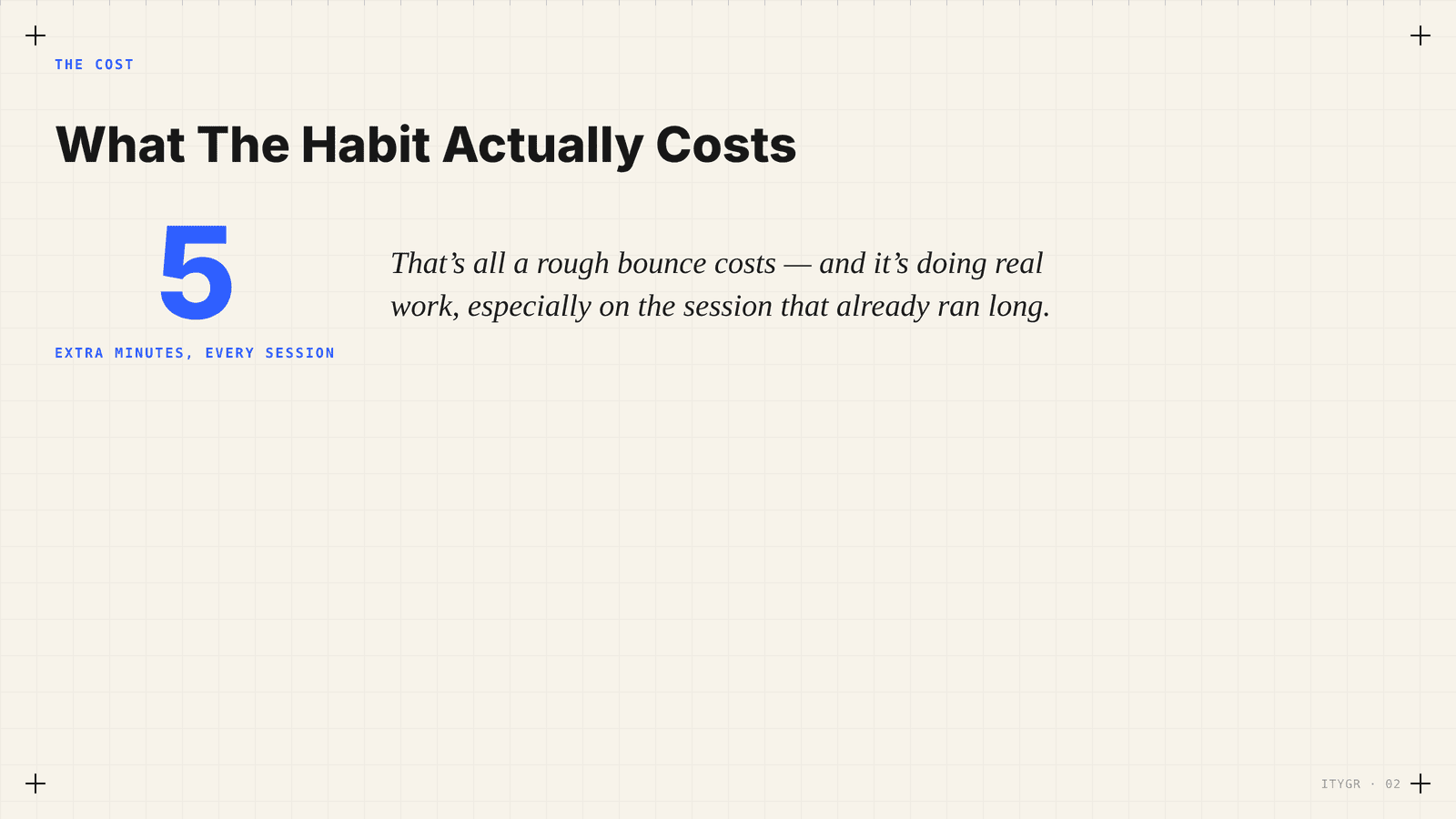
It takes maybe five extra minutes at the end of a session that’s already run long, and every one of those minutes is doing real work. Don’t skip it because you’re tired and the session ran over. That’s exactly the session where the artist’s memory needs the most help holding onto what actually happened. Always print rough mix – every session, no exceptions.
Keep reading