The Twin87: Two Eras of One Legendary Mic, One Switch
This UT Twin87 review looks past the marketing copy to the actual circuits inside. The UT Twin87’s pitch sounds like marketing: two legendary “87” circuits in one mic body, pick your era with a switch. Usually when a spec sheet sounds that cute, the product is hiding something. So let’s skip the vibes and look at what the switch actually does. Bookmark this UT Twin87 review before you spend money on either mode.
The engineering, in one paragraph
In Vintage mode, the capsule runs directly off 48V phantom power — the same topology as the earliest 87-style mics, and the reason those records sound soft and warm on top. Flip to Modern and an FET boost circuit raises the capsule’s polarization voltage to 63V. Higher voltage, higher sensitivity – a brighter, more articulate top end. Real components doing it, not a DSP preset pretending to.


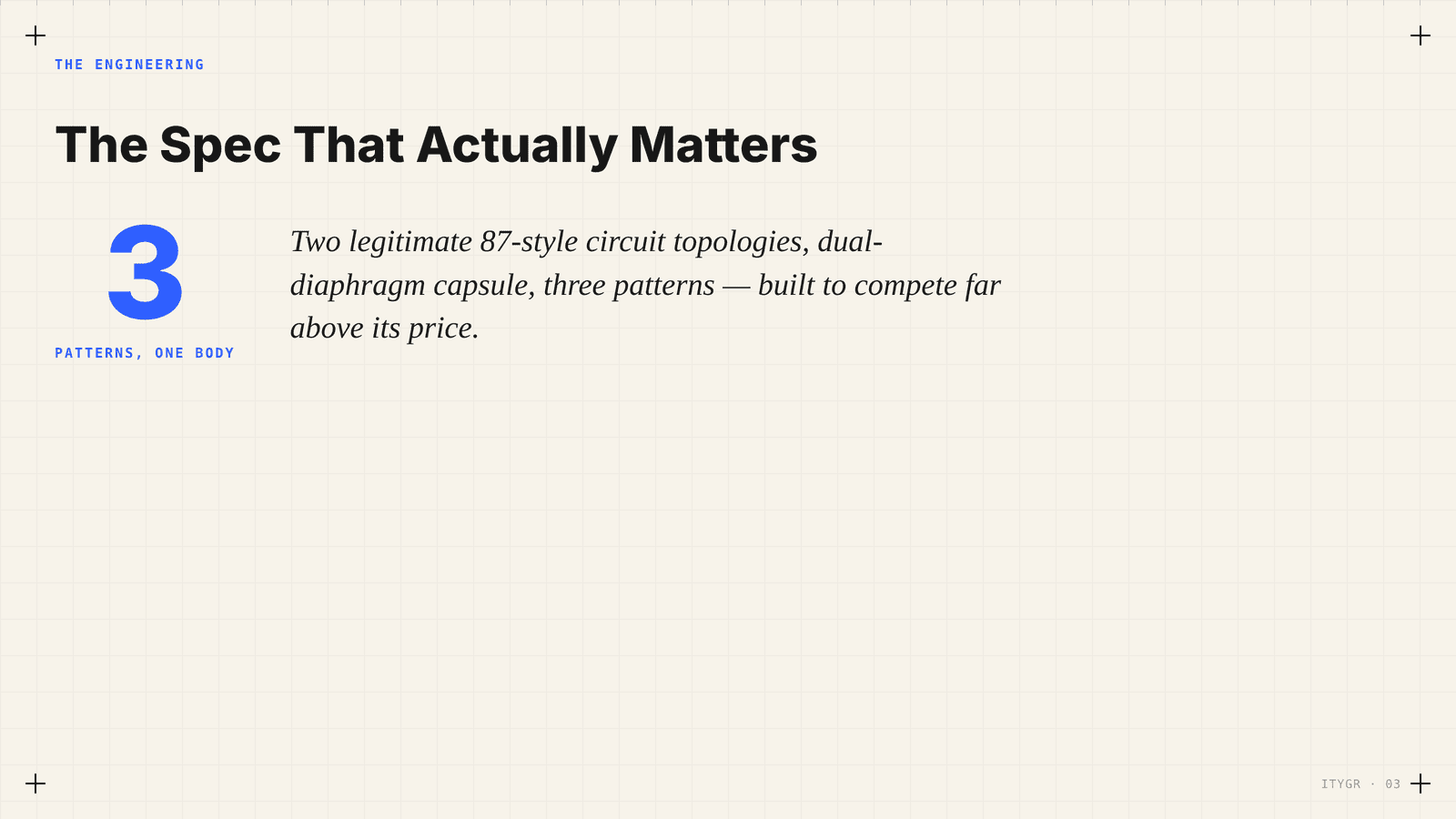
Why the switch matters more than the specs suggest: matching a vocal to a mic voicing normally means a second mic, a second stand, re-gaining, and losing ten minutes of whatever the singer had going. Here it’s one toggle. Bright voice, take the softer vintage side. Dark voice, open it up with modern. The chart difference looks subtle; on the right voice, the decision isn’t.
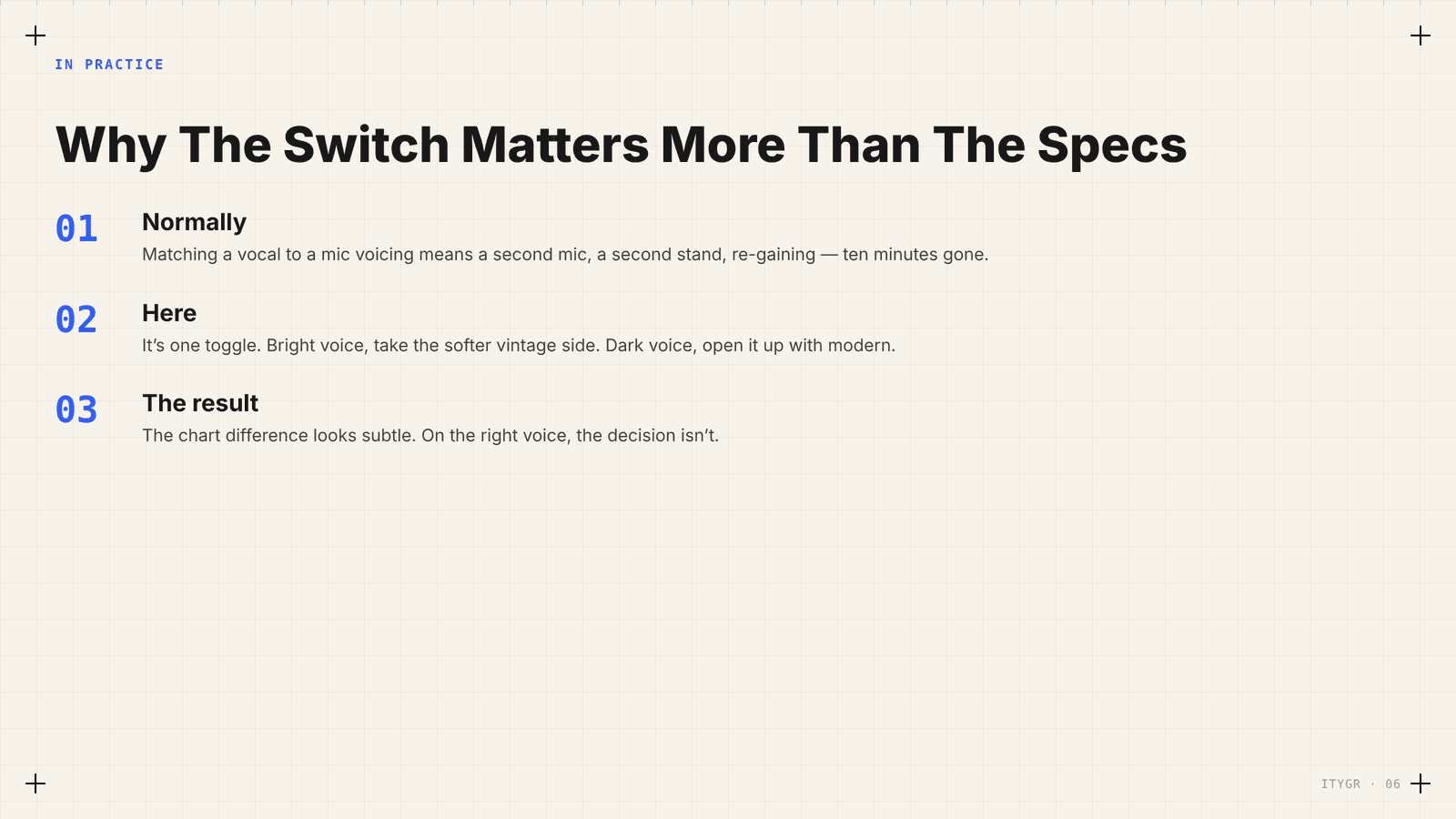
The skeptic’s paragraph, because I live there: is it “a U87”? No clone is, and anyone declaring theirs indistinguishable is selling something — possibly a clone. What it verifiably is: two legitimate 87-style circuit topologies, dual-diaphragm capsule, three patterns, built to compete far above its price. Judge it in your own room, on your own singer. That’s the only test that’s ever mattered anyway. Every UT Twin87 review worth reading has to grapple with that comparison honestly.

Who it’s actually for: home studios and worship teams that need one mic to cover a breathy acoustic vocal Sunday and a belter the next, without a shopping trip in between. It’s not for someone chasing a real vintage U87 as an investment — buy the vintage mic if that’s the actual goal, this isn’t pretending to be it. For everyone else building a vocal chain on a real budget, one honest dual-diaphragm switcher beats owning two mediocre mics. If you’re shopping the dynamic side of that same chain, the SM57 vs sE V7 breakdown is the companion piece. That is exactly the audience this UT Twin87 review is written for.

Verdict: UT Twin87 Review

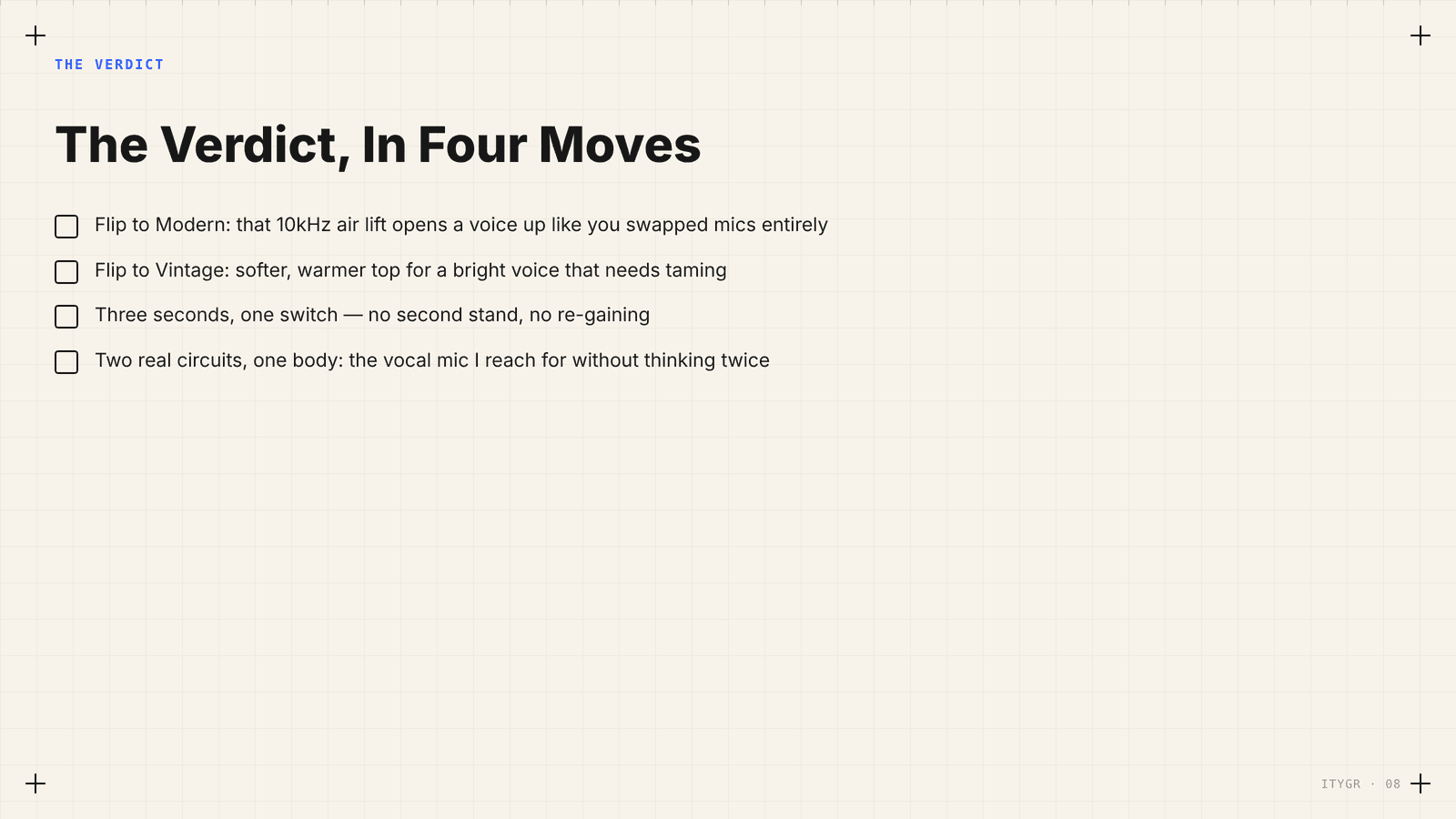
I love this mic – not the polite “it’s good for the price” kind of love, the real kind. Flip to Modern and that 10 kHz air lift opens a voice up like you swapped mics entirely, except it took three seconds and one switch instead of a second stand and ten minutes of re-gaining. Two real circuits, three patterns, one body, and it’s the vocal mic I reach for without thinking twice anymore.
That single sentence is the whole UT Twin87 review in miniature.
Gear in this post
UT Twin87 large-diaphragm condenser (with shockmount) – check the current price on Amazon
Heads up: affiliate link. If you buy through it, Itygr earns a small commission at no extra cost to you – it helps keep this training free.
Keep reading