Mixing a Whole Church on a Screen: Life With the Waves LV1
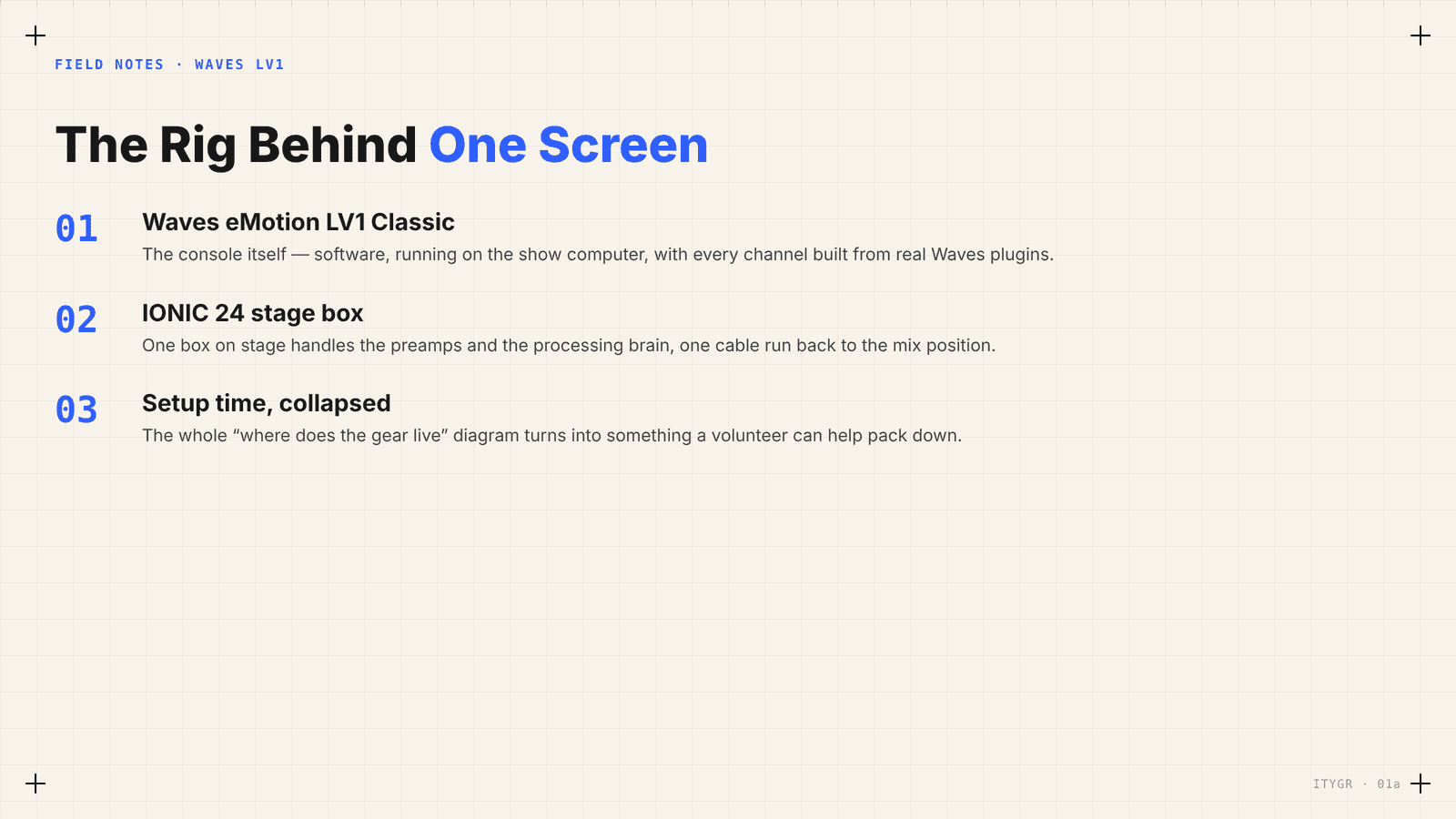
Mixing whole church screen setups sounds risky until you actually run a service on one. Our front-of-house console is a computer screen, and I’ve stopped apologizing for it. The rig is a Waves eMotion LV1 Classic with an IONIC 24 feeding it, and after enough services and shows to trust it with the important Sundays, it’s earned a proper write-up. Once the redundancy plan is solid, mixing whole church screen setups stops feeling risky at all.
The honest starting point: mixing on glass scared me, the same way it scares every engineer who grew up on faders. The fear is tactile — where do your hands go when everything is a touchscreen? The answer turned out to be: the same place your eyes were already going. You watch the mix anyway. Now the thing you’re looking at is also the thing you’re touching. That fear is exactly what mixing whole church screen setups has to overcome first.
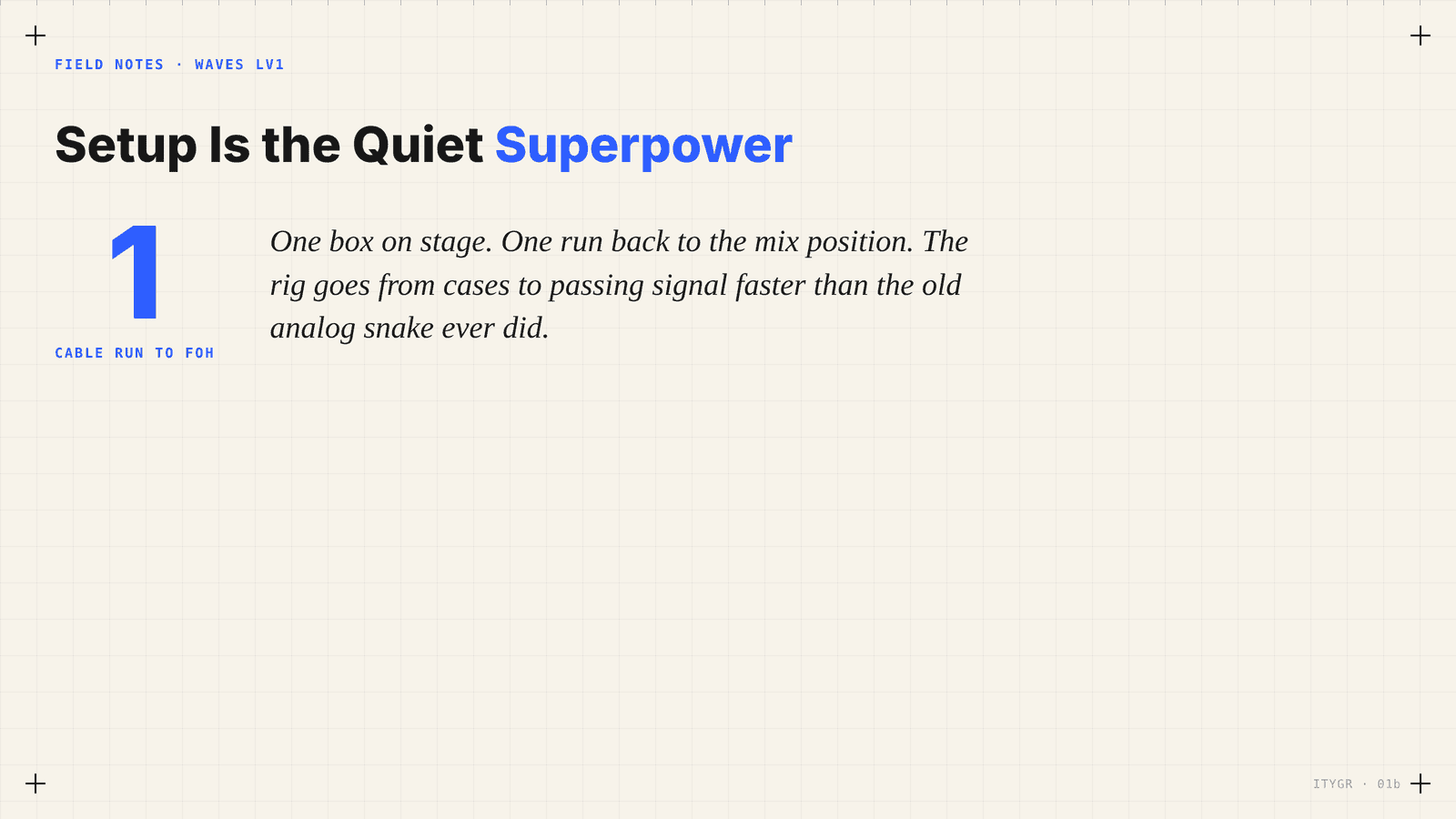
What the IONIC 24 changed: one box on stage handles the preamps and the processing brain, one cable run back to the mix position, and the whole “where does the gear live, where does the I/O live” diagram collapses into something a volunteer can help pack down. Setup time is the quiet superpower here — the rig goes from cases to passing signal faster than our old analog snake ever did.
The actual reason to do this
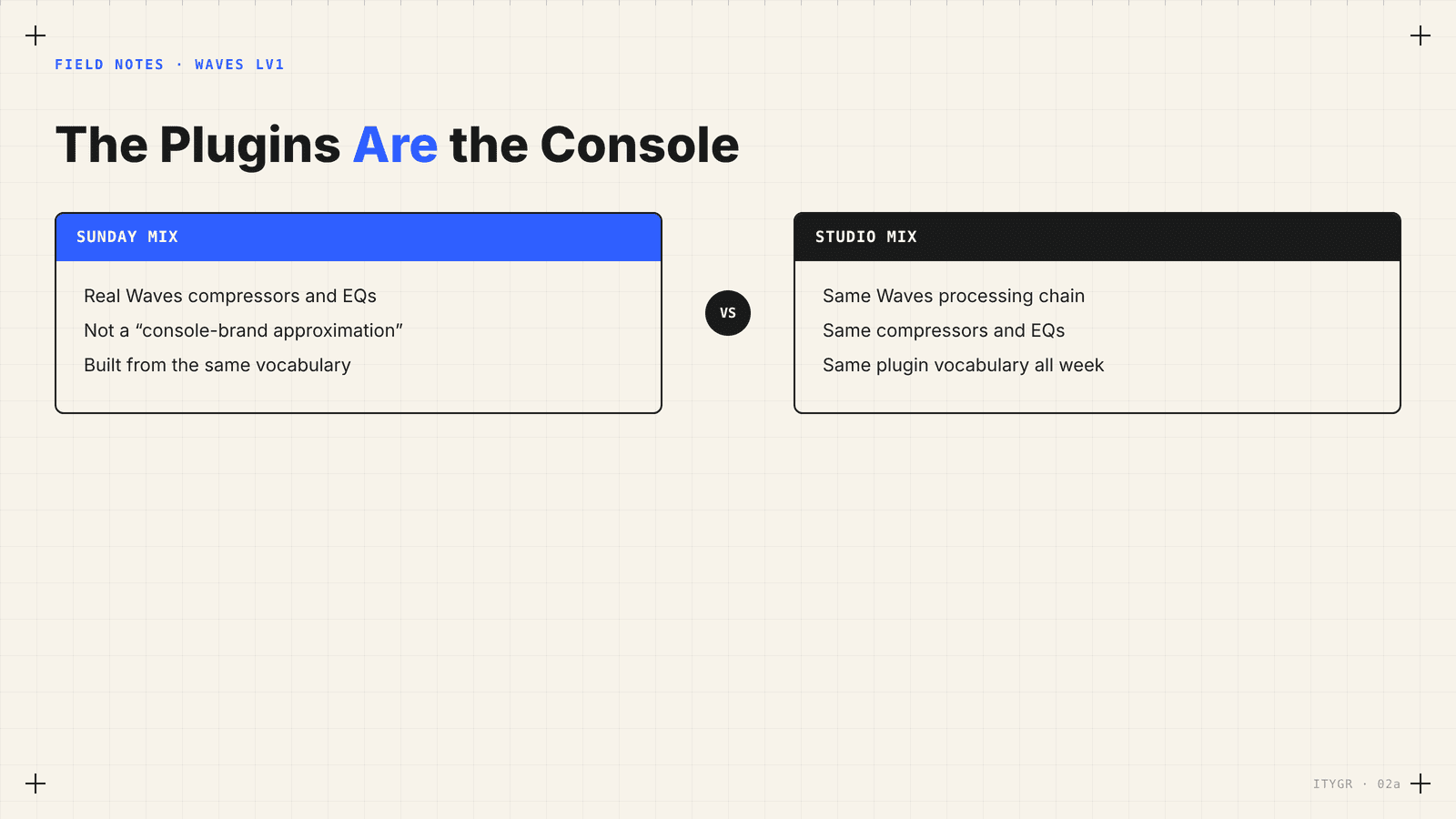
The plugins ARE the console. Every channel gets the same Waves processing we’d reach for in the studio — real compressors and EQs we already know, not “console-brand approximations” of them. The mix that leaves the room on Sunday and the mix that comes out of the studio during the week are built from the same vocabulary. For a place that trains engineers, that consistency is worth more than faders. This is the real reason mixing whole church screen setups works at all.

What I’d tell you before you switch
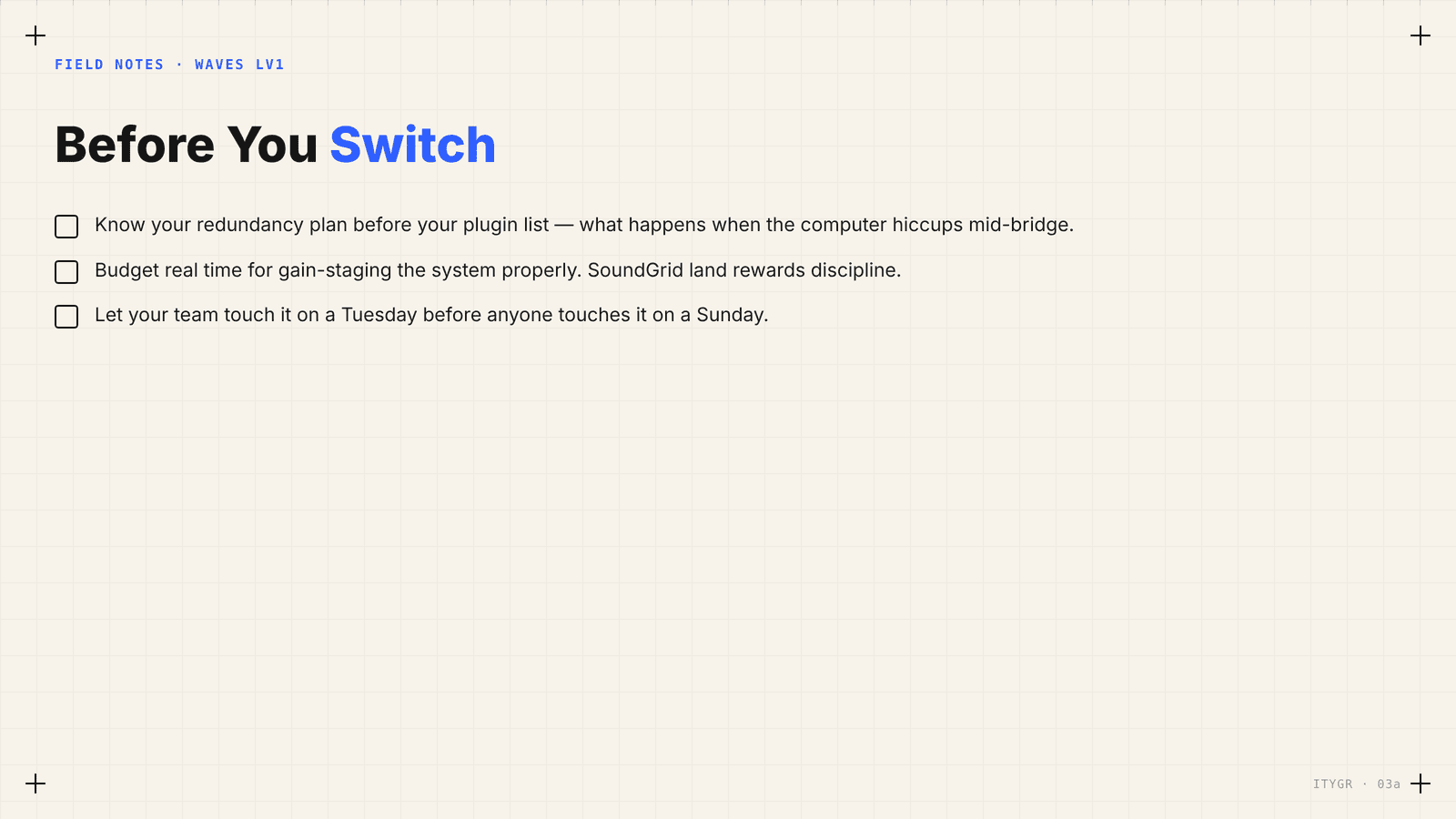
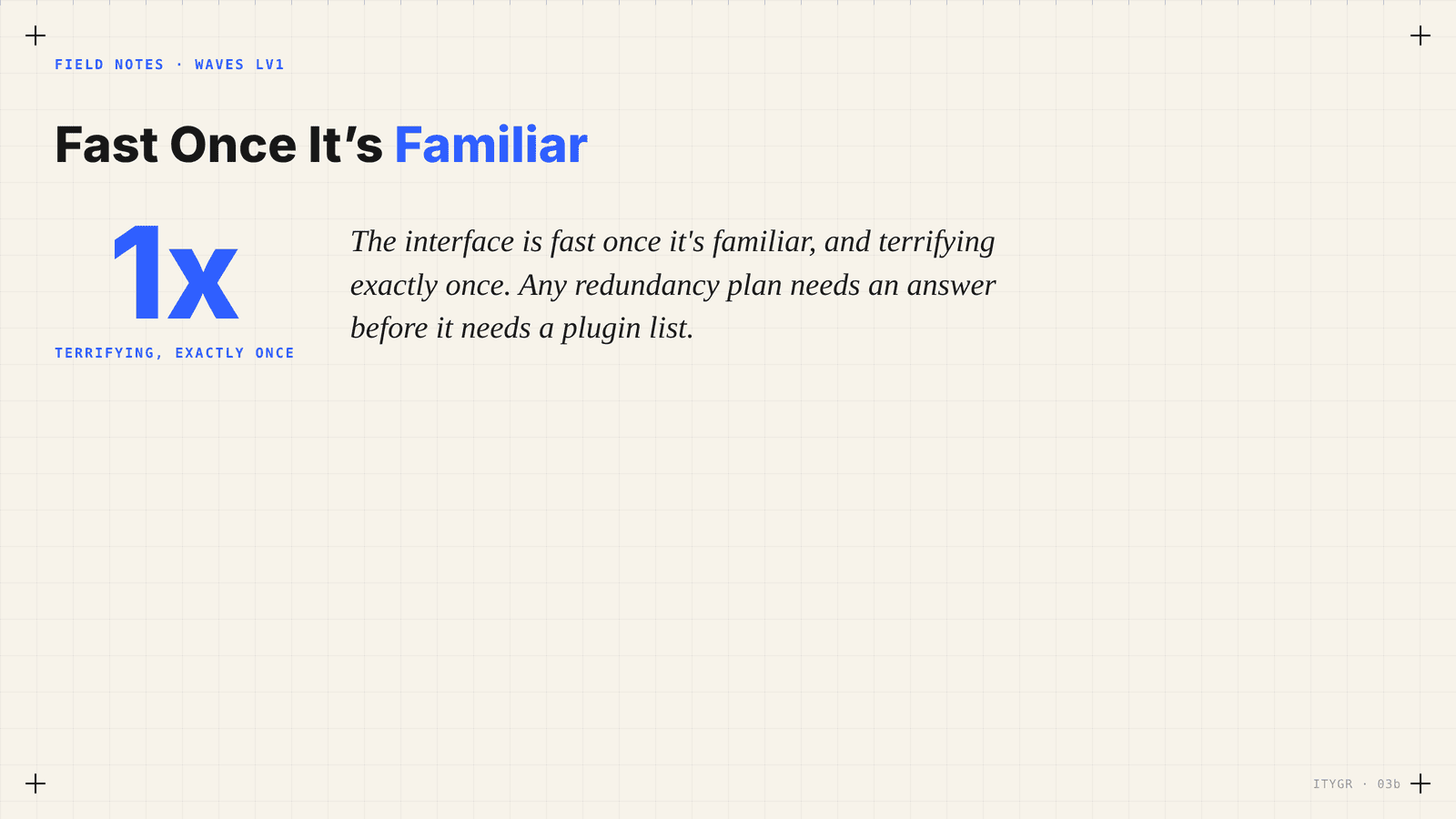
Your redundancy plan matters more than your plugin list — know exactly what happens when a computer hiccups before it happens during a bridge. Budget real time for gain-staging the system properly (SoundGrid land rewards discipline). And let your team touch it on a Tuesday before anyone touches it on a Sunday; the interface is fast once it’s familiar, and terrifying exactly once. Any plan for mixing whole church screen setups needs a redundancy answer before it needs a plugin list.
The Honest Verdict on Mixing Whole Church Screen
I’ll be straight with you: my relationship with Waves as a company is a real love-hate thing, and switching to their console hasn’t magically fixed that. The licensing, the upgrade treadmill, the moments I’ve wanted to throw the whole plugin ecosystem in the ocean — that’s all still true, and I’m not going to pretend otherwise just because this review is going well. But the LV1 and the IONIC together are a different question than “do I love Waves as a company.” Once you’ve mixed this way, there’s no version of going back to a traditional console that makes sense to me anymore. This isn’t a phase I’m passing through. Studio and live used to be two different jobs with two different toolkits — now they’re the same job, run through the same plugins, on the same screen. That part I’m sure of, even on the days I’m not sure about the company that makes it. That love-hate history is the honest backdrop to mixing whole church screen setups long term.
Mixing on a screen isn’t the compromise. Pretending a console from 2009 is the only legitimate way to mix — that’s the compromise.

Gear in this post
Waves eMotion LV1 Classic + IONIC 24 — available through Waves and pro audio dealers (links coming once we set them up).
Some posts on this site use affiliate links; when they appear, they’re marked, and purchases support Itygr at no extra cost to you.
Keep reading