The DI Box Nobody Explains
Somebody hands you a DI box on day one of running sound and nobody ever explains what it’s actually for. You just learn “guitar goes through this thing before the snake.”
Here’s what it’s really doing.
The problem it solves
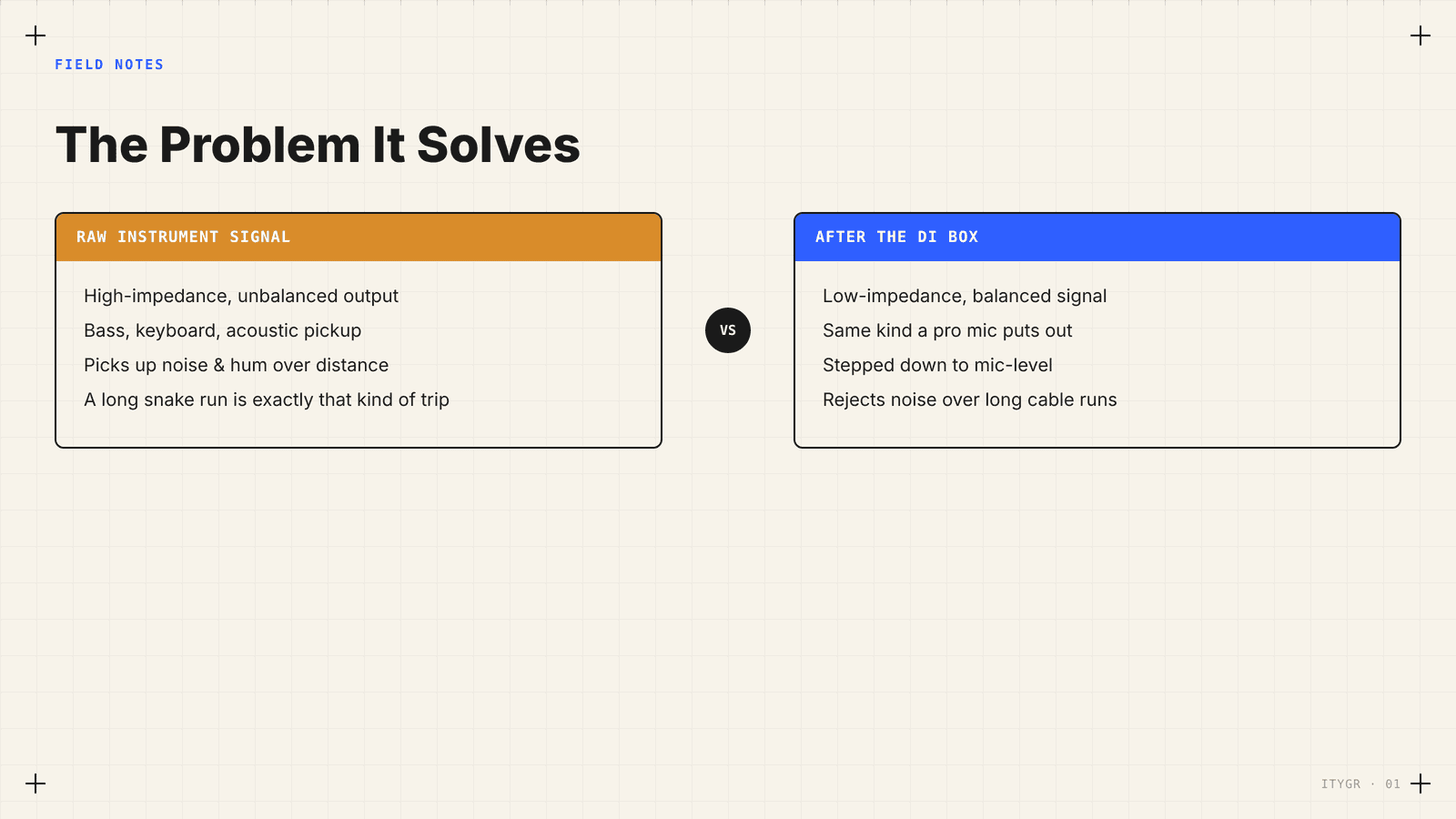
An instrument’s output — a bass, a keyboard, an acoustic guitar pickup — puts out a high-impedance, unbalanced signal. Send that raw down a long cable and you pick up noise, hum, and signal loss the farther it travels. A snake run across a stage and back to a booth is exactly that kind of long run.
What the DI actually does
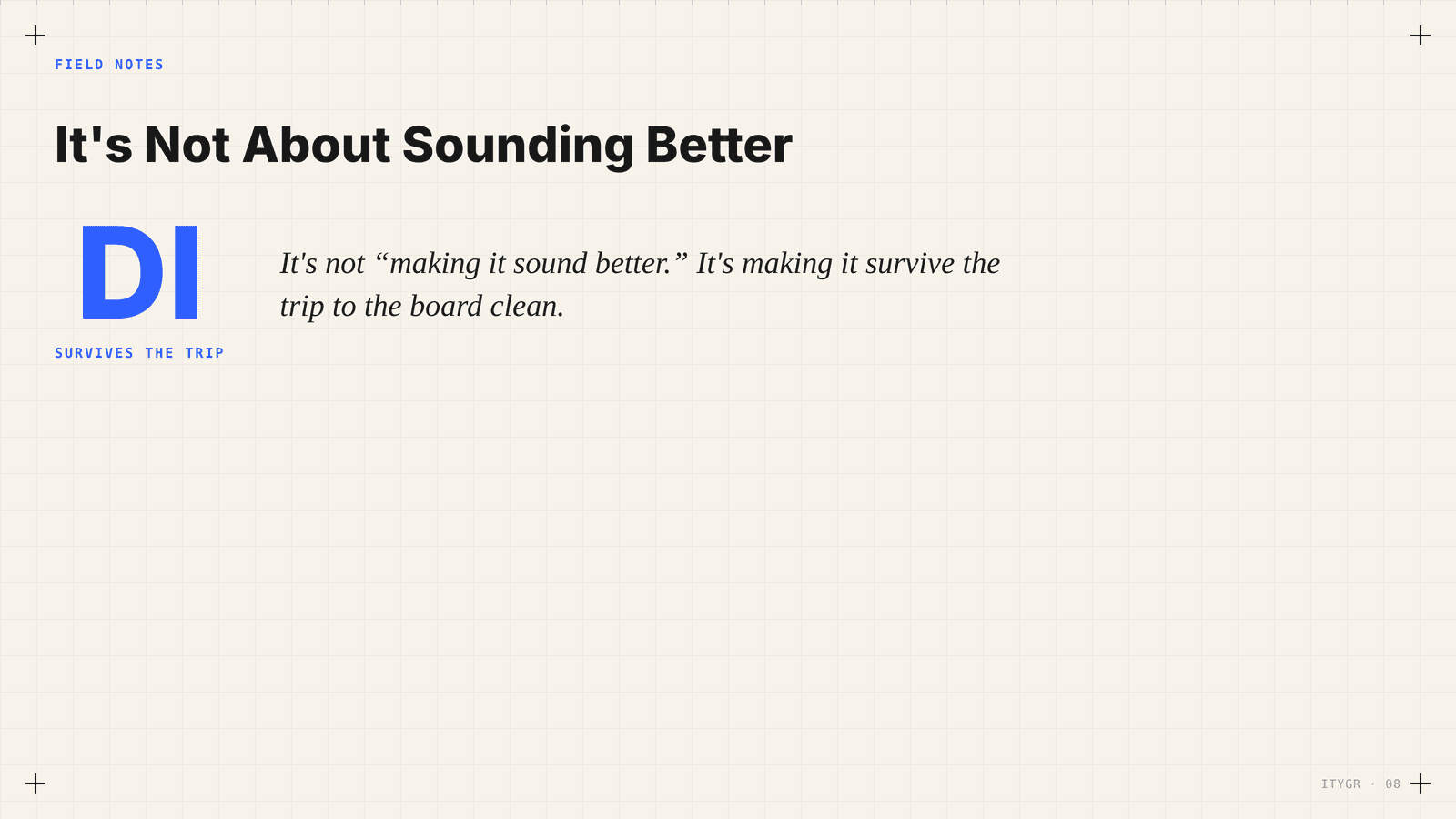
A direct box converts that high-impedance signal into a low-impedance, balanced signal — the same kind a professional microphone puts out — and usually steps the level down to mic-level in the process. Balanced signal rejects noise over long cable runs. That’s the whole trick. It’s not “making it sound better.” It’s making it survive the trip to the board clean.
When you actually need one
Any instrument-level source going any real distance: bass, acoustic-electric guitar, keyboards, laptop outputs for tracks. You generally don’t need one for something already going into an amp that’s then miked, since the mic is already doing that job.

One thing worth knowing
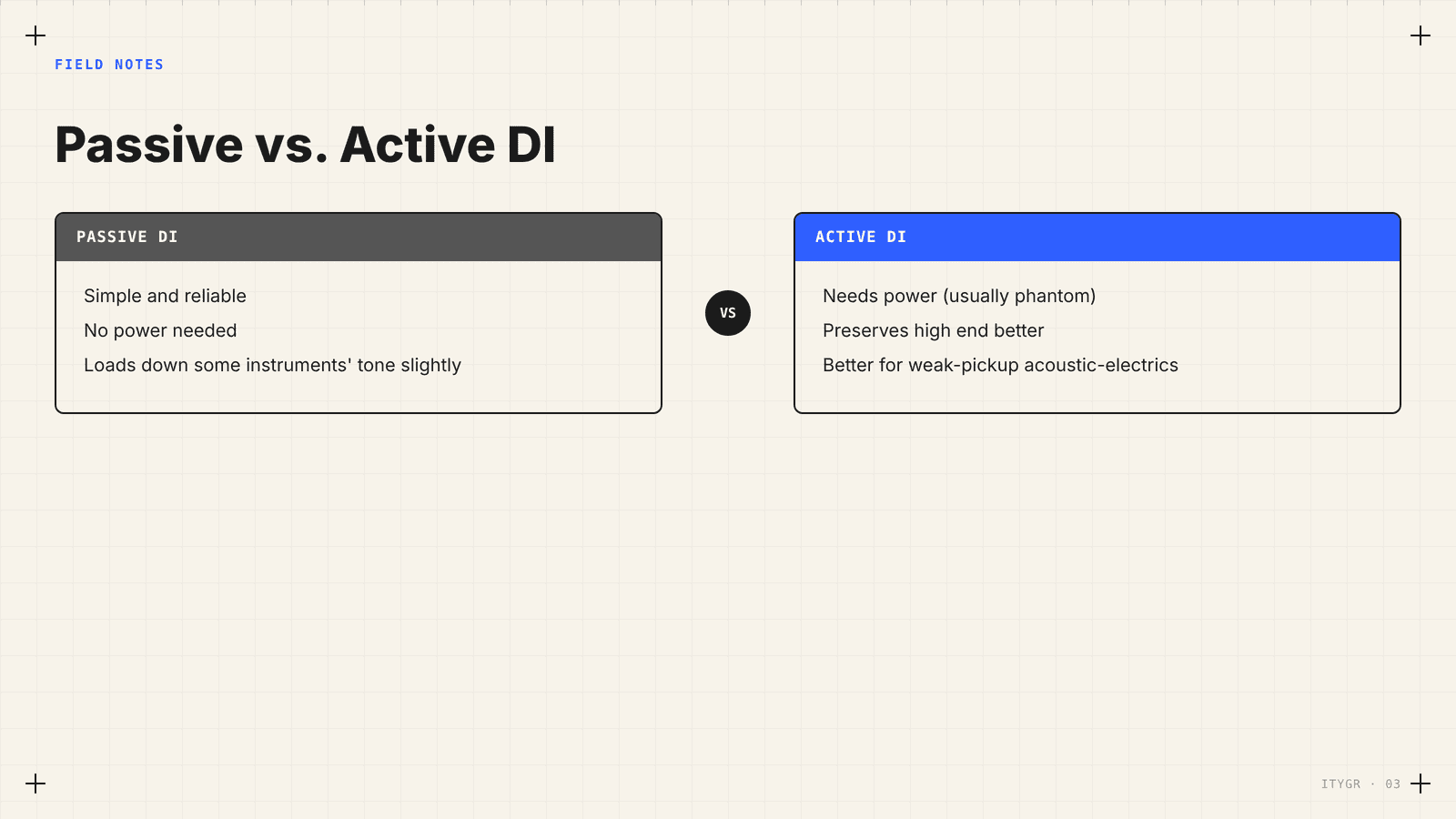
Passive DIs are simple and reliable but load down some instruments’ tone slightly. Active DIs (need power, usually phantom) preserve high end better on things like acoustic-electric guitars with weaker pickups. If your acoustic sounds thin through a passive DI, that’s often why.
Understand what it’s doing and you stop treating it as a mystery box you’re told to grab, and start knowing exactly when it’s the right tool.

One more thing worth knowing: the ground lift switch
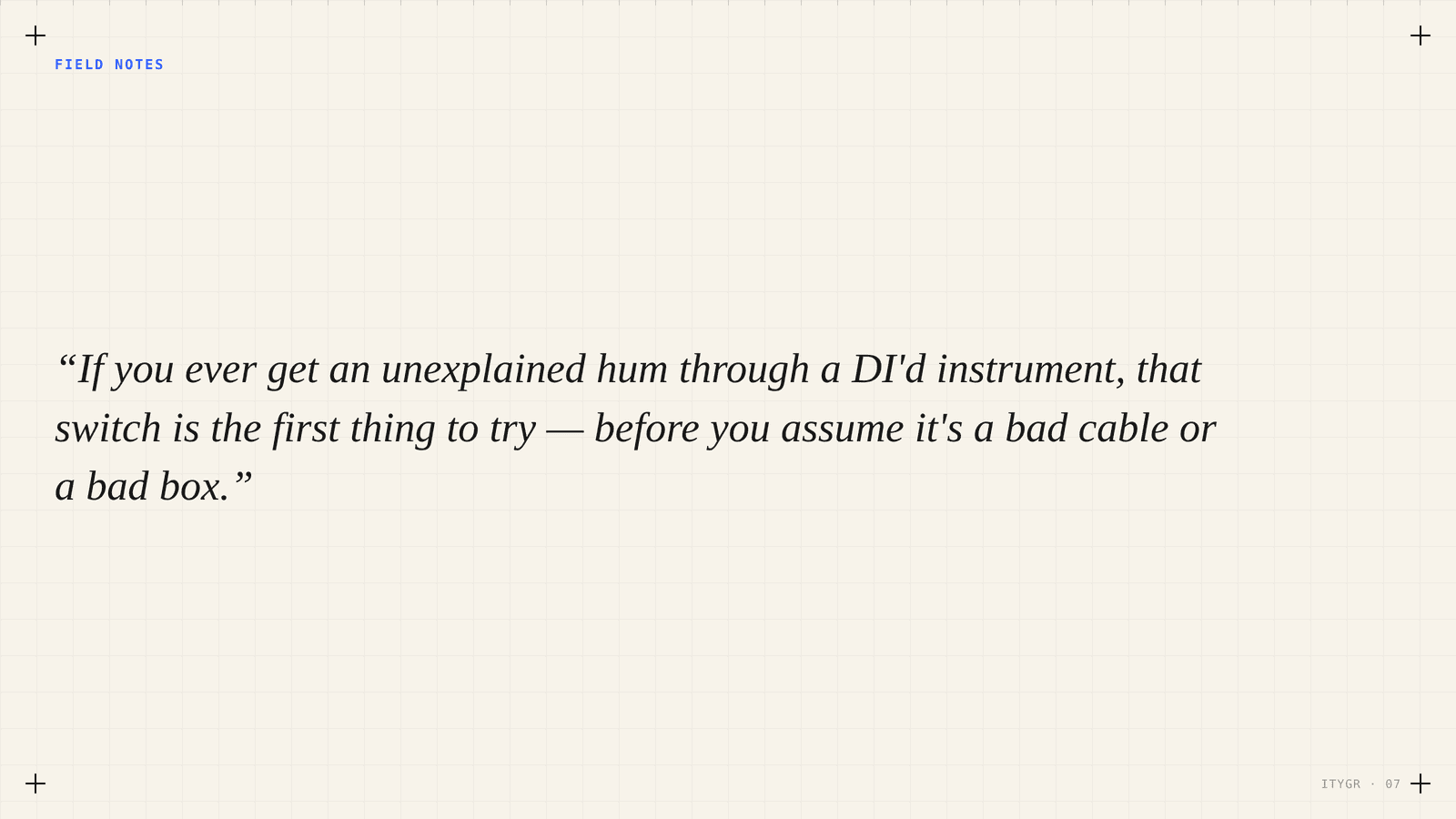
Most DI boxes have a small switch labeled “ground lift.” It exists because connecting two pieces of gear that are both grounded (say, an amp and a DI feeding the same instrument) can create a ground loop — an audible hum caused by a small voltage difference between the two ground paths. Flipping the ground lift breaks that loop without affecting your actual signal. If you ever get an unexplained hum through a DI’d instrument, that switch is the first thing to try, before you assume it’s a bad cable or a bad box.