What Actually Changes Between a Rehearsal Mix and a Live Mix
You dial in a great mix at rehearsal, then run the exact same settings live and it doesn’t feel the same. That’s expected — a few real things change between the two.

The room fills up
Bodies absorb high frequencies and change how the room reflects sound generally. A mix balanced in an empty room can feel different, usually needing a touch more presence and clarity once people are actually in the seats.

The energy changes
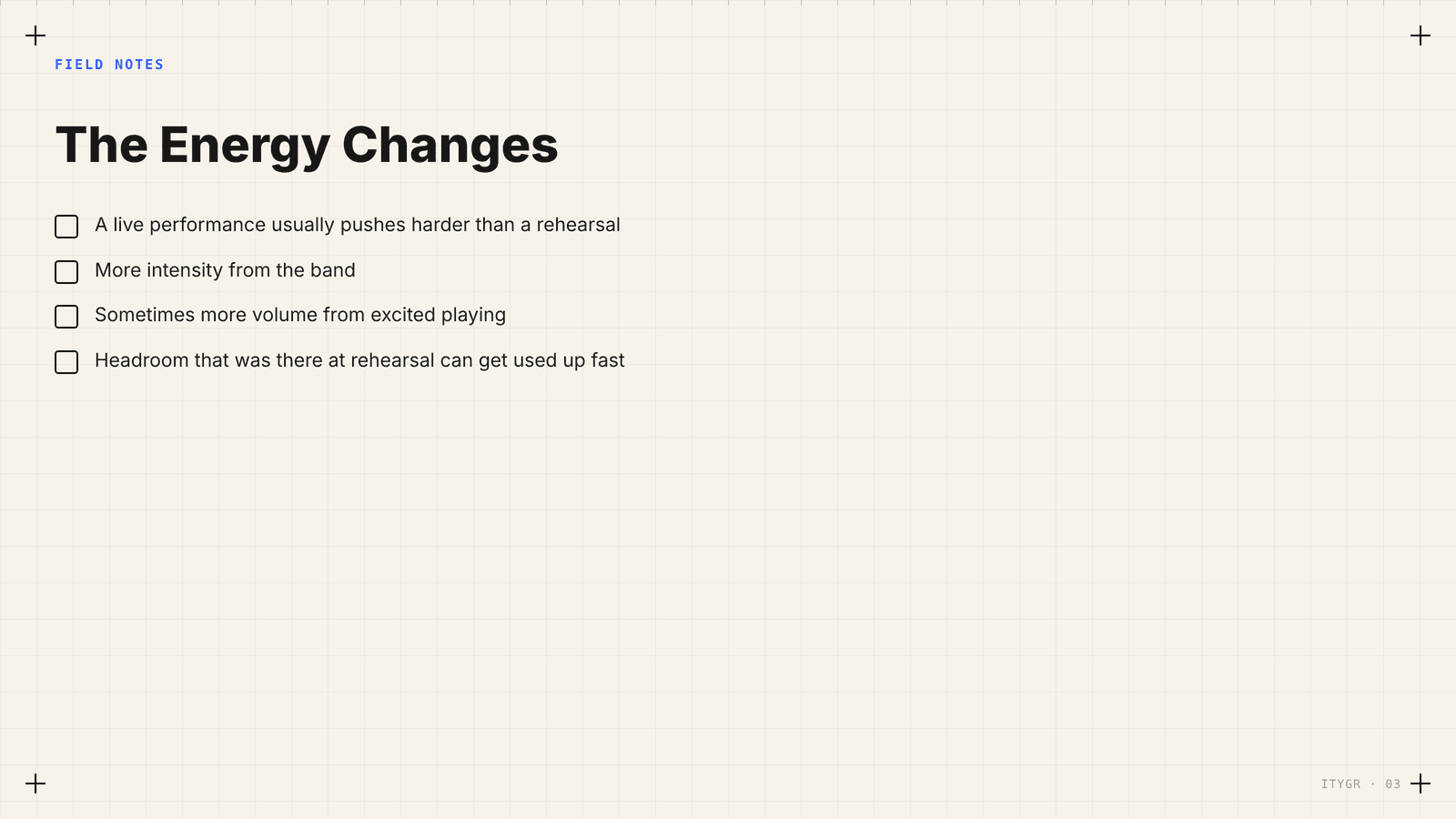
A live performance usually pushes harder than a rehearsal — more intensity from the band, sometimes more volume from excited playing. A mix that had headroom to spare at rehearsal can find itself much closer to the edge once real show energy hits.
The stakes change your ears
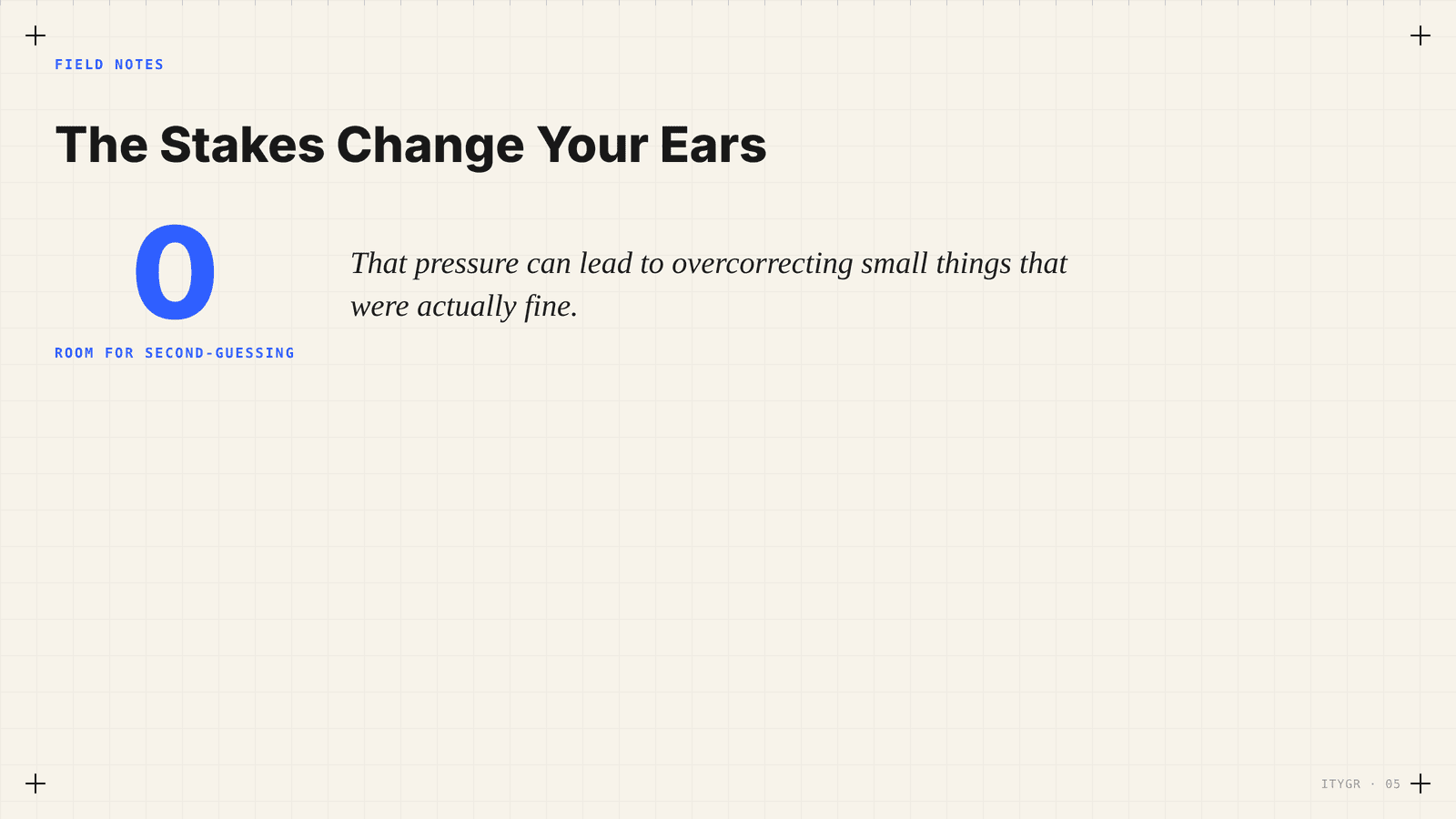
It’s easy to second-guess a live mix in a way you wouldn’t at rehearsal, since a mistake here is in front of the actual audience. That pressure can lead to overcorrecting small things that were actually fine.
What to actually do
Treat the rehearsal mix as a strong starting point, not a final answer — build in a real, if brief, live-room adjustment pass once people are in and the show’s actual energy is present, rather than assuming the rehearsal settings will hold. The room and the performance both changed. Your mix should be allowed to change with them.

Build the margin in on purpose
Since you know in advance that live energy will push closer to the edge than rehearsal did, leave a bit more headroom than feels strictly necessary during your rehearsal pass — deliberately, not by accident.

That small cushion is what keeps a big, excited moment from clipping or distorting instead of forcing you to react to it after it’s already happened in front of people.