Training a Volunteer Engineer in One Session
You get one real training session with a new volunteer before they’re running sound solo. You can’t teach them everything. Here’s what actually earns that time.
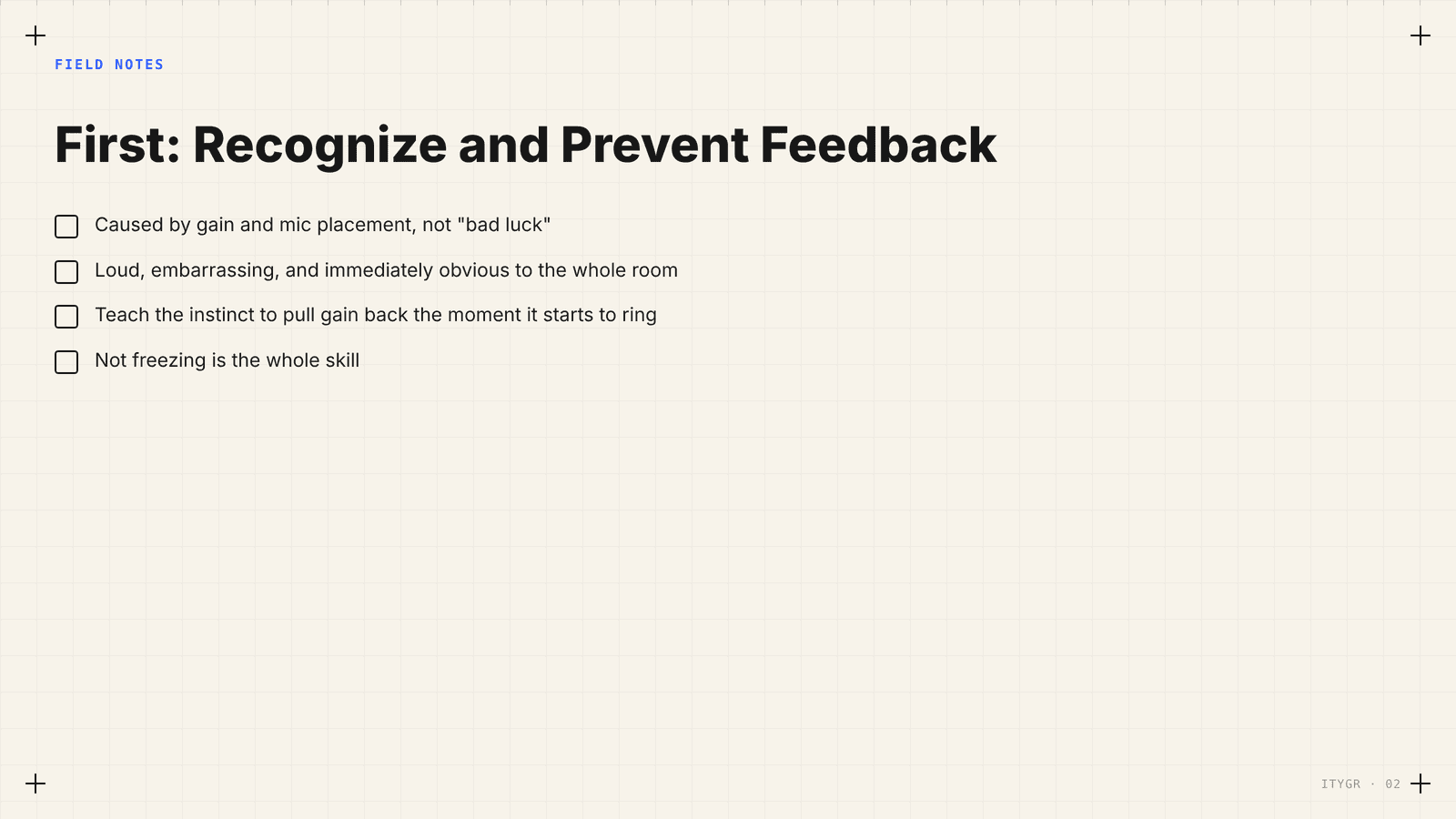
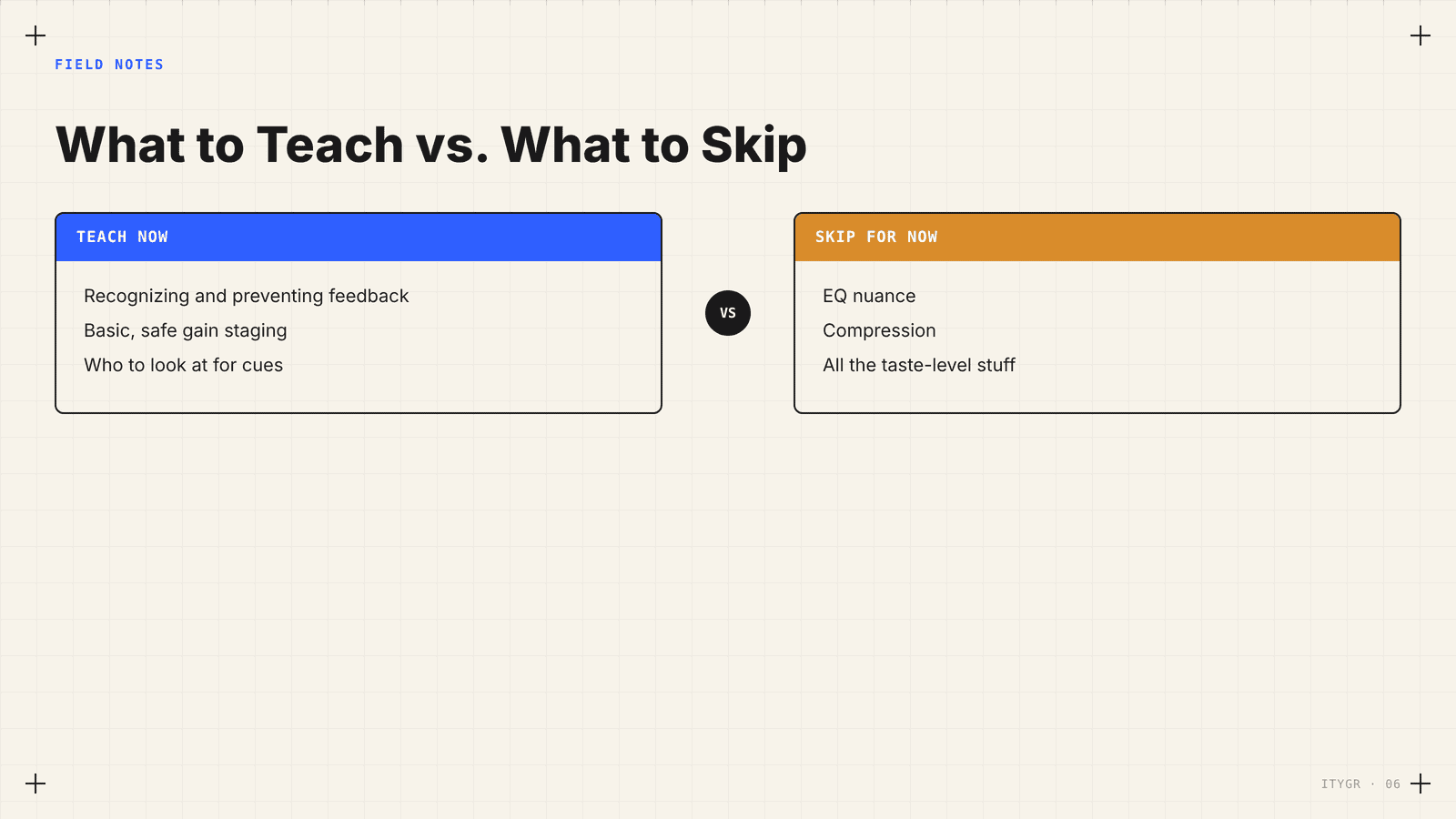
First: how to recognize and prevent feedback
This is the one mistake that’s loud, embarrassing, and immediately obvious to the whole room. Teach them what causes it (gain and mic placement, not “bad luck”) and the instinct to pull gain back the moment they hear it start to ring, rather than freezing.
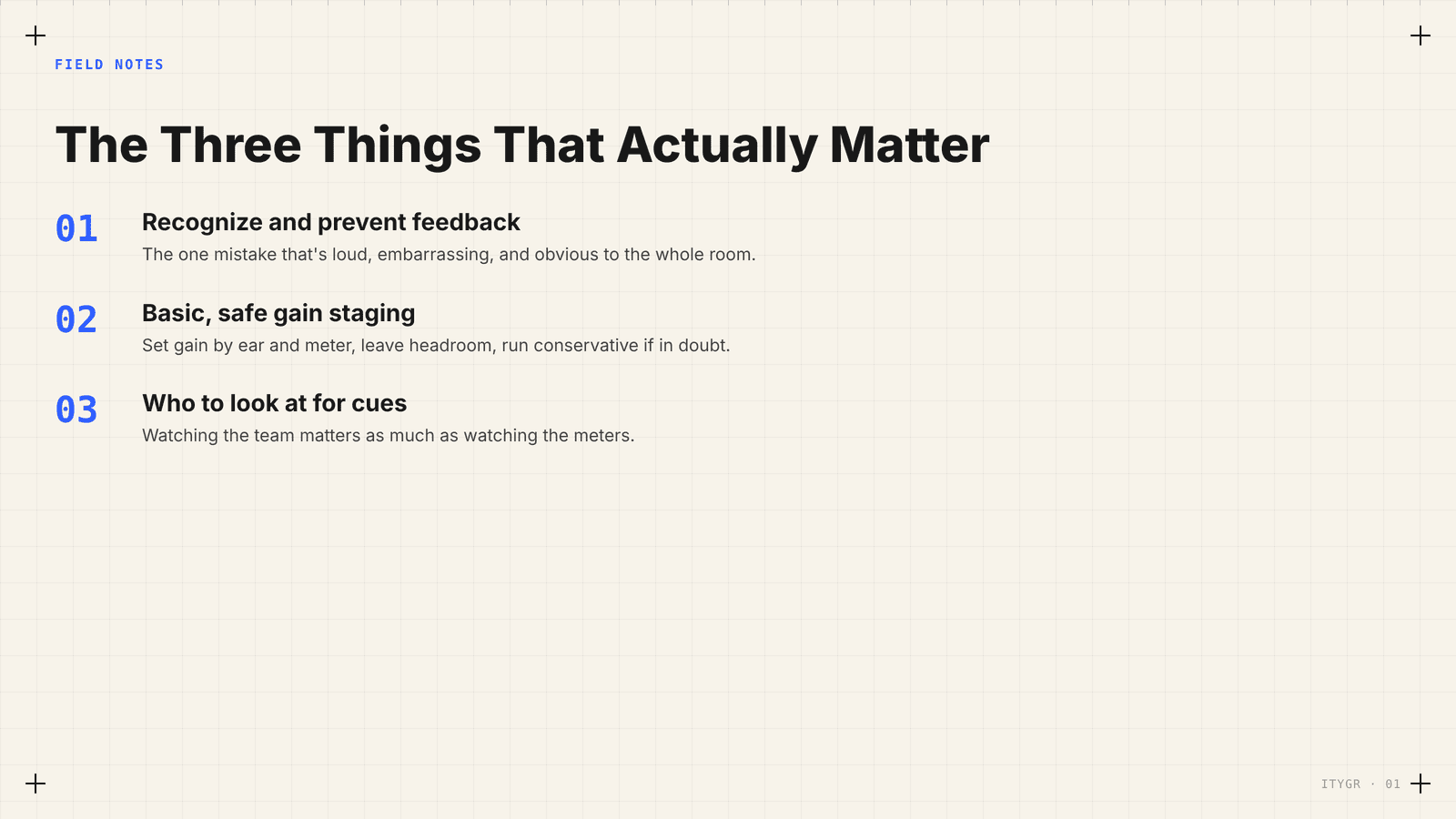
Second: basic, safe gain staging
Not a deep technical explanation — just: set gain by ear and by meter at real performance level, leave real headroom, and if in doubt, run a little conservative rather than push into distortion. A quiet-but-clean mix is recoverable in the room; a distorted one usually isn’t.

Third: who to look at and what to watch for cues
Most mixing mistakes early on aren’t technical — they’re missed cues. Teach them who leads transitions, what a “bring it down” or “build” signal looks like from the stage, and that watching the team matters as much as watching the meters.

What to skip for now
EQ nuance, compression, all the taste-level stuff — that’s real, but it’s not what causes a genuinely bad night. The three things above are what stand between a serviceable first solo run and a memorable disaster. Everything else, they can build over time.
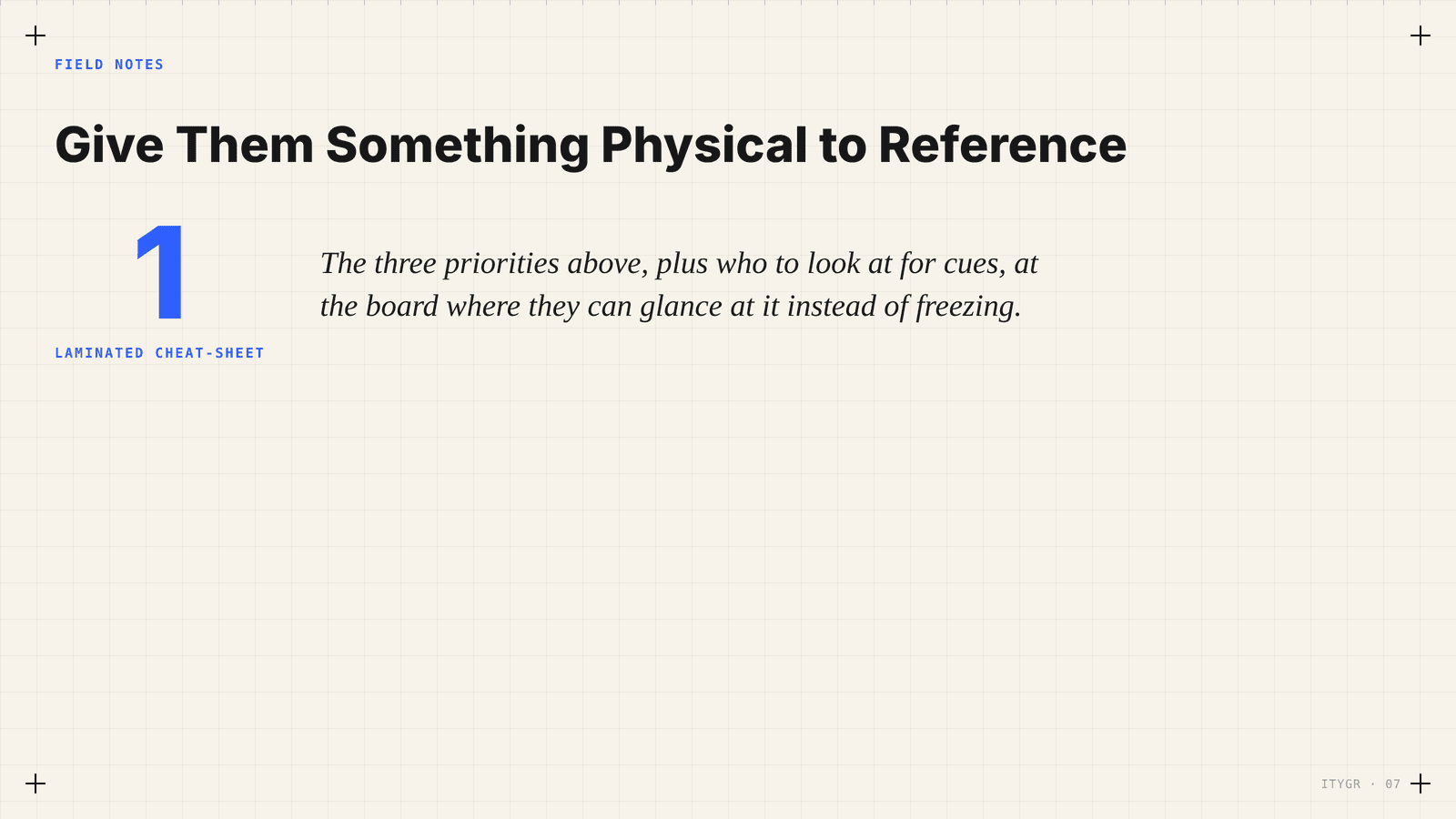
Give them something physical to reference
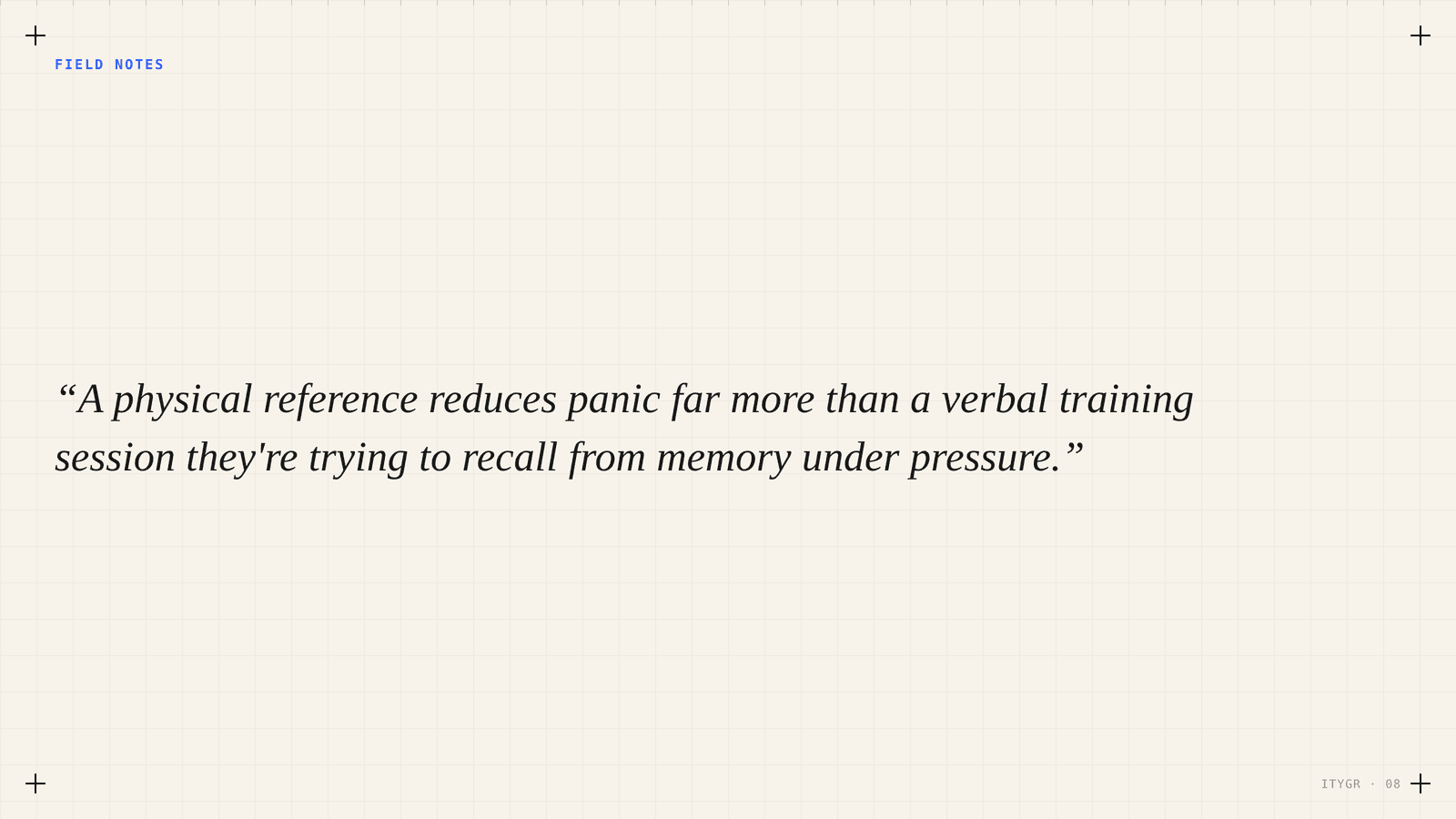
A small, laminated cheat-sheet at the board — the three priorities above, plus who to look at for cues — gives a nervous first-timer something to glance at instead of freezing when they blank on what to check first. It’s a small thing, but a physical reference reduces panic far more than a verbal training session they’re trying to recall from memory under pressure.