The Volunteer You Train Today Mixes the Service You Miss
There’s a version of excellence where the sound is great because one very capable person touches everything. It works right up until that person gets sick, gets married, moves, or just needs a Sunday off — and then the whole standard leaves in their car.
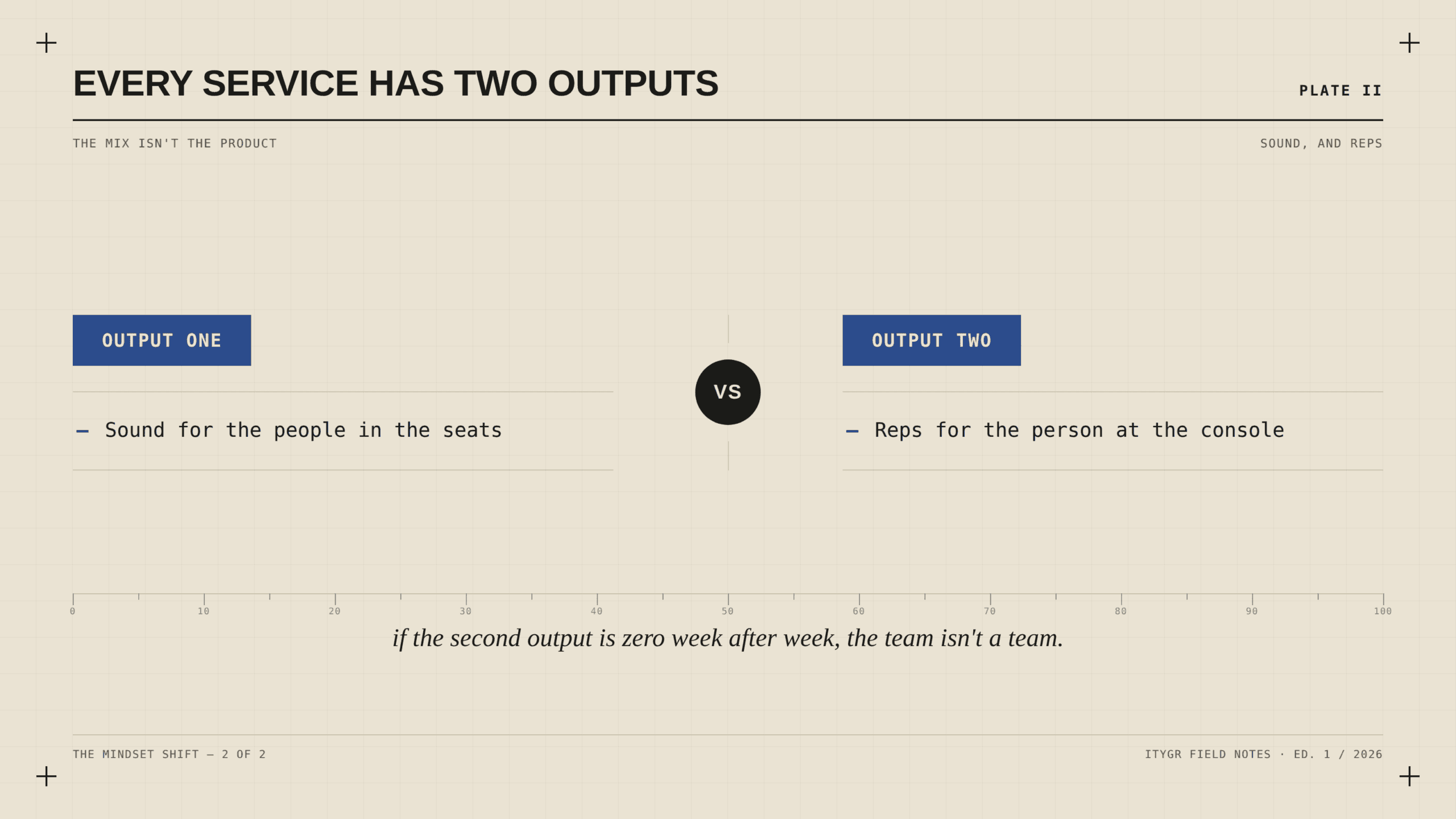
The mindset shift: in a training-driven room, the mix isn’t the product. The mixer is. Every service is two outputs: sound for the people in the seats, and reps for the person at the console. If the second output is zero week after week, the team isn’t a team — it’s an audience for your monologue.
What Transferable Actually Looks Like
Gain structure written down. Scenes saved and named like a human will read them. The ring-out routine documented. The “why” explained while you do the “what” — because a volunteer who knows why the high-pass exists will use it in rooms you’ll never visit. That’s the ends-of-the-earth math: skills multiply only when they leave your hands.


The Hard Part Is the Middle
Handing the faders to someone slower than you, on a real Sunday, and letting the mix be 85% as good so that next year it can be better than yours. Excellence that can’t survive your absence was never excellence. It was dependence with good EQ.

Where to Start This Week
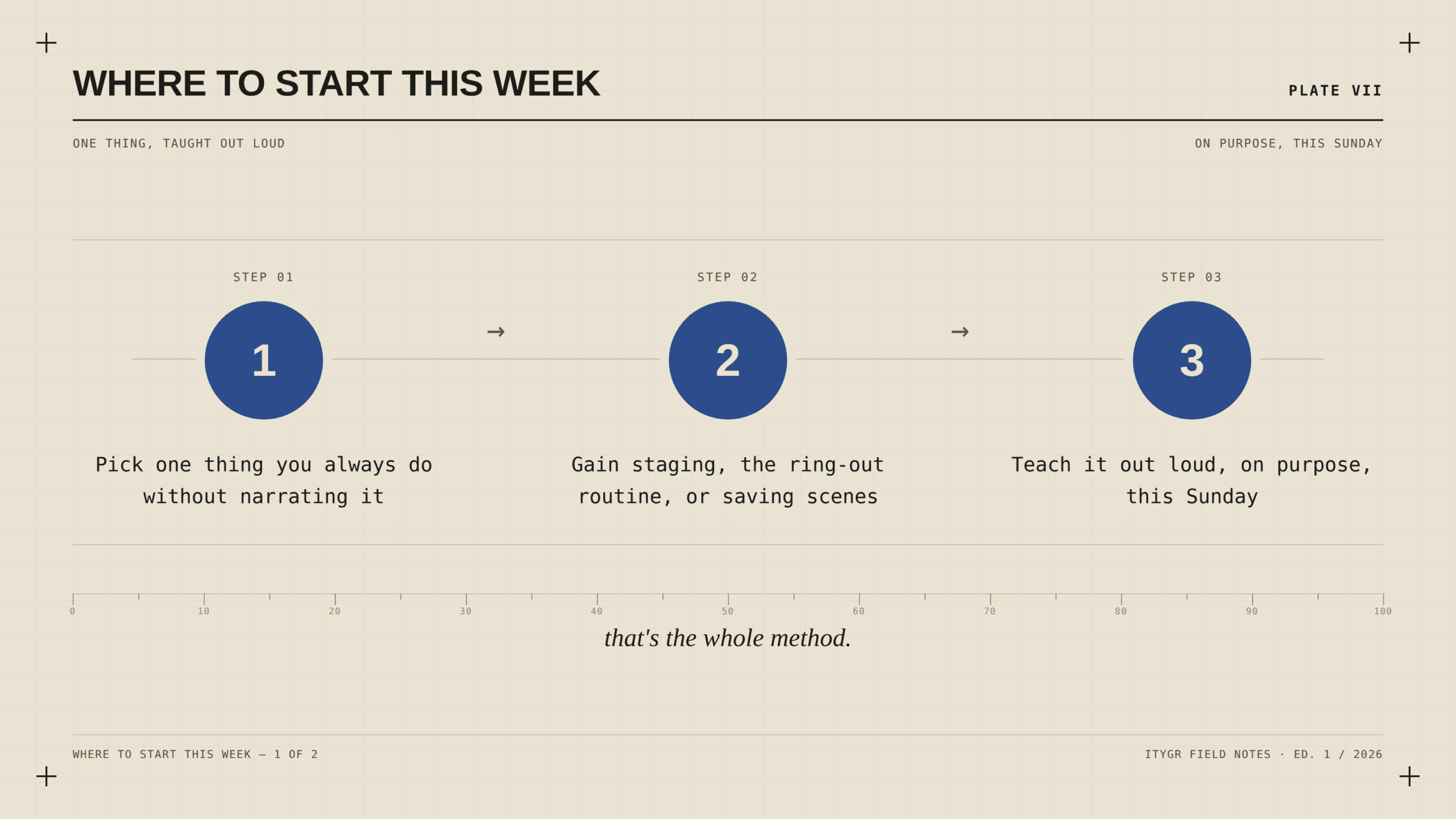
Pick one thing you always do without narrating it — gain staging, the ring-out routine, saving scenes — and teach it out loud, on purpose, this Sunday. That’s the whole method. It’s also most of what the training I run actually is: turning invisible habits into steps somebody else can repeat without you standing there.
Train people until you’re optional. That was the assignment the whole time.