What a Blown Monitor Mix Taught Me About Ego
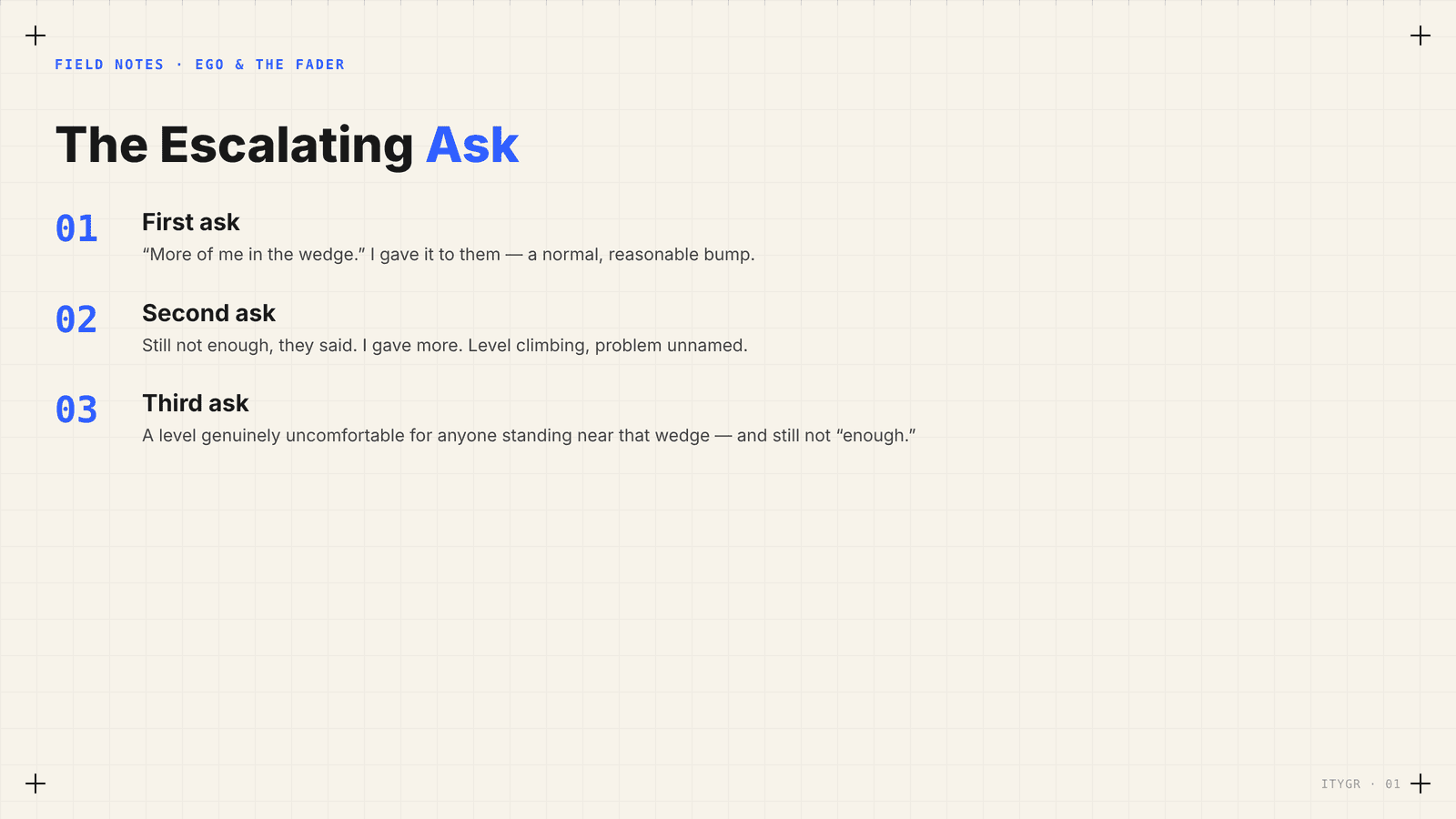
What a blown monitor mix taught me started with a request I couldn’t satisfy. Years back I ran monitors for a set where a vocalist kept coming back to me between songs asking for more of themselves in the wedge. I gave it to them. Still not enough, they said. I gave more. By the third ask I was pushing a level that was genuinely uncomfortable for anyone standing near that wedge, and it still wasn’t landing as “enough” for them.
I was so focused on being right about the mix — I’d built it carefully, I knew what was in it, I was confident it was technically correct — that I never stopped to ask the actual question. I was solving “give them more of the fader” instead of solving “why do they feel like they can’t hear themselves.”
That blown monitor mix taught me something no gain-structure trick ever could.
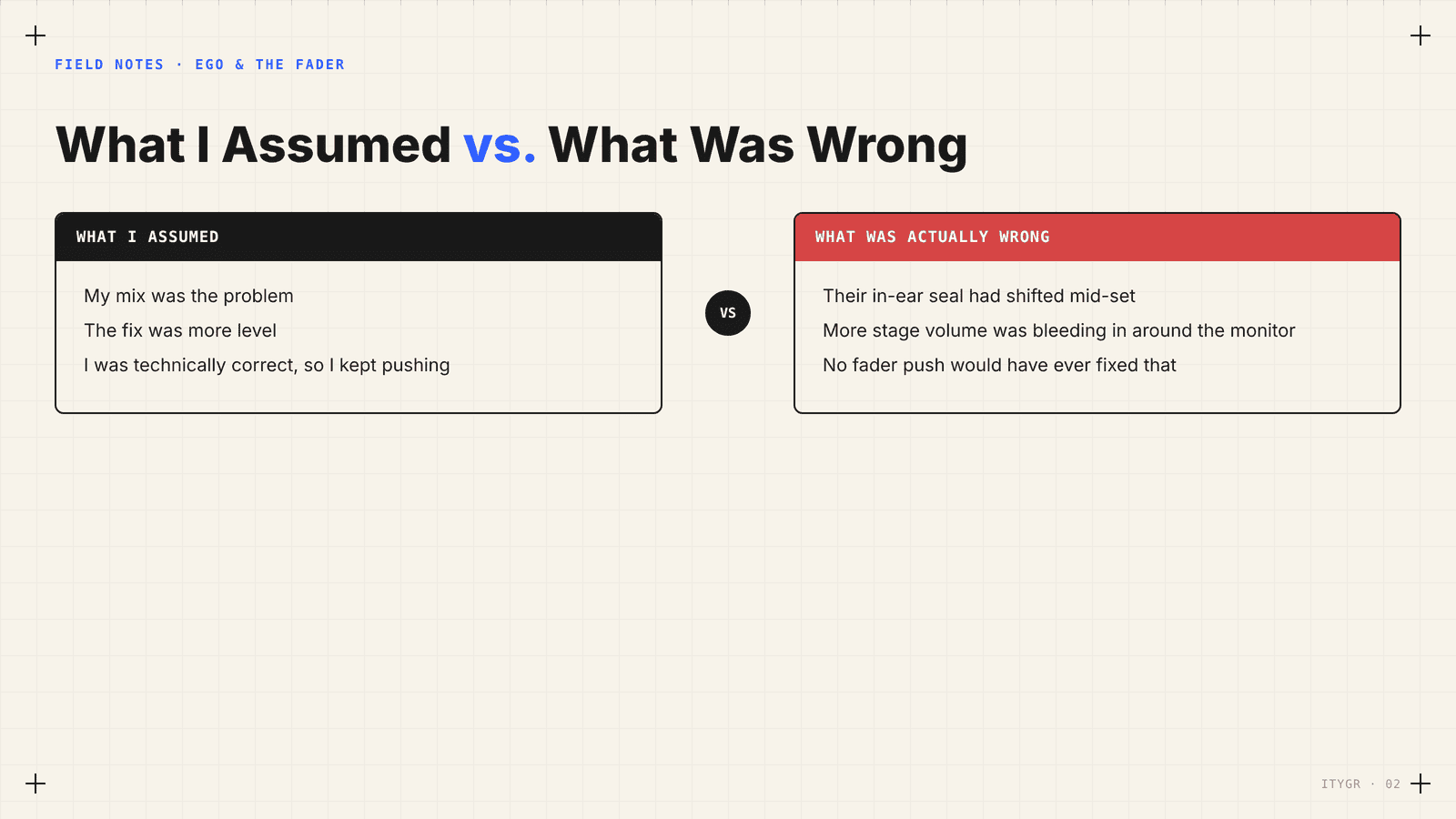
Turned out the actual issue had nothing to do with the monitor mix at all. Their in-ear seal had shifted mid-set from moving around on stage, and what they were hearing was a physically worse seal letting more stage volume bleed in around the monitor, not a genuinely insufficient send from me. No amount of fader pushed would have fixed that, because the problem was never in my hands to begin with. I found out after the set, from a two-minute conversation I should have had after the first ask instead of the fourth. A blown monitor mix taught me to ask before I push another fader.
Here’s what that night actually taught me, and it wasn’t about monitor technique: the fastest way to make a real problem worse is to be so sure of your own competence that you stop actually listening to the person telling you something’s wrong. I trusted my mix over their experience of it, and that’s backwards every single time. They’re the one standing in the sound. I’m the one guessing at it from a board twenty feet away. That’s the real lesson a blown monitor mix taught me that night.

Now, second ask for the same thing, same show, I stop the fader-pushing and go ask a real question in person. Not “is that better” — “what does it actually feel like right now.” Half the time the answer has nothing to do with a level at all, and I would have kept turning a knob forever trying to fix a problem that was never mine to fix with a knob.
What a Blown Monitor Mix Taught Me About Ego


Confidence in your mix is good. Confidence that overrides someone telling you it’s not working for them is just ego with a fader attached. Learned that one the hard way, and I don’t plan on relearning it.
Keep reading