Label the Snake Once, Save Every Soundcheck Forever
Cable labeling is the cheapest insurance a stage ever gets. There are two kinds of stages: the ones where channel 14 is labeled, and the ones where channel 14 is a group discussion. Only one of these finishes soundcheck on time.
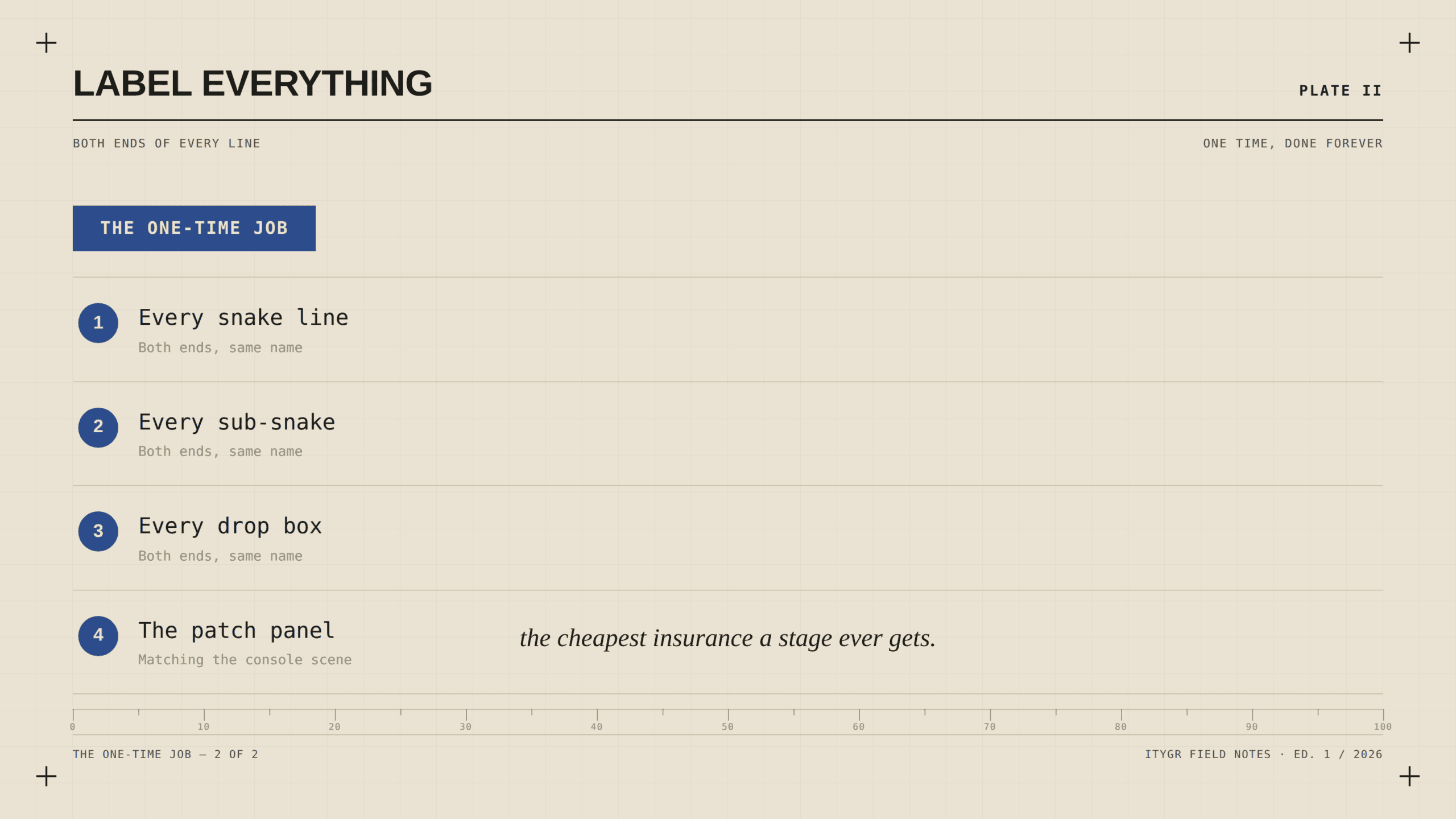
The one-time job: label both ends of every snake line, every sub-snake, every drop box, and the patch panel — same names everywhere, matching the console scene. Not “Tom’s XLR.” Numbers and roles: 14 / FLOOR TOM. Tom moves to another church eventually. The floor tom stays.

Cable Labeling Pays Compounding Interest
A labeled stage means any volunteer can patch from the input list without radioing the booth four times. It means troubleshooting starts at the actual problem instead of an archaeology dig. It means the guest engineer — or you, six months from now — walks in cold and just works. Cable labeling turns a mystery stage into a known one.


Go One Nerd-Level Deeper
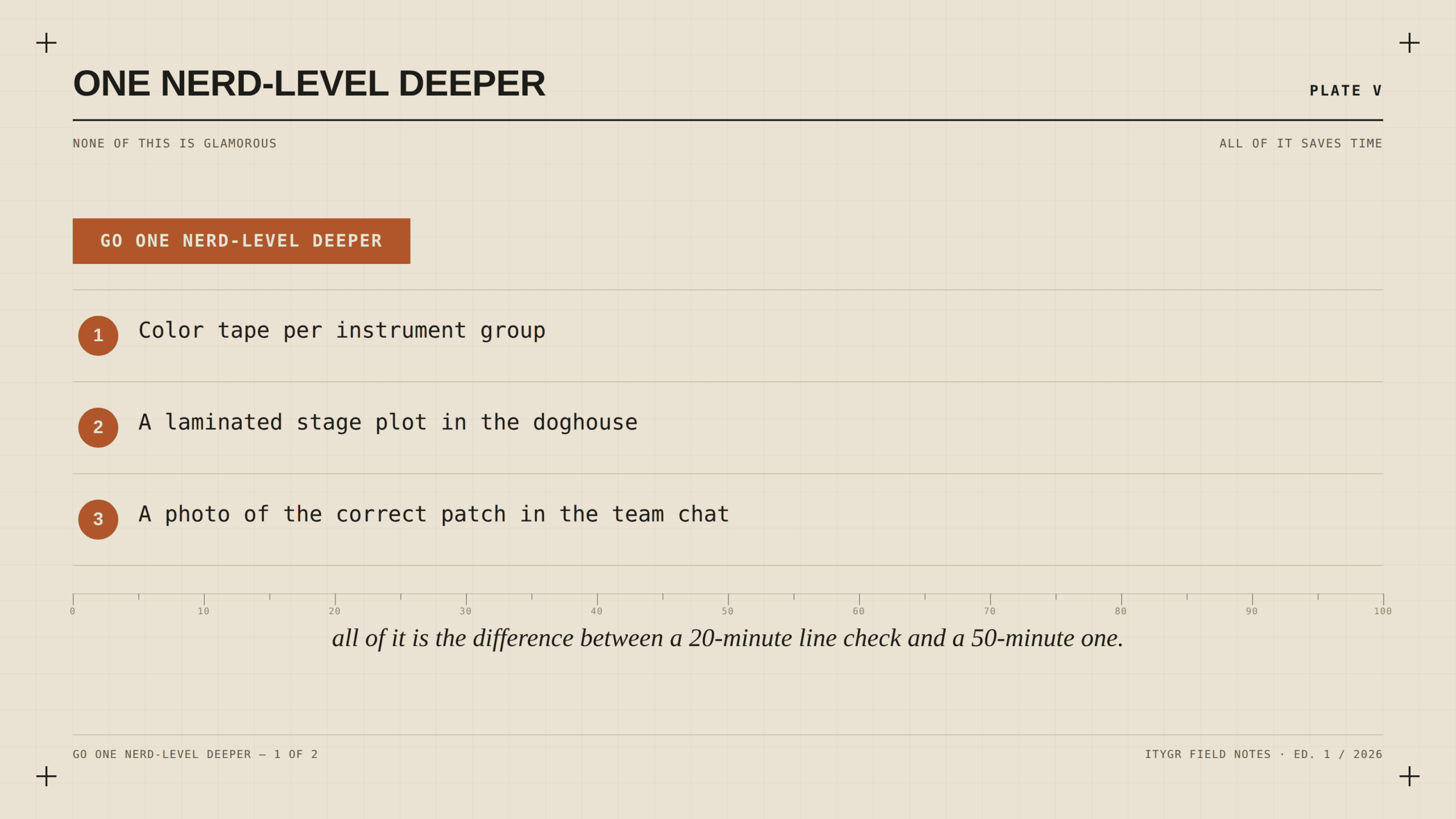
Color tape per instrument group, a laminated stage plot taped inside the doghouse, and a photo of the correct patch saved to the team chat. None of this is glamorous. All of it is the difference between a 20-minute line check and a 50-minute one.

Do It Before You Need It
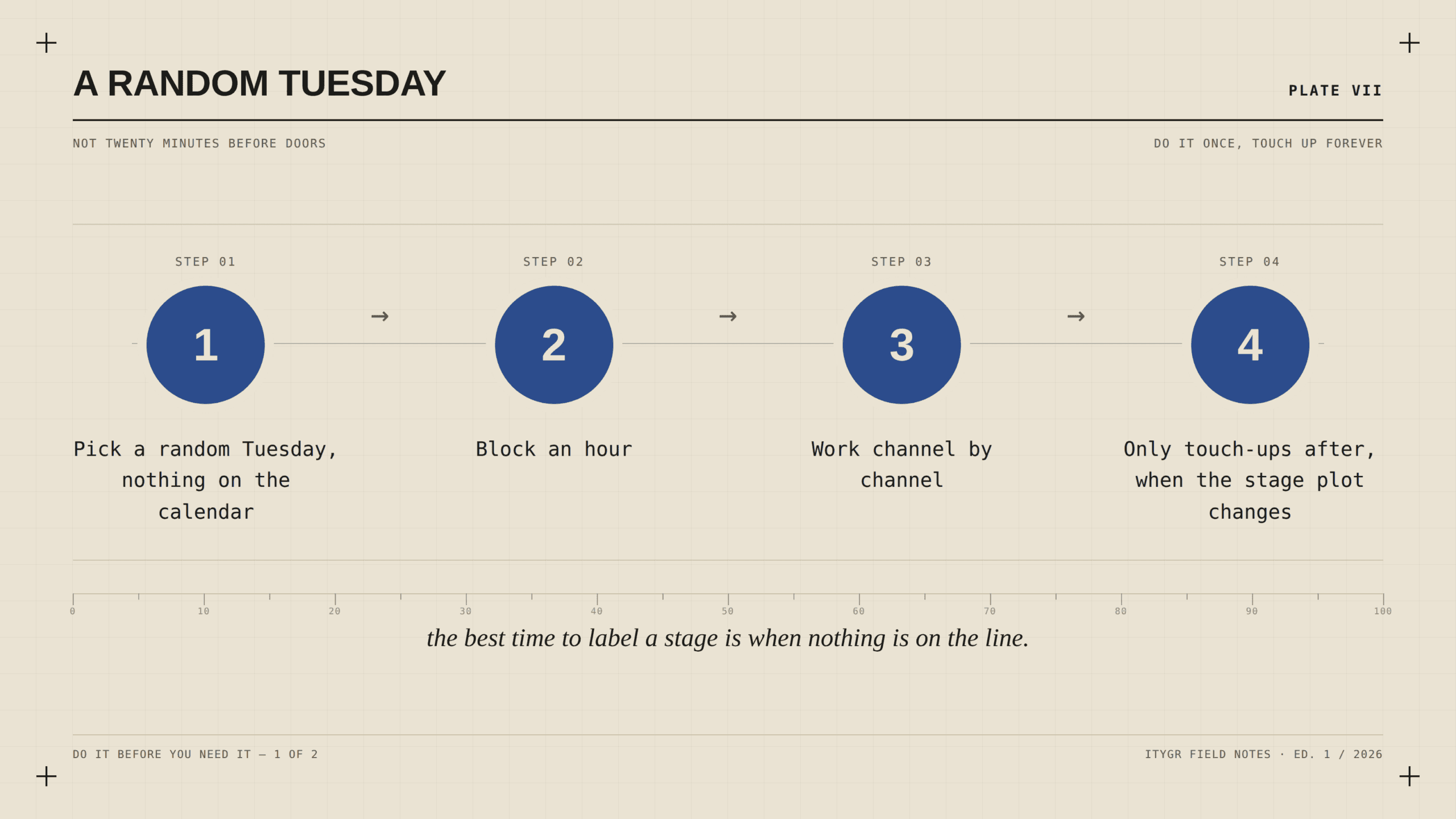
The best time to label a stage is a random Tuesday with nothing on the calendar, not twenty minutes before doors on a Sunday you’re already behind on. Block an hour, work channel by channel, and you’ll never do it again — only touch-ups when the stage plot changes. Pair it with the 30-second soundcheck trick and line check turns into an actual formality instead of a scramble. Good cable labeling is the difference between a fast soundcheck and a slow one.
A label maker is the highest ROI purchase in live sound. Nothing else even submits an application.