The Real Reason Your Recordings Sound Thin
A recording sounds thin, so the instinct is to grab an EQ and start boosting low end. That’s treating the symptom. Arrangement is usually the actual cause.
What “thin” usually actually means
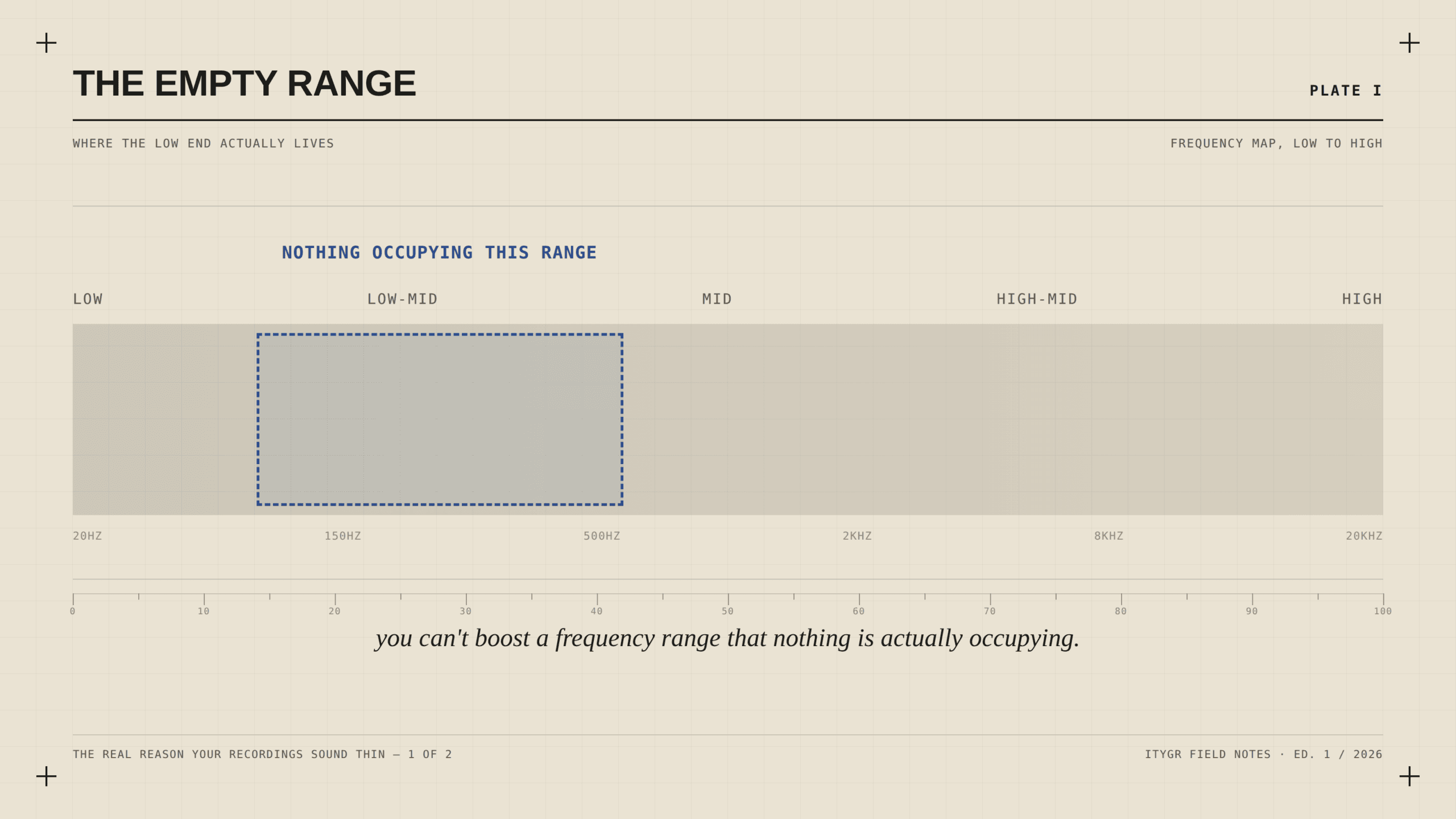
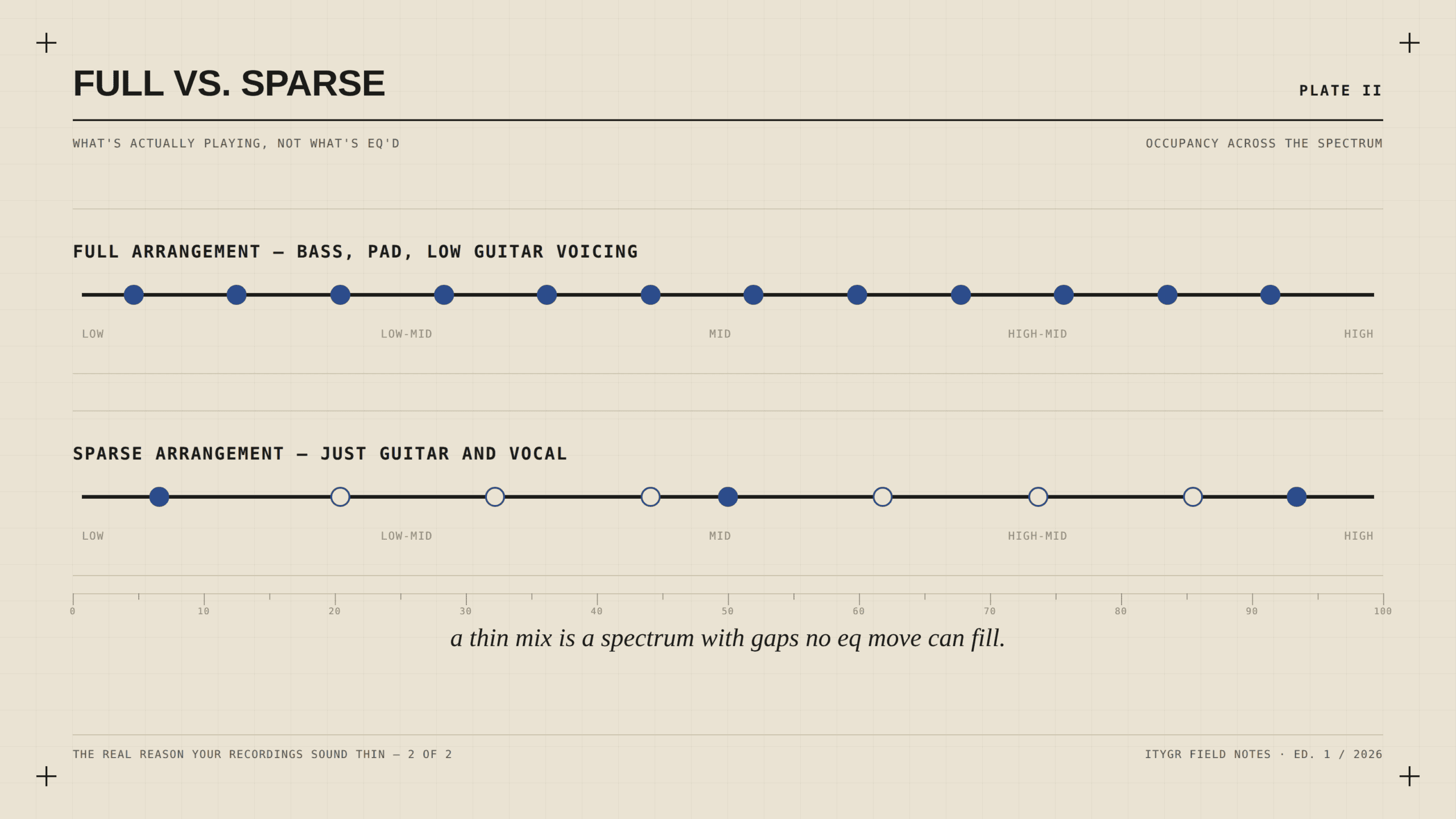
A thin mix often just doesn’t have enough happening across the frequency spectrum to feel full — not because the EQ is wrong, but because the arrangement itself is sparse in a way that leaves gaps no EQ move can fill. You can’t boost a frequency range that nothing in the recording is actually occupying.
Where this shows up most
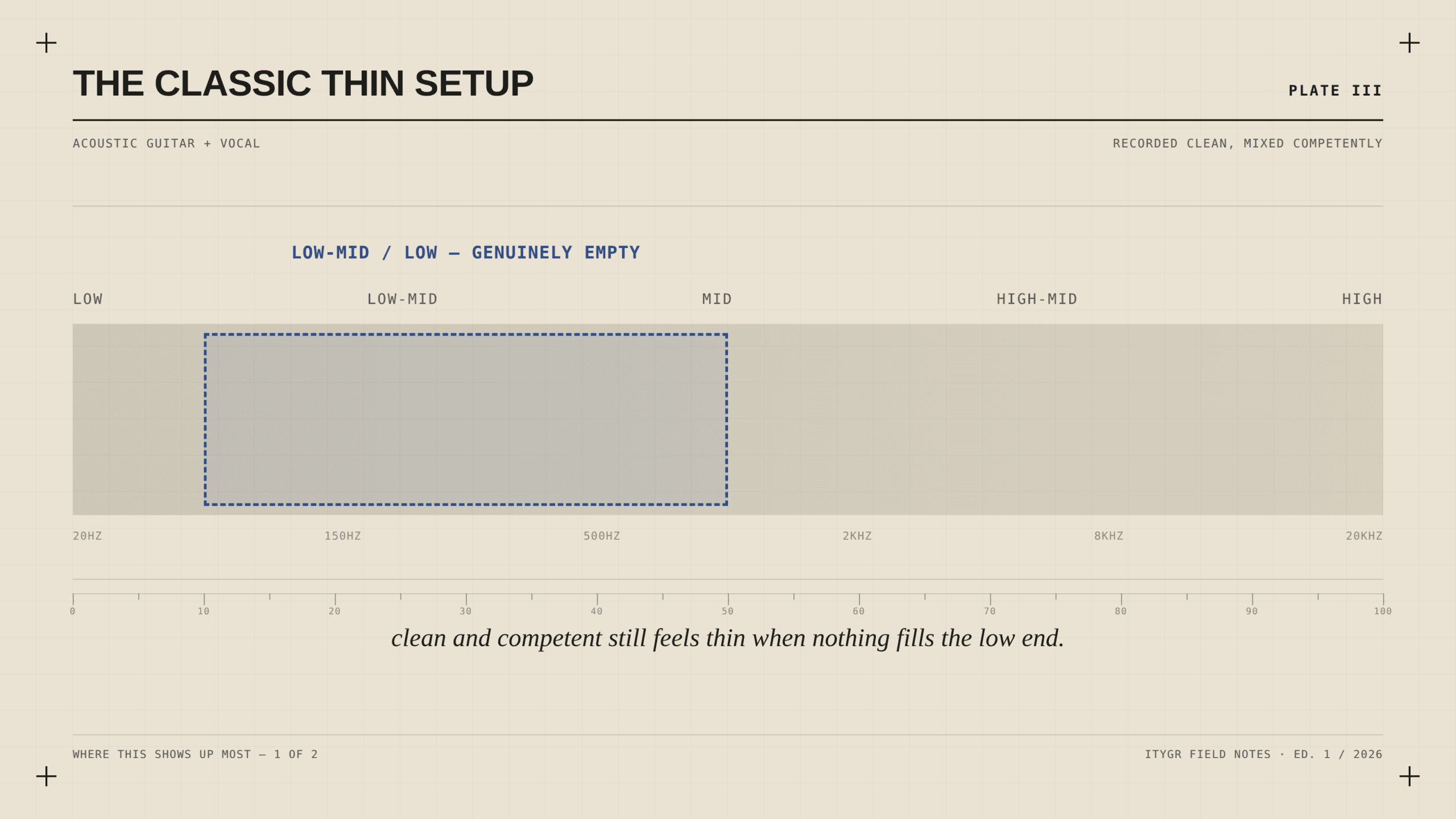
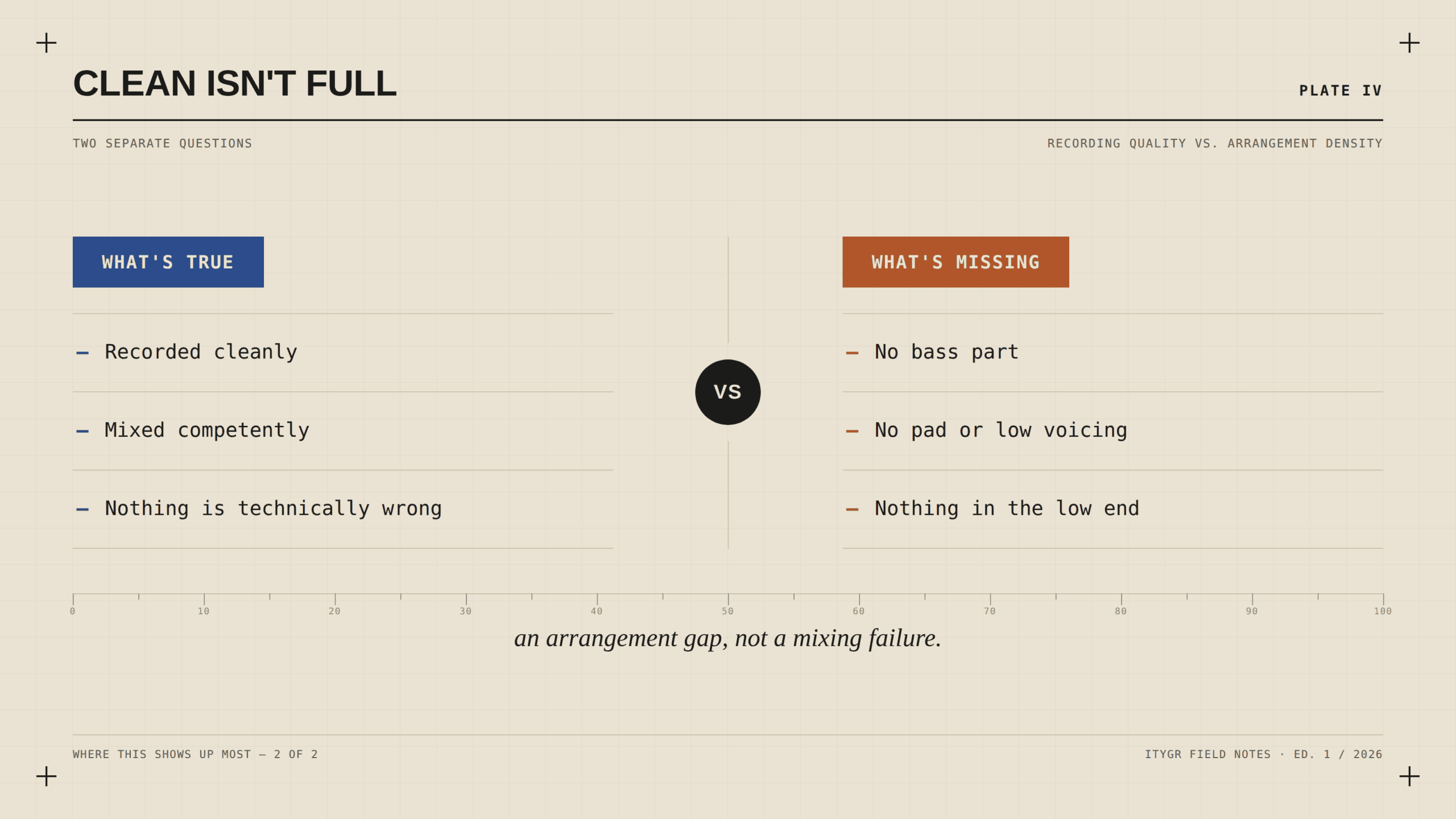
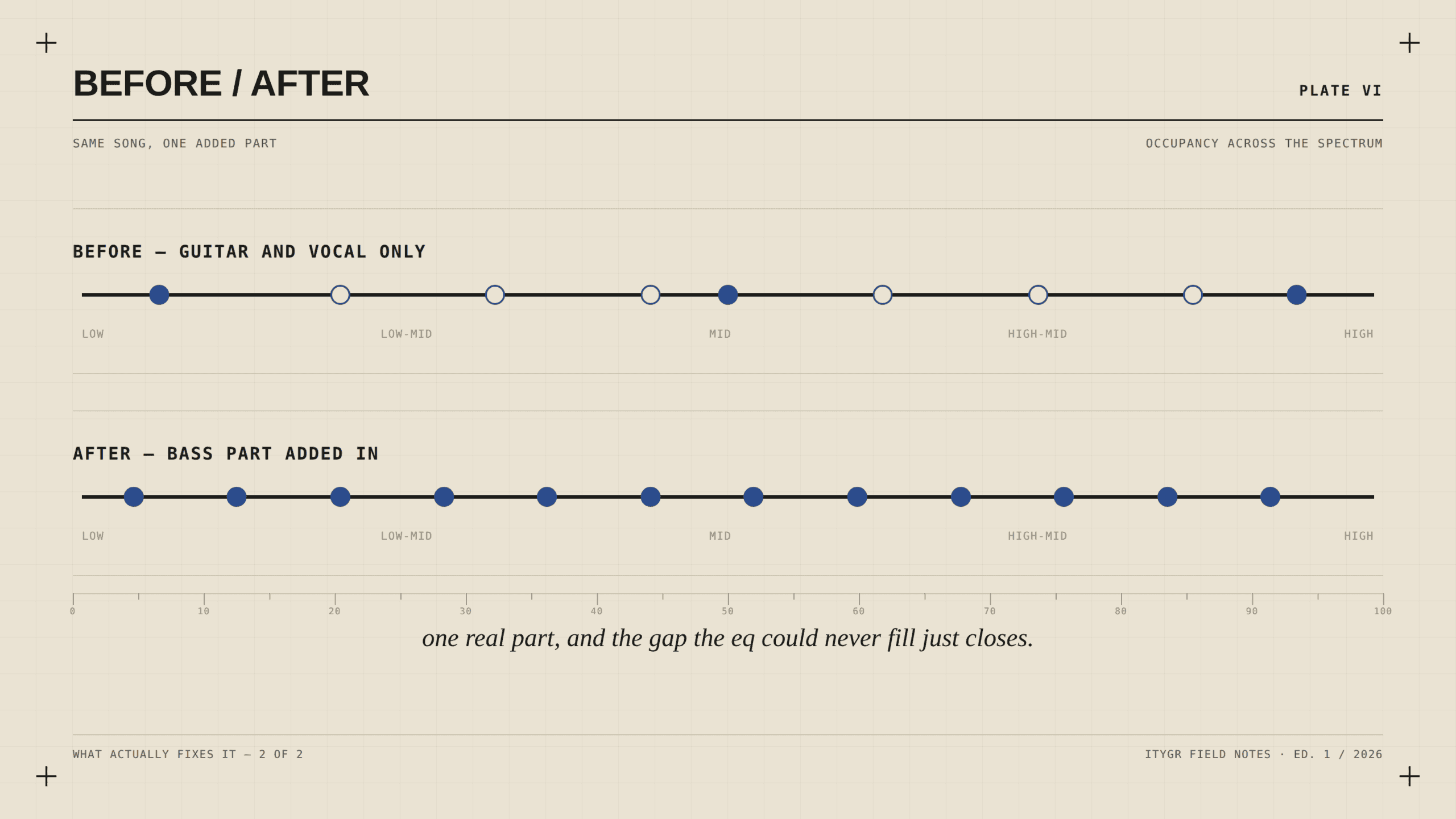
A song with just an acoustic guitar and a vocal, recorded cleanly and mixed competently, can still feel thin — because there’s genuinely not much filling the low-mid and low end. That’s an arrangement gap, not a mixing failure.
What actually fixes it
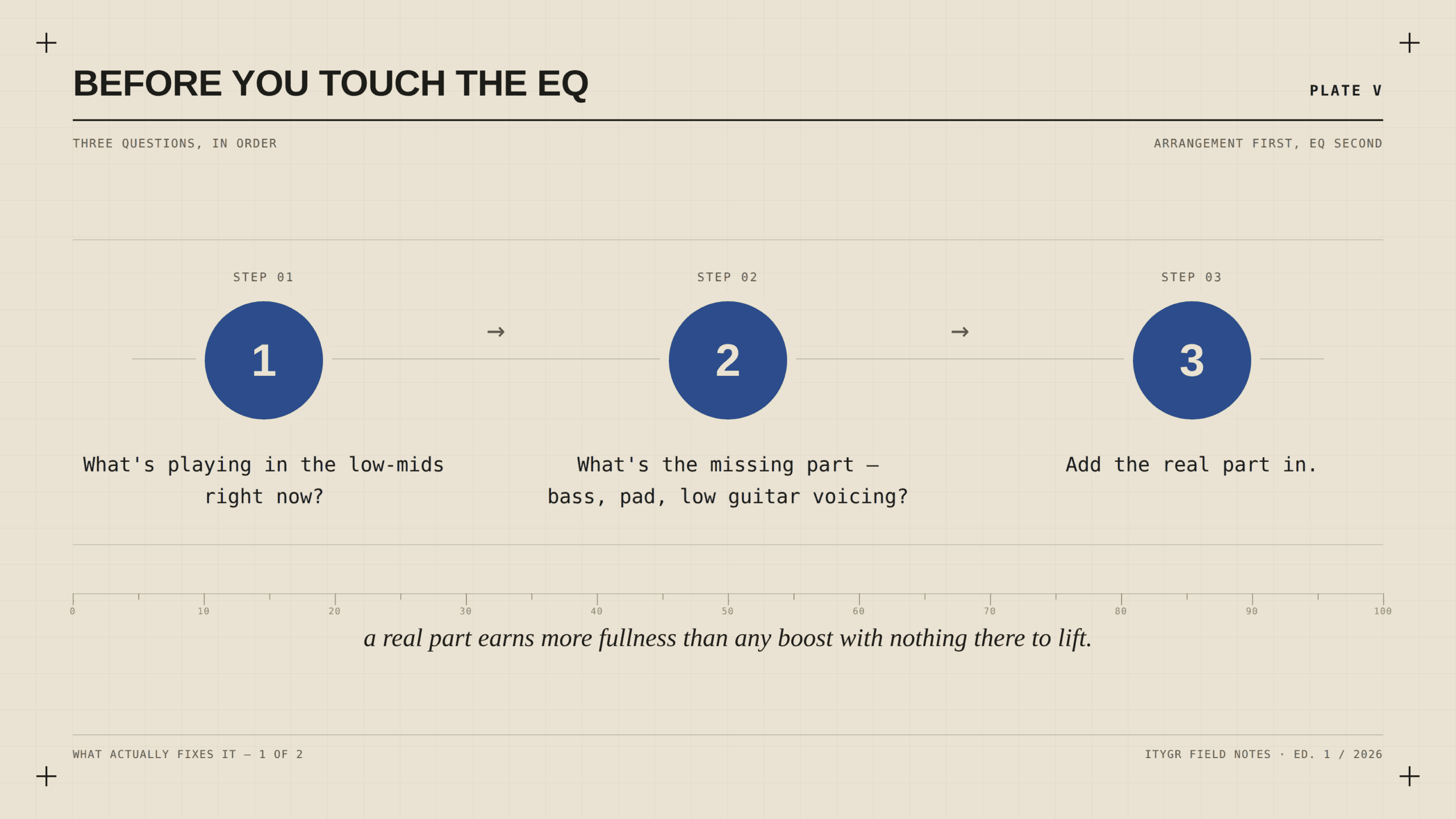
Before reaching for EQ, ask what’s actually playing in the low-mids and low end of the arrangement itself — a bass part, a pad, a second guitar voicing lower on the neck. Adding a real part that occupies that space does more for fullness than boosting a frequency range with nothing there to bring forward.
When EQ is actually the right tool
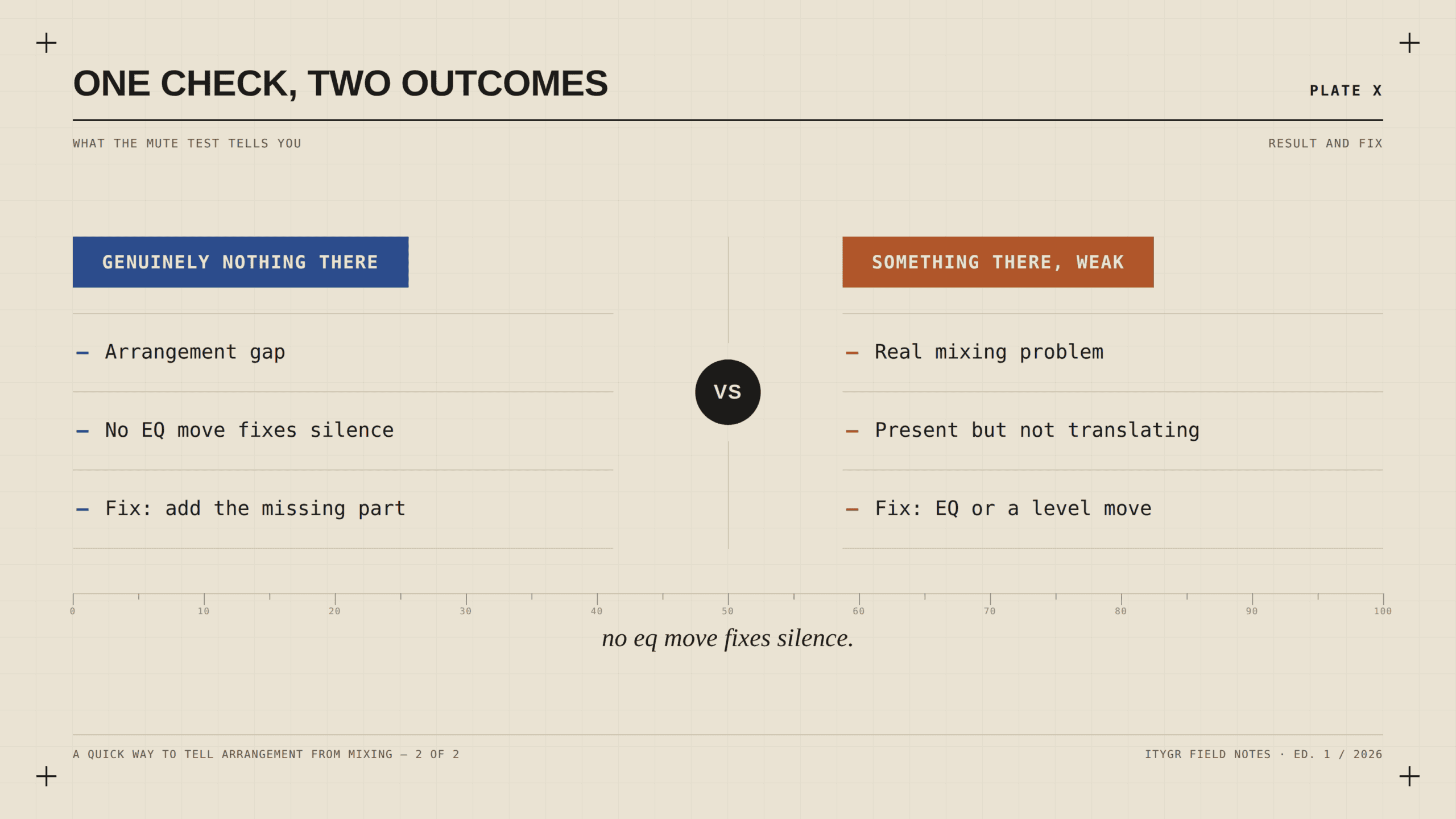
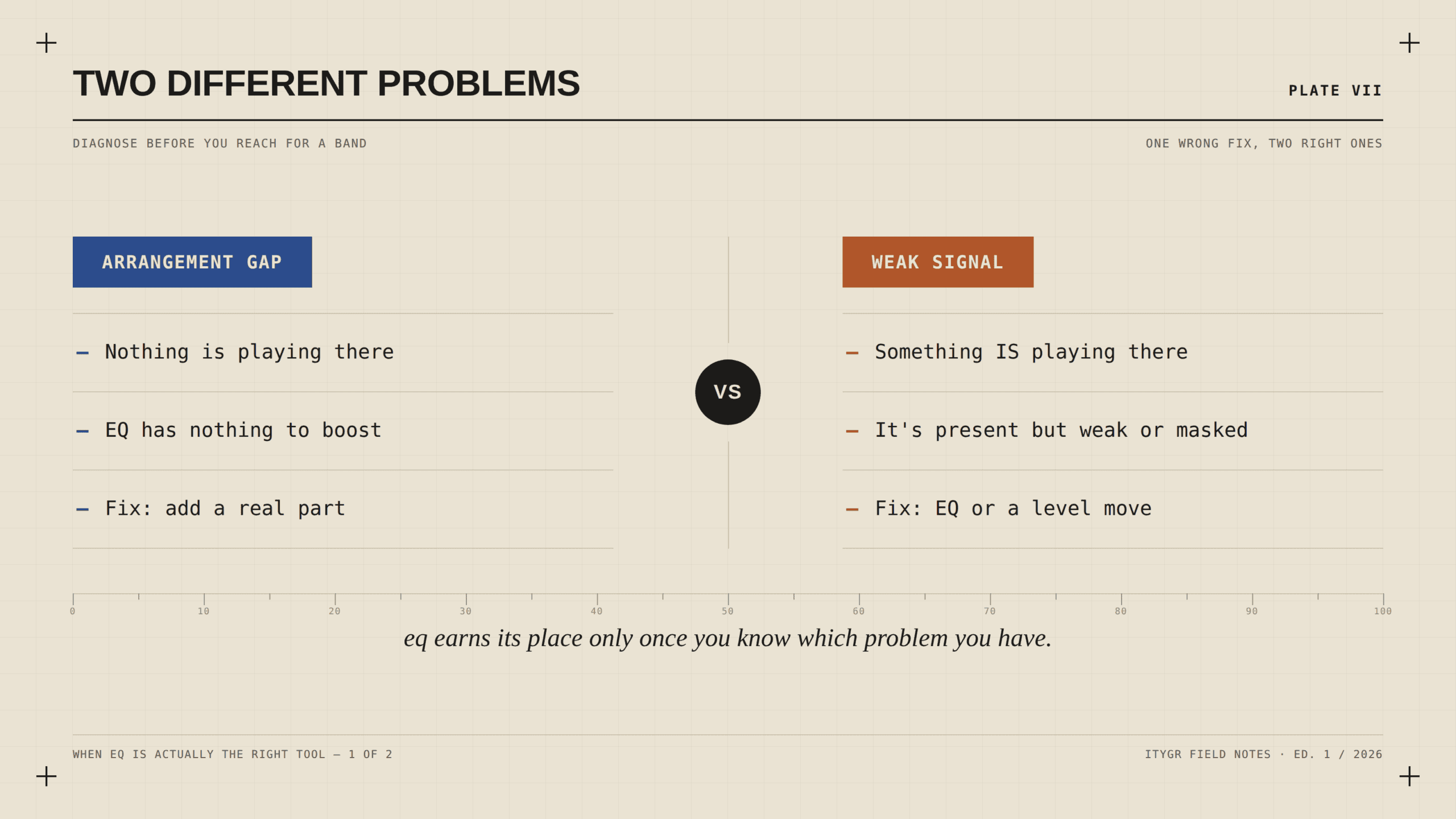
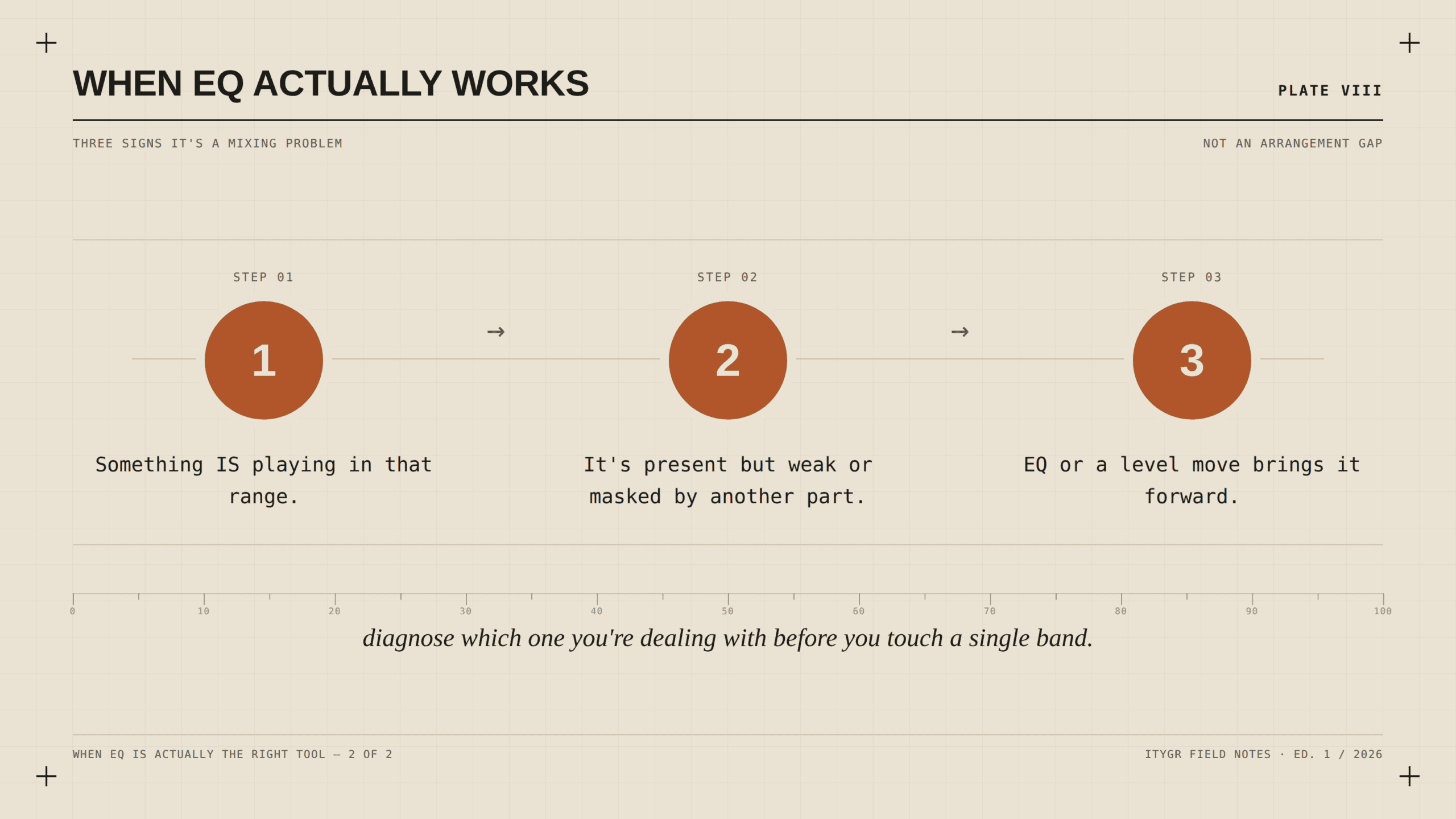
If something IS playing in that range and it’s just not translating — genuinely present but weak — that’s when EQ earns its place. Diagnose which one you’re dealing with before you touch a single band.
A quick way to tell arrangement from mixing
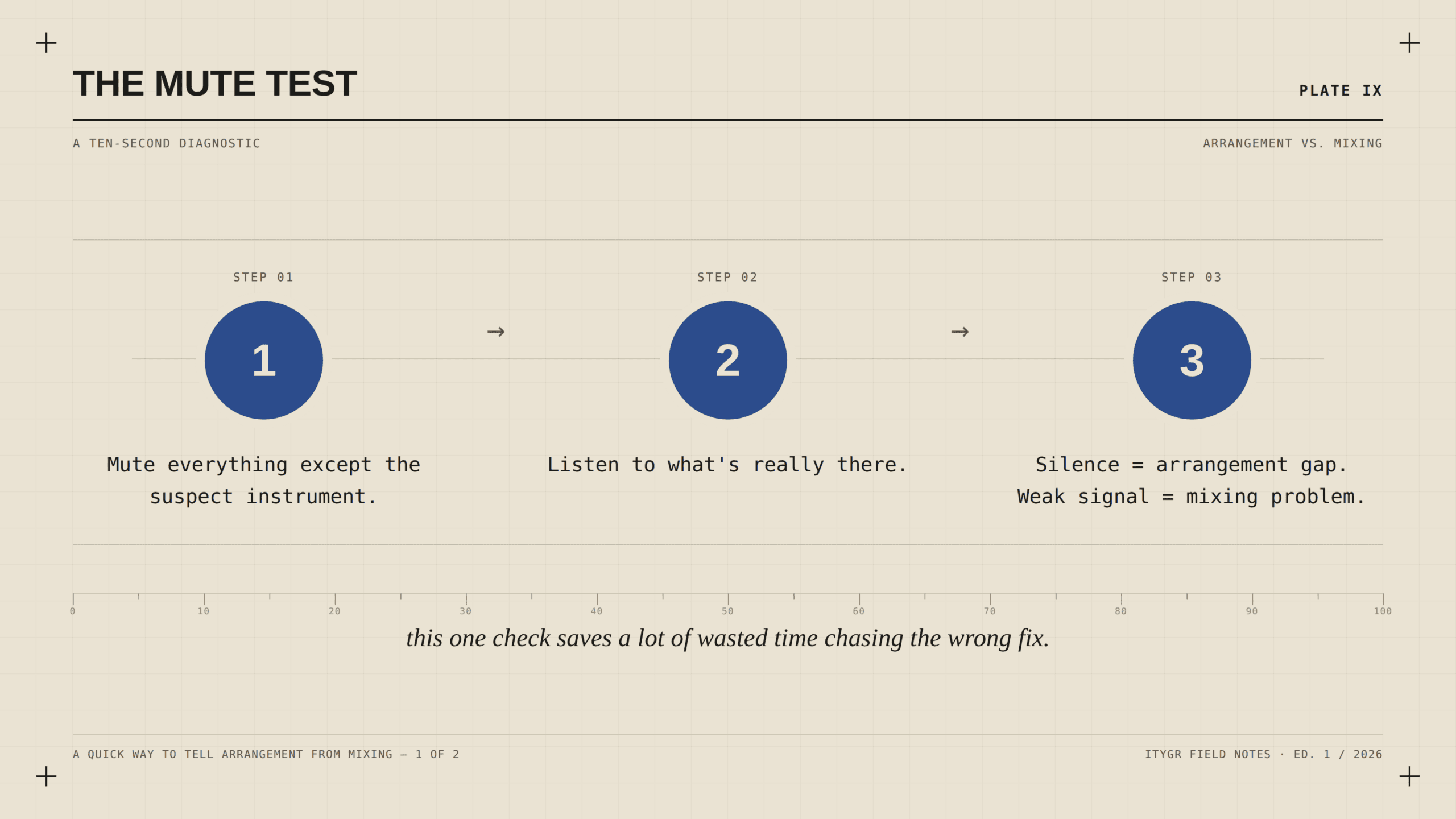
Mute everything except the instrument you think should be filling the low-mids. If there’s genuinely nothing meaningful playing there, that’s an arrangement gap — no EQ move fixes silence. If something’s there but weak or masked by another part, that’s a real mixing problem, and EQ or a level adjustment is the right tool. This one check saves a lot of wasted time chasing the wrong fix.