Feedback Isn’t Always the Mic’s Fault
Feedback happens and the first instinct is almost always “bad mic” or “cheap mic.” Most of the time, that’s not actually the cause.
What feedback actually is
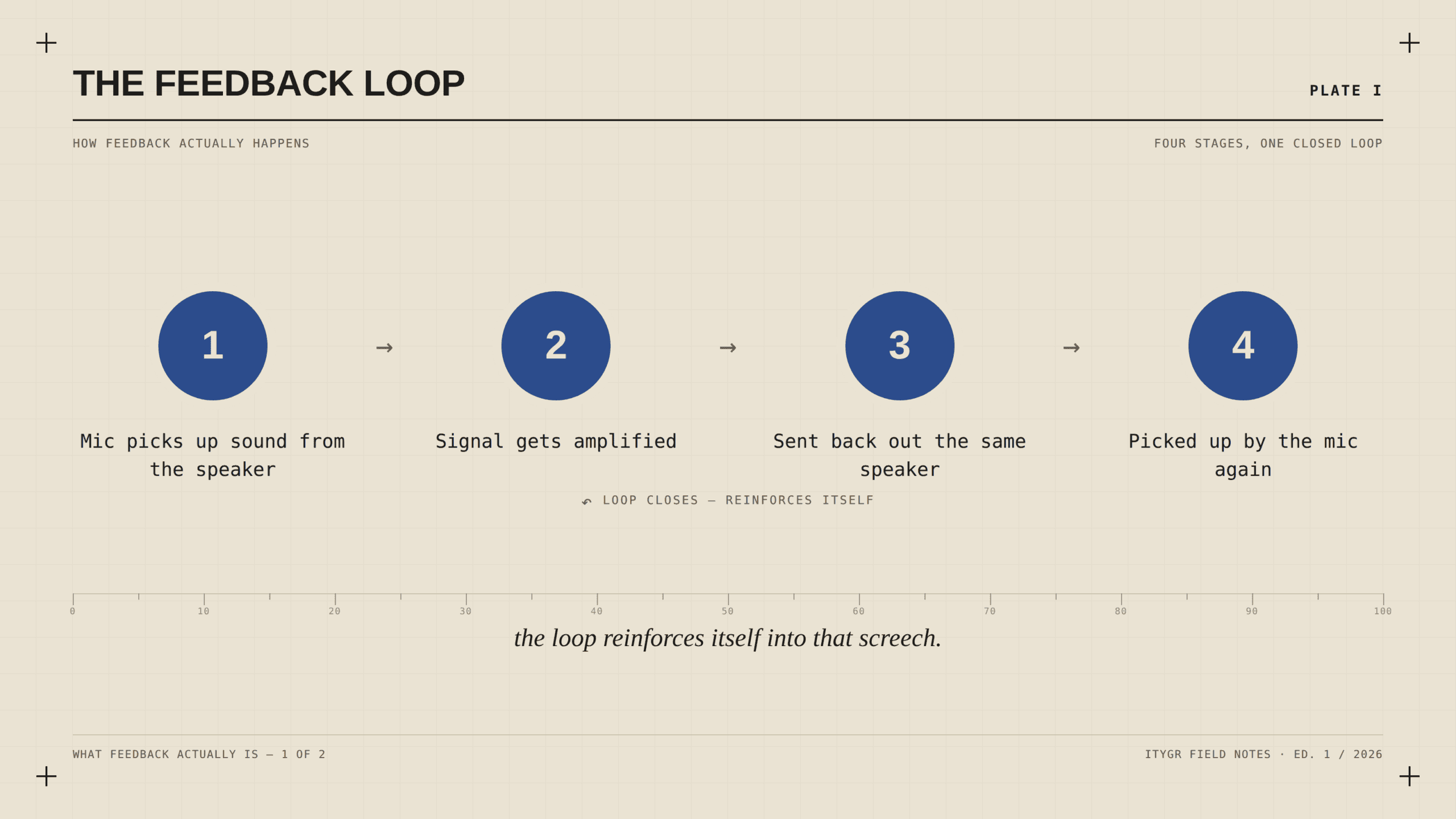
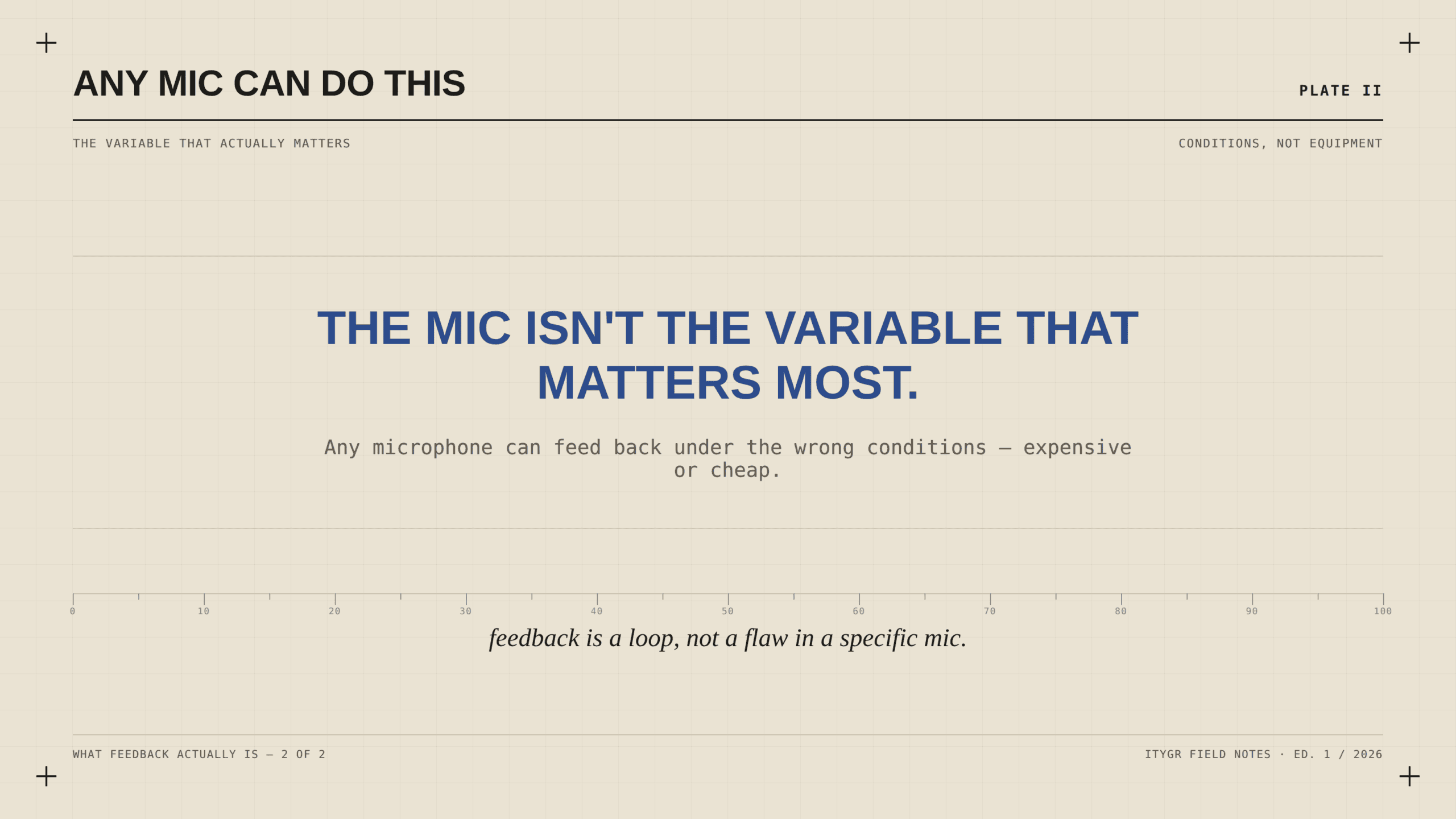
Feedback is a loop: a microphone picks up sound coming out of a speaker, that gets amplified and sent back out the same speaker, gets picked up again, and the loop reinforces itself into that screech. Any microphone can feed back under the wrong conditions — the mic isn’t the variable that matters most.
The real usual suspects
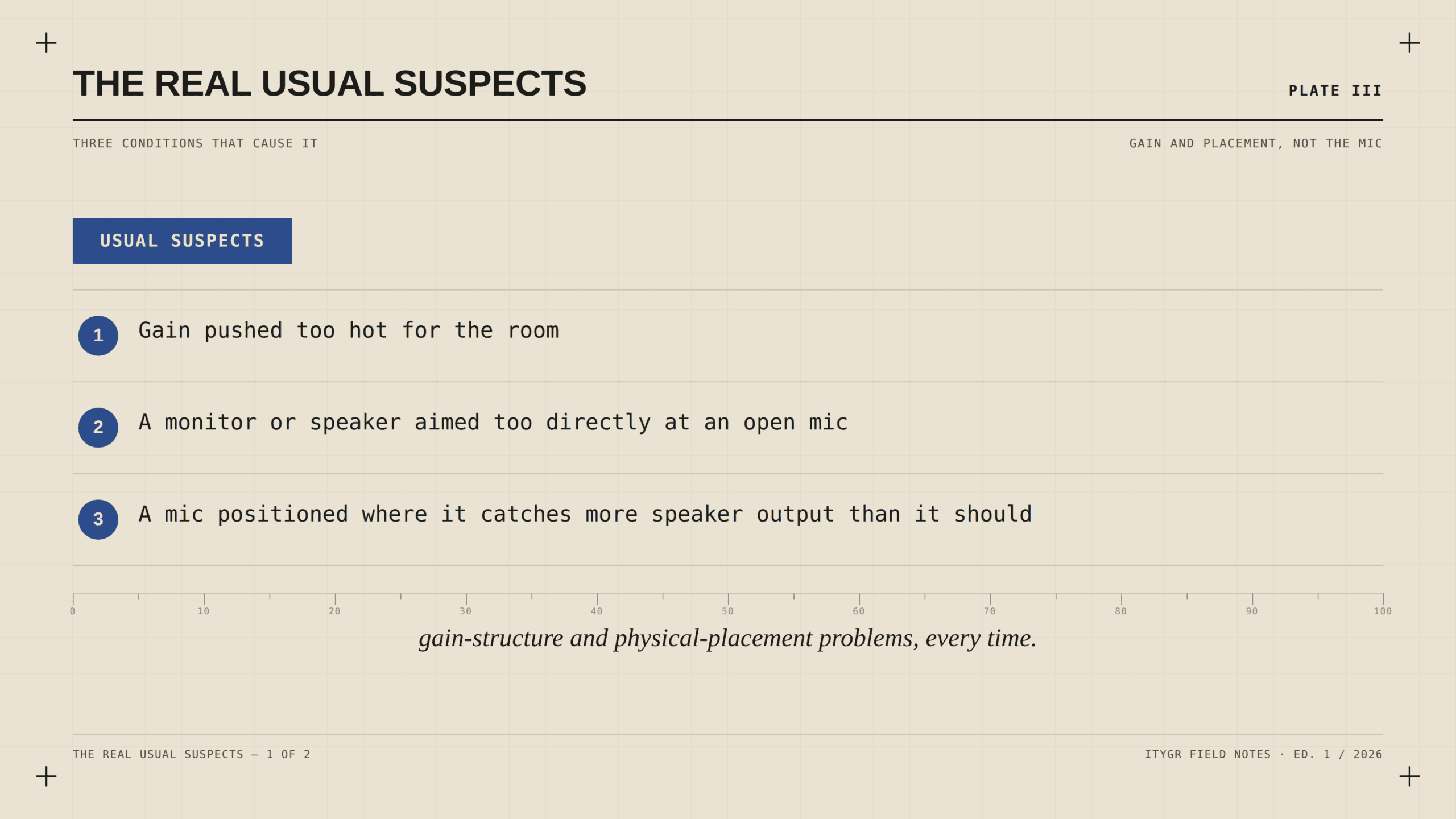
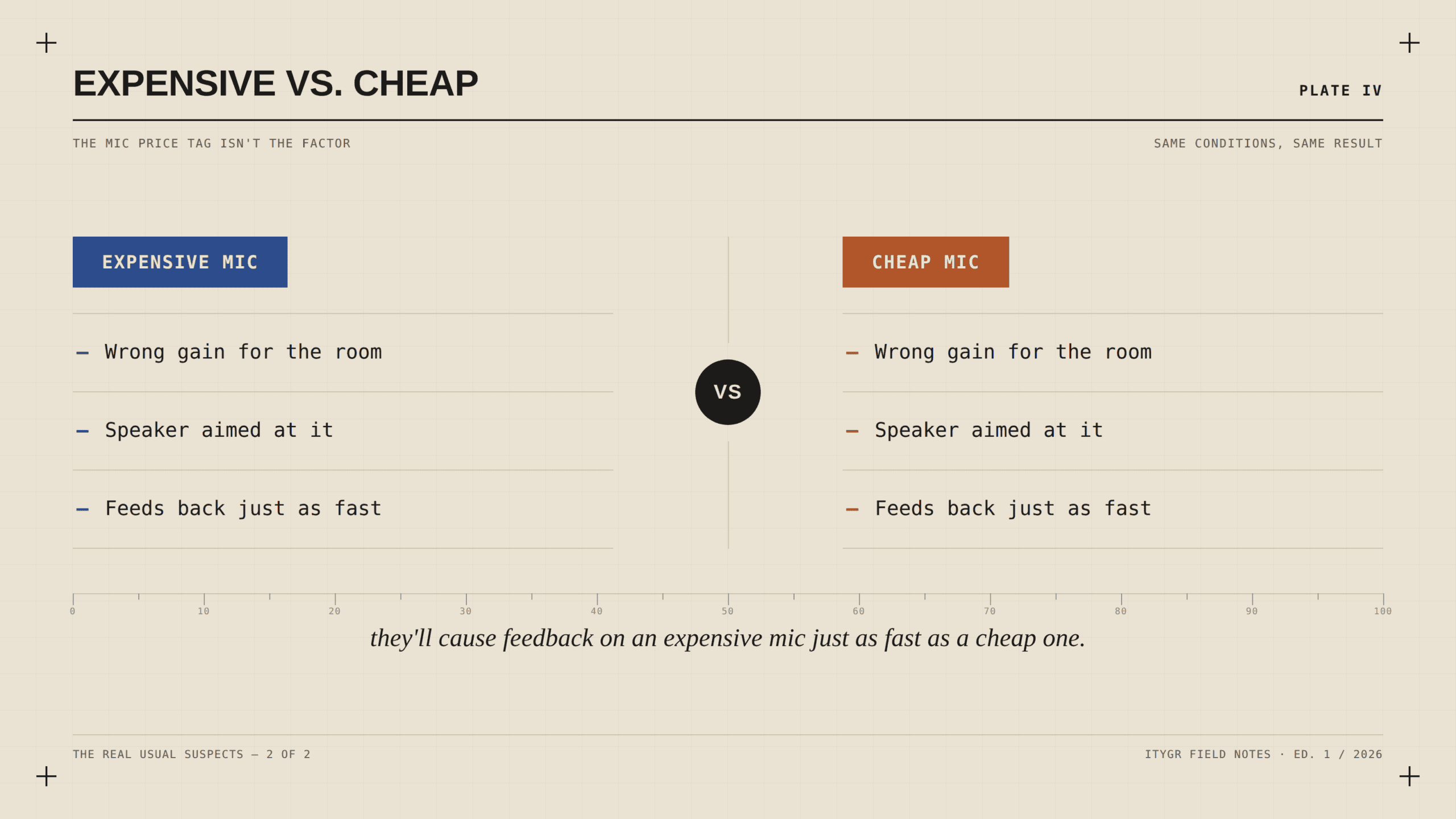
Gain pushed too hot for the room, a monitor or speaker aimed too directly at an open mic, or a mic positioned in a spot where it’s catching more speaker output than it should. These are gain-structure and physical-placement problems, and they’ll cause feedback on an expensive mic just as fast as a cheap one.
What actually fixes it
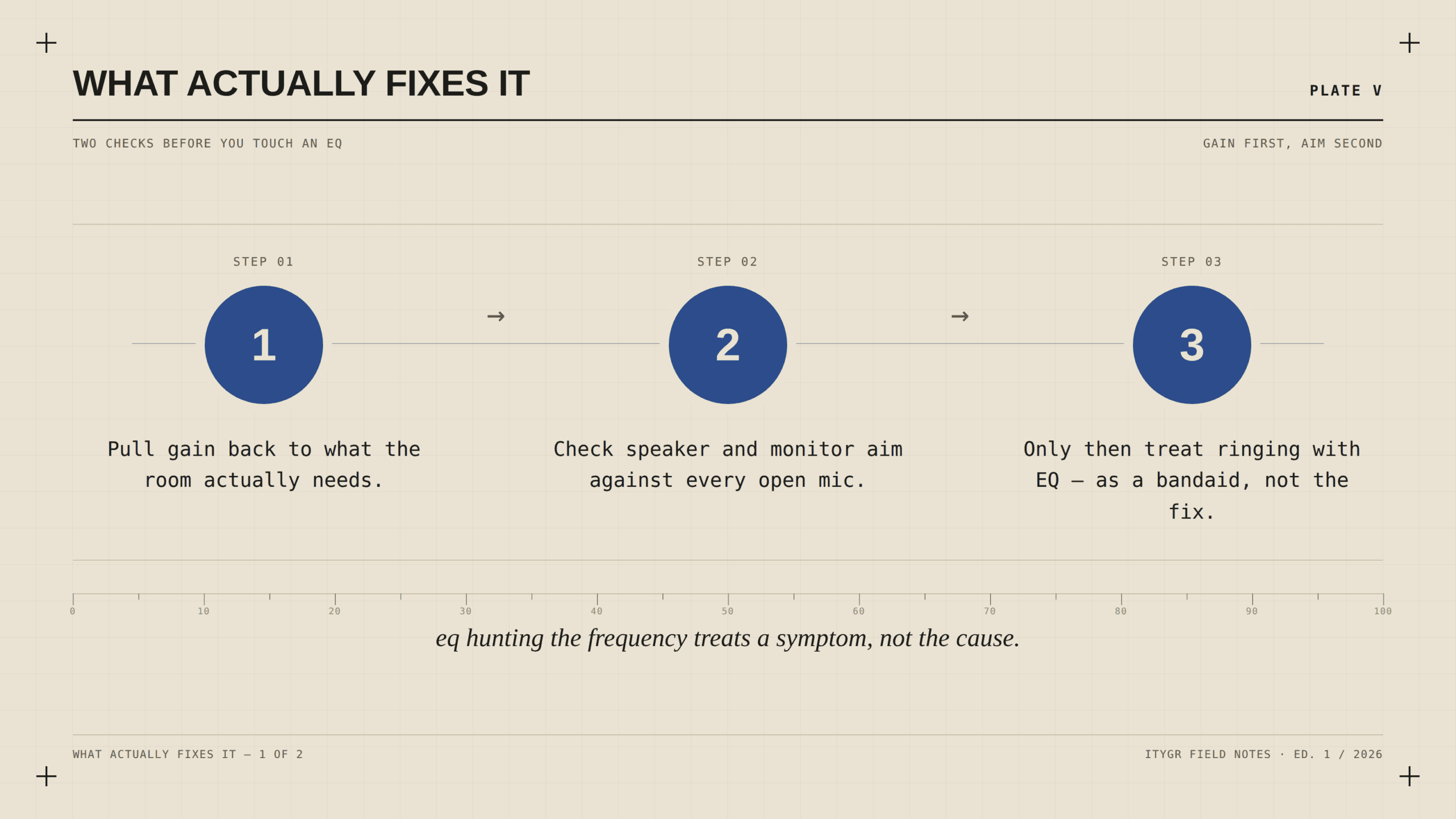
Pull gain back to the level the room actually needs rather than chasing “loud.” Check speaker and monitor aim relative to every open mic on stage, not just the obvious ones. And when feedback does start, the instinct to grab an EQ and start hunting the frequency is fine as a bandaid — but it’s treating a symptom, not the actual gain-and-placement issue that caused it.
Blame the room and the setup before you blame the mic. It’s right far more often.

A proactive check worth doing before doors open
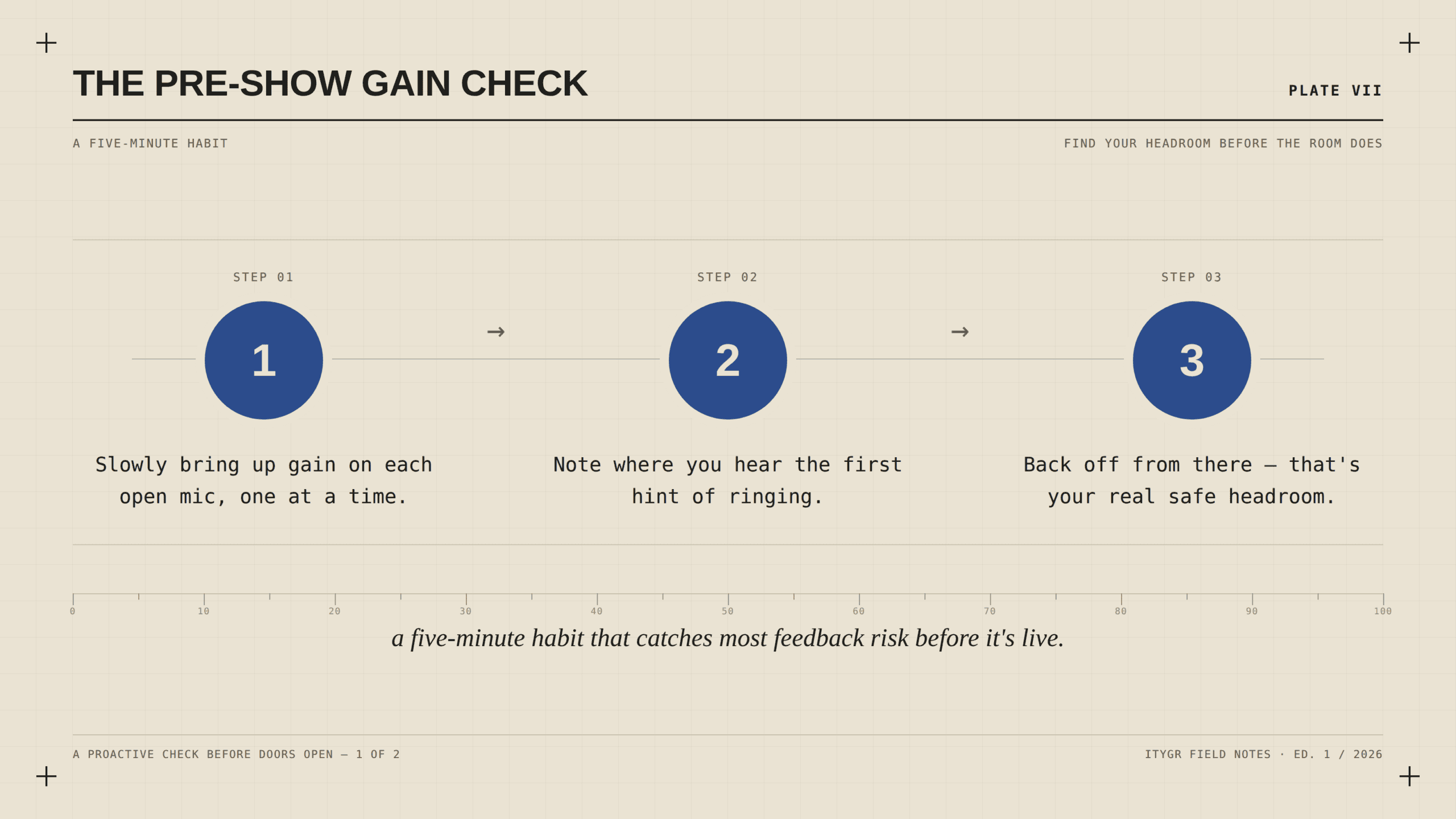
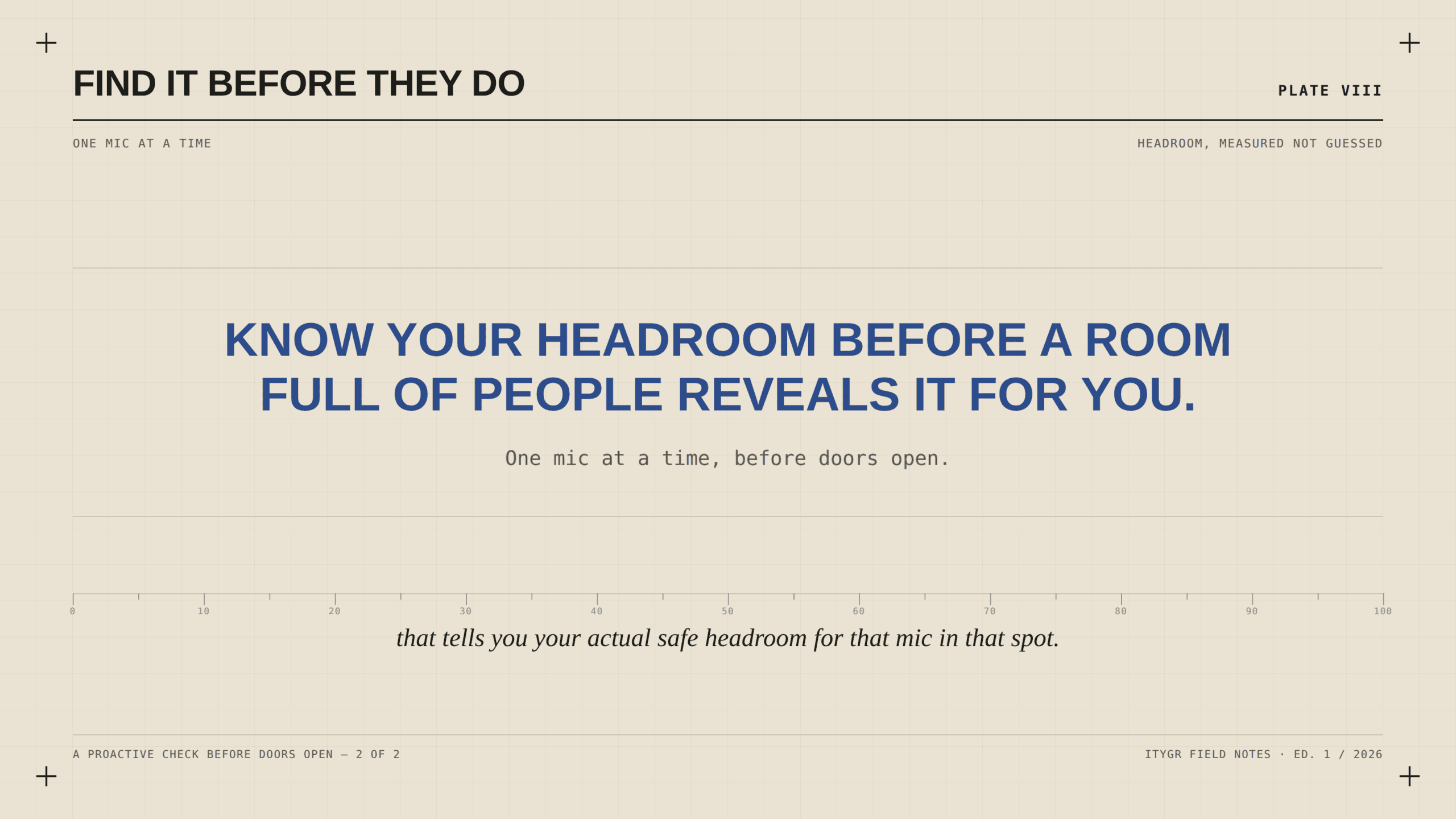
Slowly bring up gain on each open mic, one at a time, until you hear the first hint of ringing, note roughly where that happens, then back off — that tells you your actual safe headroom for that mic in that spot, before you’re relying on a room full of people to reveal it for you. It’s a five-minute habit that catches most feedback risk before it ever becomes a live problem.